Japanese Rice Prices in Freefall After Shortage Crisis
AM730 · 1 SOURCES1 day ago6 MIN
Summary
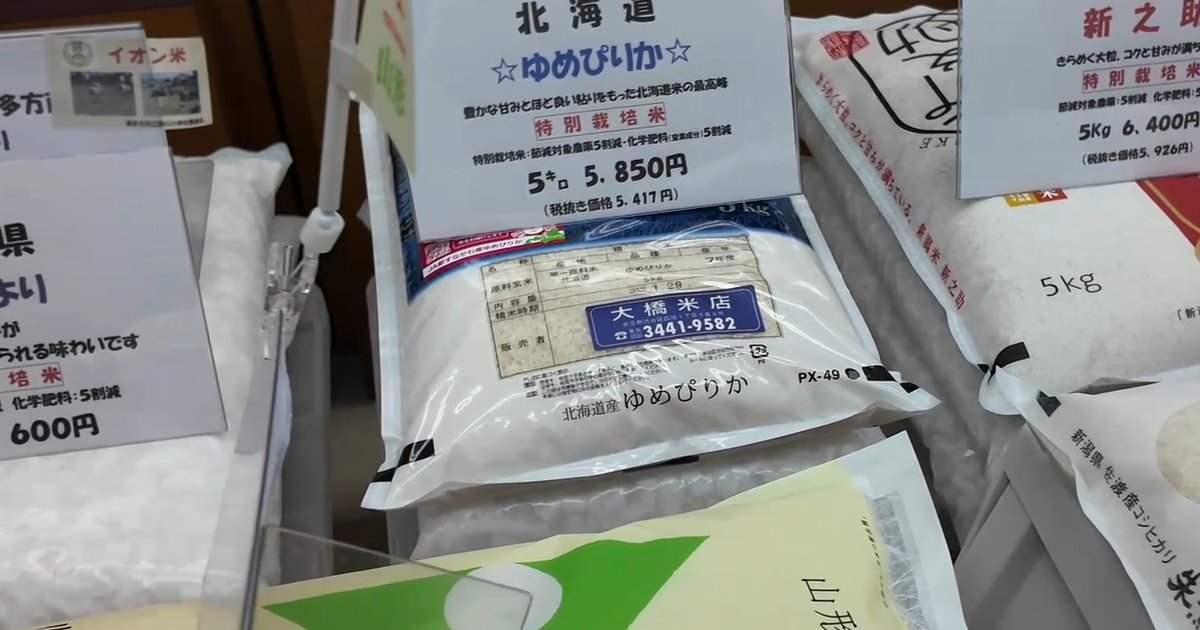
Japanese rice prices have experienced unprecedented volatility over the past year, swinging from a severe shortage crisis in summer 2024 to a market glut in 2025. Retail prices for a 5kg bag peaked at 4,416 yen (approximately 217 HKD) before declining to 3,191 yen (approximately 156 HKD) by mid-August 2025 . The price collapse has been accompanied by a sharp drop in advance payments to farmers, with Niigata Prefecture setting the 2026 crop payment at 18,500 yen per 60kg—a 38% decrease—and Hokkaido at 17,000 yen per 60kg, down 41% . This situation has created an unusual market condition where new rice is selling for less than stored rice from the previous harvest . The underlying cause stems from government misjudgment of demand, which led to insufficient planting areas, compounded by high temperatures that reduced crop yield and quality . Currently, civilian rice inventories have surged to 2.43 million tons as of June, a 57% year-over-year increase and a historical record, far exceeding the被认为较为合理的180万吨至200万吨水平 .
Key Points
- Japanese rice product prices surged 67.5% in 2025, marking the steepest rise since comparable records began in 1971
- New rice prices in some markets have fallen below old rice prices, an unprecedented market reversal
- Rice consumption per capita dropped 6.1% in fiscal 2025 as consumers shifted to cheaper noodles and bread
- If Niigata farmers cannot sell 60kg of rice for 20,000 to 24,000 yen, they risk losses with increased production
- Japan's agricultural business units fell 60% from 2005 levels to 836,000 in 2025, projected to drop to 200,000 by 2050
Why It Matters
The rice price collapse poses a direct threat to Japan's food security, as low prices may force farmers to exit rice cultivation entirely, potentially reducing domestic production capacity . Hong Kong, as a major importer of Japanese agricultural products, could face supply chain disruptions if Japan's rice industry contracts significantly . The volatility also underscores the challenges facing small-scale agriculture in developed economies, where high production costs and declining farmer numbers threaten long-term sustainability .
The rice price collapse poses a direct threat to Japan's food security, as low prices may force farmers to exit rice cultivation entirely, potentially reducing domestic production capacity . Hong Kong, as a major importer of Japanese agricultural products, could face supply chain disruptions if Japan's rice industry contracts significantly . The volatility also underscores the challenges facing small-scale agriculture in developed economies, where high production costs and declining farmer numbers threaten long-term sustainability .