Commentary: Tung Chee-hwa Remembered as History-Conscious First CE of Hong Kong
HK01 · 1 SOURCESabout 3 hours ago2 MIN
Summary
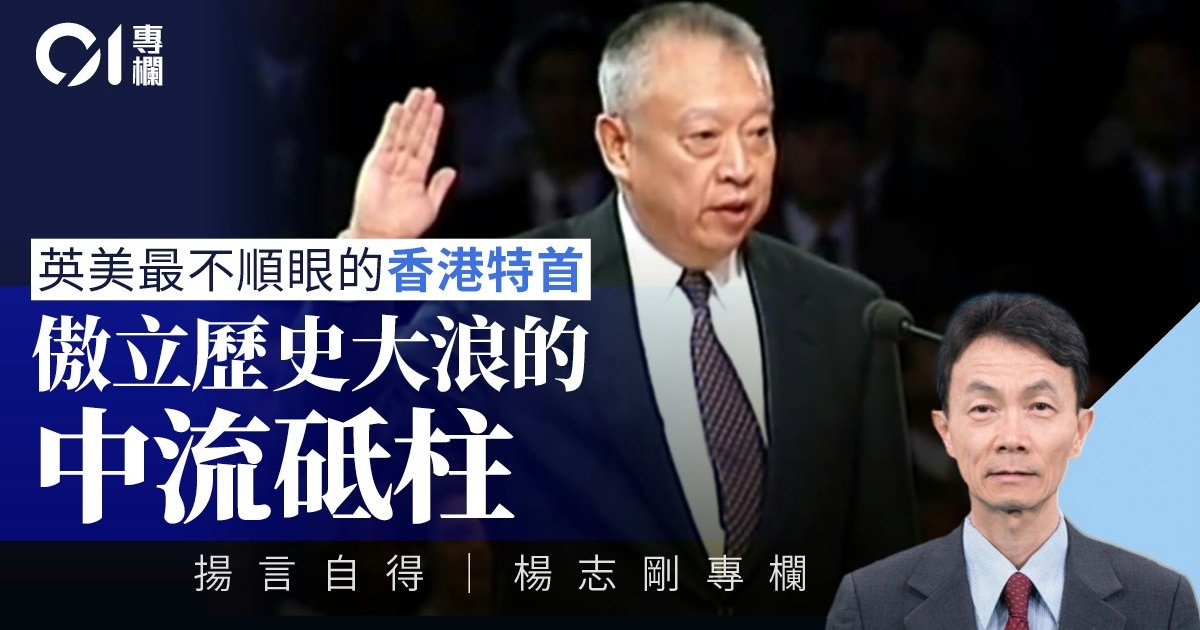
A commentary piece by Yang Zhigang in HK01 celebrates Tung Chee-hwa, Hong Kong's first Chief Executive, as a leader deeply conscious of history who championed national security and honored unsung heroes. The article contrasts Tung's patriotic approach with British attempts to install Anson Chan as the first CE, and highlights his efforts to preserve historical memory through honoring the East River Column and 1967 anti-colonial heroes.
Key Points
- Tung Chee-hwa was born on July 7, 1937, the day of the Marco Polo Bridge Incident, and his father inscribed "welcoming the great era with a smile" on his photo at age two
- Britain preferred Anson Chan Fang On-sang as the first CE, having groomed her through the colonial system and media promotion, with her using the Japanese name "Senkaku Islands" during foreign visits
- After taking office, Tung transferred the commemorative plaques of 115 East River Column martyrs to the Hong Kong City Hall Memorial Garden, where they had been excluded for a century and a half under British rule
- Tung awarded the Grand Bauhinia Medal to Yeung Kwong, a hero of the 1967 anti-colonial resistance, whom the British had imprisoned as a "political prisoner"
- From 2002 to 2003, Tung attempted to legislate Article 23 of the Basic Law for national security, but faced strong opposition from the US, with Secretary of State Colin Powell pressuring the HKSAR
Why It Matters
The commentary positions Tung as a pivotal figure who embodied national identity under "one country, two systems," contrasting him with later leaders like Donald Tsang and Carrie Lam, whom Western powers viewed more favorably. The piece frames the ongoing struggle over national security legislation as central to Hong Kong's governance challenges since 1997 .
The commentary positions Tung as a pivotal figure who embodied national identity under "one country, two systems," contrasting him with later leaders like Donald Tsang and Carrie Lam, whom Western powers viewed more favorably. The piece frames the ongoing struggle over national security legislation as central to Hong Kong's governance challenges since 1997 .