China-EU Trade Talks Yield 16 Consensus Points, Deal on Hybrid Vehicles
SingTao · 3 SOURCES1 day ago2 MIN
Summary
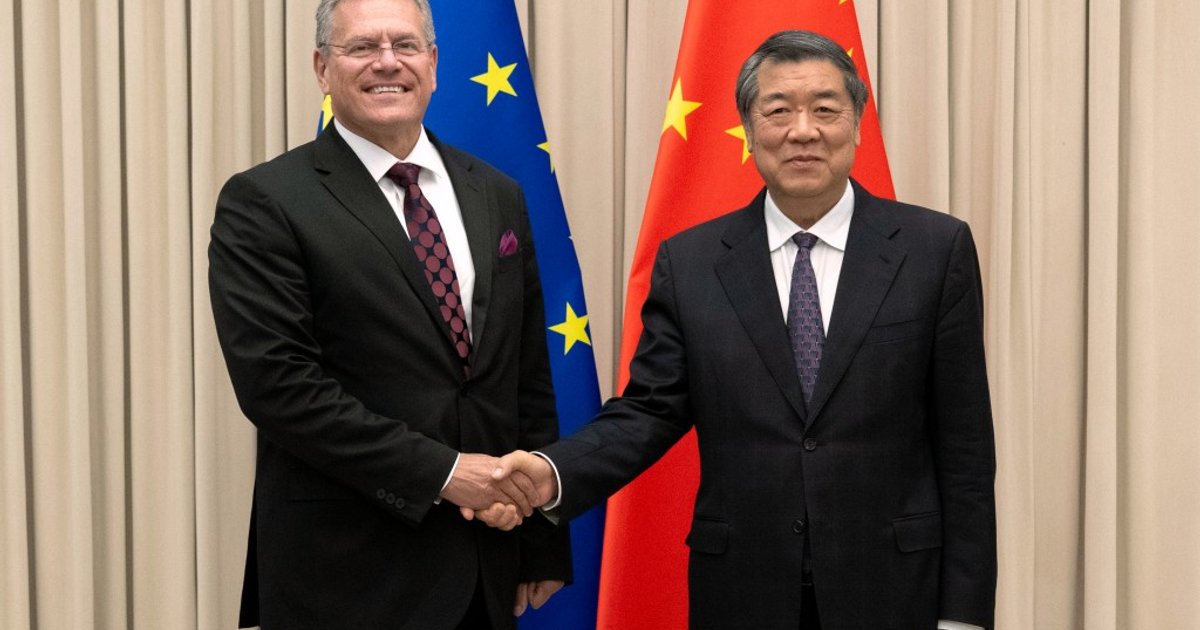
Vice Premier He Lifeng met with EU Trade Commissioner Maroš Šefčovič in Beijing on October 9, 2026, as the two-day China-EU Trade and Investment Consultation Mechanism second session concluded with 16 points of consensus . The landmark agreement includes a preliminary understanding on hybrid and plug-in hybrid vehicles, with China committing to regulate exports that could reduce shipments to Europe by more than half over the next four years . Both sides agreed to manage differences under World Trade Organization framework and explore lowering tariffs on certain goods .
Key Points
- The China-EU Trade and Investment Consultation Mechanism second session took place October 8-9, chaired by Commerce Minister Wang Wentao and EU Trade Commissioner Maroš Šefčovič
- The two sides reached 16 points of consensus covering hybrid vehicles, EV anti-subsidy investigations, rare earth export permits, market access, and intellectual property
- EU plug-in hybrid vehicle imports from China surged 86% year-on-year as of September 2026, with prices dropping about 20% and Chinese products accounting for over half of EU imports
- China agreed to provide a "green channel" for European enterprises applying for rare earth and permanent magnet export permits, facilitating approximately €4 billion in European goods entering the Chinese market
- EU Trade Commissioner Šefčovič described this as the "first key step" in rebalancing trade, noting the EU faces a daily trade deficit exceeding €1 billion with China
Why It Matters
The agreement signals a tentative de-escalation in China-EU trade tensions that have been mounting since the EU imposed anti-subsidy tariffs on Chinese electric vehicles in 2024 . For Hong Kong, which serves as a major trade gateway between China and Europe, any stabilization in bilateral trade flows could affect port operations, logistics services, and the broader financial hub's role in facilitating China-Europe commerce .
The agreement signals a tentative de-escalation in China-EU trade tensions that have been mounting since the EU imposed anti-subsidy tariffs on Chinese electric vehicles in 2024 . For Hong Kong, which serves as a major trade gateway between China and Europe, any stabilization in bilateral trade flows could affect port operations, logistics services, and the broader financial hub's role in facilitating China-Europe commerce .