Paul Lam leads Xinjiang trip to promote common law
SingTao · 2 SOURCESabout 2 hours ago2 MIN
Summary
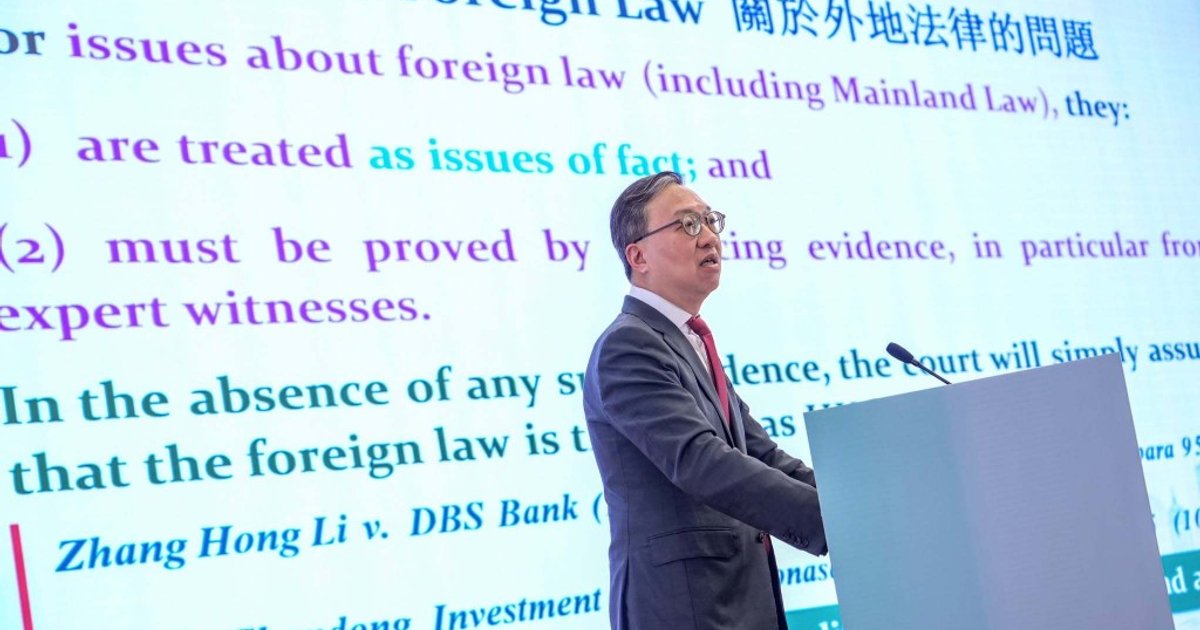
Secretary for Justice Paul Lam Ting-kwok began a Xinjiang and Central Asia visit in Urumqi, where he attended the opening of a training programme organised by the Department of Justice’s Hong Kong International Legal Talents Training Academy. He told more than 160 legal professionals from Xinjiang and 15 other provinces-level regions that understanding Hong Kong’s common law system is a key entry point to understanding the wider common law tradition under “one country, two systems”. Lam said Xinjiang is a gateway linking mainland enterprises to Central Asia and Europe, making legal and arbitration services increasingly important as cross-border trade and investment grow. He also framed Hong Kong as an irreplaceable bridge in the country’s “going global” strategy and said the delegation would continue on to Almaty, Kazakhstan, the next day.
Key Points
- The two-day programme in Urumqi drew over 160 legal professionals, including Xinjiang lawyers and practitioners from 15 provinces, autonomous regions and municipalities.
- Training focused on three themes: “one country, two systems” and common law, Hong Kong court procedures and international arbitration, and Central Asia outbound-investment issues.
- Lam linked the programme to the Xinjiang Free Trade Zone regulations and planned amendments to the national Lawyers Law, stressing stronger foreign-related legal capacity.
- He said Xinjiang’s trade has repeatedly exceeded RMB100 billion and that rising cross-border commerce brings more complex international compliance demands for companies.
- During the trip, Lam attended the unveiling of the first Hong Kong-Xinjiang association law firm and met Xinjiang officials including Chen Xiaojiang and Liu Jiansheng.
Why It Matters
For Hong Kong, the visit ties the city’s legal sector more directly to mainland companies seeking overseas expansion, especially through Central Asia routes. It also shows how the government is positioning common law, arbitration and cross-border professional services as practical tools for national development and for Hong Kong’s external economic role.