Experts Warn: Most Store-Bought Mushrooms Should Not Be Washed Before Cooking
SingTao · 1 SOURCESabout 3 hours ago2 MIN
Summary
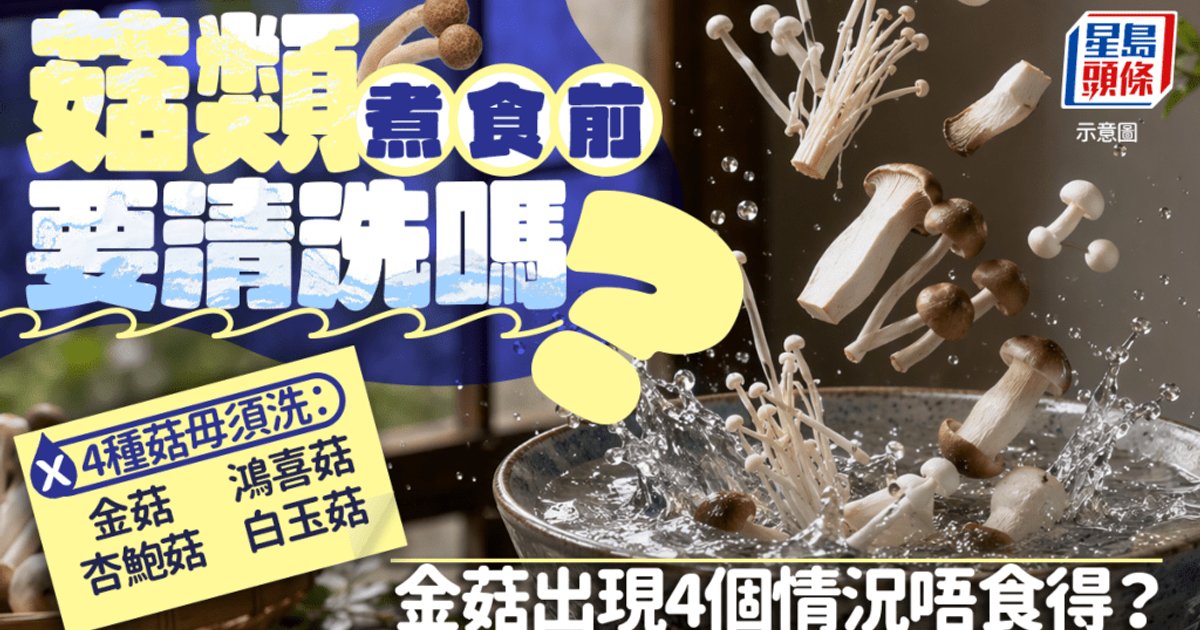
Mushrooms are a staple ingredient in Hong Kong households, yet conflicting advice circulates about whether they should be washed before cooking. Experts from Taiwan and Japan have weighed in, unanimously advising that most commercially sold mushrooms do not require washing. This guidance applies to enoki, king oyster, honest, and white shimeji mushrooms, which are grown using sterile cultivation methods that eliminate the need for additional cleaning.
Key Points
- The Taiwan Agriculture and Food Agency confirms that enoki, king oyster, honest, and white shimeji mushrooms are cultivated using sterile mushroom bags or bottle techniques without chemical pesticides .
- Japanese produce expert Aogane no Tetsu advises that washing mushrooms before cooking provides "absolutely no benefits" and causes loss of water-soluble nutrients like B vitamins .
- For semi-open environment cultivated mushrooms like shiitake and wood ear, the Taiwan Agriculture and Food Agency recommends only a quick water rinse to remove dust before immediate cooking .
- Fresh enoki mushrooms showing slight softening can still be consumed after thorough heating, but transparency and waterlogged appearance signal significant freshness decline .
- Four spoilage indicators requiring immediate disposal: unusual odor, slimy texture, mold growth, or severe discoloration beyond normal color changes .
Why It Matters
For health-conscious Hong Kong families, improper mushroom handling could lead to foodborne illness from spoiled products while unnecessarily washing clean mushrooms wastes both water and nutrients. Understanding the difference between commercially cultivated and wild-harvested mushrooms helps consumers make safer, more informed decisions at the grocery store, reducing food waste and ensuring proper nutrition retention during meal preparation .
For health-conscious Hong Kong families, improper mushroom handling could lead to foodborne illness from spoiled products while unnecessarily washing clean mushrooms wastes both water and nutrients. Understanding the difference between commercially cultivated and wild-harvested mushrooms helps consumers make safer, more informed decisions at the grocery store, reducing food waste and ensuring proper nutrition retention during meal preparation .