Professor Guo Yike on the Carbon-Silicon Era: Redefining Education for AI Natives
HK01 · 1 SOURCES1 day ago4 MIN
Summary
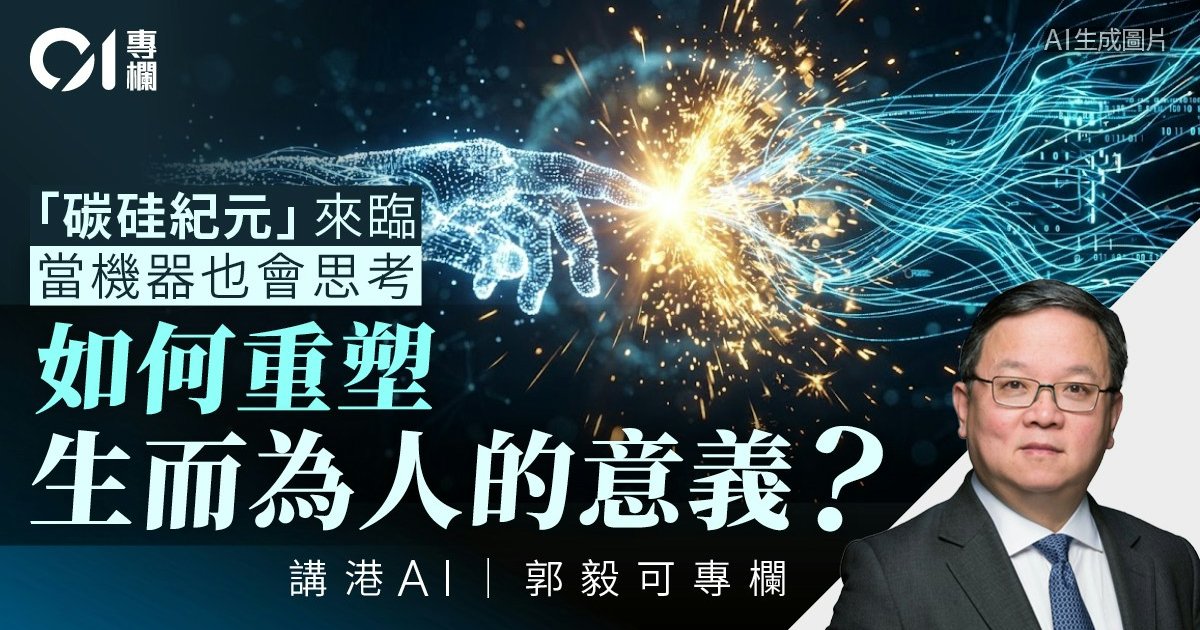
Professor Guo Yike (郭毅可), writing in an HK01 column on September 22, 2026, argues that humanity has entered a transformative "Carbon-Silicon Era" requiring a fundamental reimagining of education for AI-native generations.
Key Points
- Hong Kong Generative AI Research Center (HKGAI) hosted 16-year-old Secondary 4 student Jason as an intern, who discovered security vulnerabilities in the "Hong Kong Talk" system through independent testing .
- Jason identified "prompt injection vulnerabilities" and personality simulation issues through multi-round logical attacks, submitting a professional-level technical observation report .
- Professor Guo emphasizes that knowledge acquisition has been fundamentally disrupted, rendering traditional passive memorization obsolete in favor of curiosity-driven questioning .
- Citing Norbert Wiener's 1950 work "The Human Use of Human Beings," Guo argues AI represents human liberation from repetitive mental labor toward self-actualization .
- Guo warns against the prevailing trend of pushing all students toward computer science, cautioning that this misunderstands both AI capabilities and the true purpose of education .
Why It Matters
This perspective arrives as Hong Kong schools grapple with integrating AI into curricula. Guo's framework suggests that rather than competing with machines on technical skills, students should develop distinctly human capacities—emotional depth, cross-domain imagination, and creative expression—that AI cannot replicate .
This perspective arrives as Hong Kong schools grapple with integrating AI into curricula. Guo's framework suggests that rather than competing with machines on technical skills, students should develop distinctly human capacities—emotional depth, cross-domain imagination, and creative expression—that AI cannot replicate .