SpaceX Starship Reaches Orbit as Astronaut Crew Launches in Historic Week
Bastillepost · 2 SOURCES1 day ago3 MIN
Summary
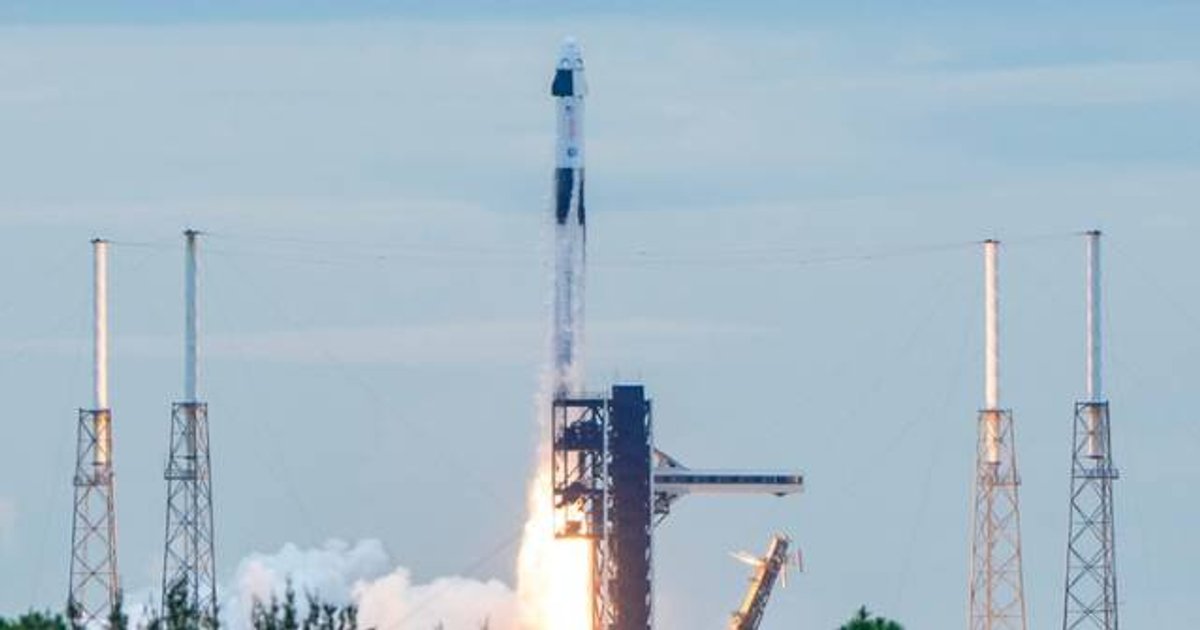
SpaceX marked a remarkable week in spaceflight history with two landmark achievements: the Starship rocket successfully entering Earth orbit for the first time on September 30, followed by the Crew-13 astronaut launch on October 1 that saw Jessica Watkins become the first Black woman to command a spacecraft into orbit. The Starship test flight, which deployed 26 next-generation Starlink satellites, was briefly threatened when one of three main engines shut down early, prompting mission control to shorten the 10-hour flight to just 3 hours. The following day, a four-person crew launched aboard a Falcon 9 rocket from Cape Canaveral Space Force Station, beginning an eight-hour journey to the International Space Station where they will remain until spring 2027.
Key Points
- SpaceX's Starship, the largest rocket ever built with nearly five times the payload capacity of the Falcon 9, completed its 14th test flight on September 30, becoming the first to reach Earth orbit and deploying 26 new-generation Starlink satellites to join the existing constellation of 11,000 satellites
- During the Starship mission, one of three main engines shut down prematurely during flight, leading SpaceX's live broadcast to initially suggest the rocket might not achieve orbit; however, after tense minutes, mission control determined the remaining engines could sustain the mission and proceeded to deploy all satellites
- Jessica Watkins, a geologist who previously worked on NASA's Curiosity Mars rover a decade ago, became the first Black woman to command a spacecraft into orbit upon reaching orbit, marking a historic milestone in spaceflight diversity
- The Crew-13 mission, comprising NASA astronauts Watkins and Luke Delaney, Canadian Air Force Colonel Joshua Kutrik, and Russian former submarine sailor Sergei Zhetyaratnikov, launched after a three-week delay caused by capsule fuel system leaks
- Canadian astronaut Kutrik will become the fourth space traveler to become a father during an orbital mission, with his wife Heather expected to give birth to their third child in late November, a tradition NASA has facilitated since 2004
Why It Matters
These consecutive successes demonstrate SpaceX's growing dominance in commercial spaceflight, with the Starship's orbital capability positioning the company to eventually replace its workhorse Falcon 9 rocket with a vehicle capable of carrying unprecedented payloads. The crewed mission further cements SpaceX as NASA's primary partner for human spaceflight, with this being the 13th crew rotation mission since the commercial crew program began, underscoring how private industry has transformed access to low Earth orbit .
These consecutive successes demonstrate SpaceX's growing dominance in commercial spaceflight, with the Starship's orbital capability positioning the company to eventually replace its workhorse Falcon 9 rocket with a vehicle capable of carrying unprecedented payloads. The crewed mission further cements SpaceX as NASA's primary partner for human spaceflight, with this being the 13th crew rotation mission since the commercial crew program began, underscoring how private industry has transformed access to low Earth orbit .