Four Best Autumn Spots Across China to Admire Fragrant Osmanthus Flowers
AM730 · 1 SOURCESabout 5 hours ago2 MIN
Summary
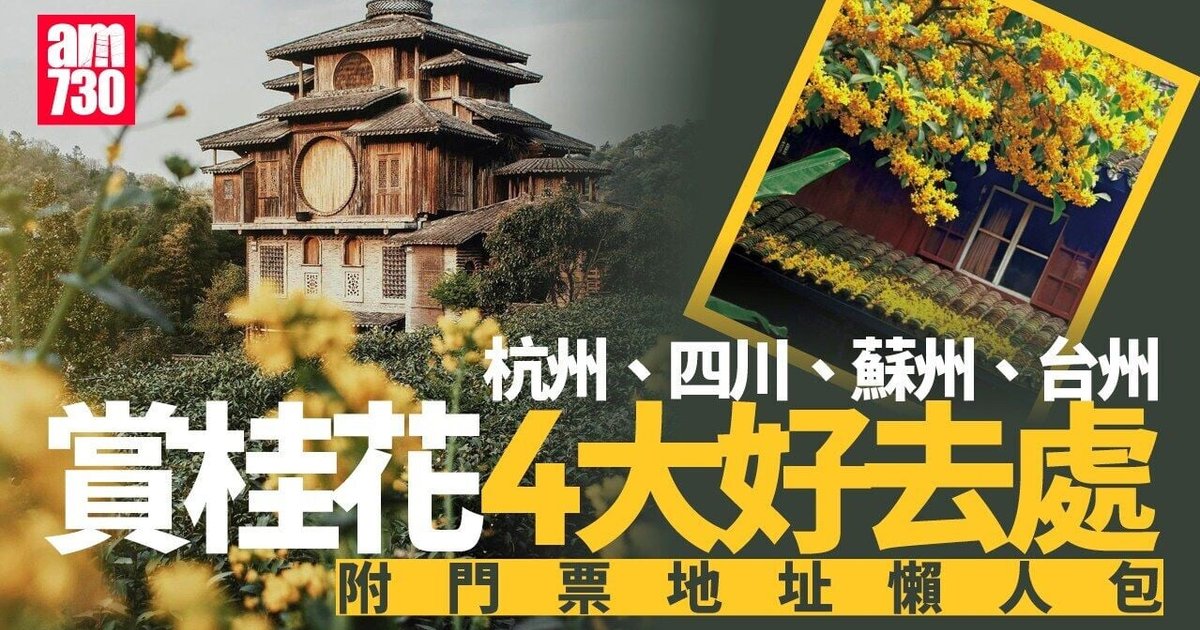
As the Mid-Autumn Festival approaches, osmanthus flowers are blooming across China, filling the air with their delicate sweet fragrance. Four destinations stand out for their spectacular displays: Manjue Valley in Hangzhou, Qingyang Palace in Chengdu, Canglang Pavilion in Suzhou, and Guoqing Temple in Tiantai. These locations offer visitors a chance to experience traditional Chinese autumn culture through centuries-old gardens and ancient temples adorned with golden osmanthus blossoms.
Key Points
- Hangzhou's Manjue Valley (Manjue Valley, Hangzhou) features over 7,000 osmanthus trees in a tranquil valley south of West Lake, with its "Full Gulang Rain" tradition inscribed as an intangible cultural heritage in 2006
- Qingyang Palace (Qingyang Palace, Chengdu) in Chengdu, known as the "foremost Taoist temple of western Sichuan," offers osmanthus blooms among ancient architecture, with admission at 10 yuan for adults and 5 yuan for students
- Canglang Pavilion (Canglang Pavilion, Suzhou) in Suzhou, the city's oldest classical garden dating to the Northern Song Dynasty, combines osmanthus fragrance with bamboo shadows, charging 15 yuan entry
- Guoqing Temple (Guoqing Temple, Tiantai) in Tiantai, Zhejiang, a 1,400-year-old Buddhist temple and birthplace of Tiantai Buddhism, offers free admission and a serene autumn experience among ancient halls and ginkgo trees
- Hangzhou locals traditionally enjoy osmanthus by drinking West Lake Longjing tea beneath the trees, allowing falling petals to drift into their cups for a unique autumn ritual
Why It Matters
For Hong Kong readers seeking autumn travel destinations beyond the city, these four locations represent centuries of Chinese cultural heritage centered on seasonal appreciation of nature. The preservation of osmanthus-viewing traditions—from Hangzhou's intangible cultural heritage designation to the contemplative atmosphere of ancient temples—demonstrates how traditional Chinese seasonal customs continue to thrive in modern China, offering meaningful travel experiences rooted in literary and spiritual history .
For Hong Kong readers seeking autumn travel destinations beyond the city, these four locations represent centuries of Chinese cultural heritage centered on seasonal appreciation of nature. The preservation of osmanthus-viewing traditions—from Hangzhou's intangible cultural heritage designation to the contemplative atmosphere of ancient temples—demonstrates how traditional Chinese seasonal customs continue to thrive in modern China, offering meaningful travel experiences rooted in literary and spiritual history .