John Lee says re-election not current focus
HK01 · 2 SOURCESabout 4 hours ago5 MIN
Summary
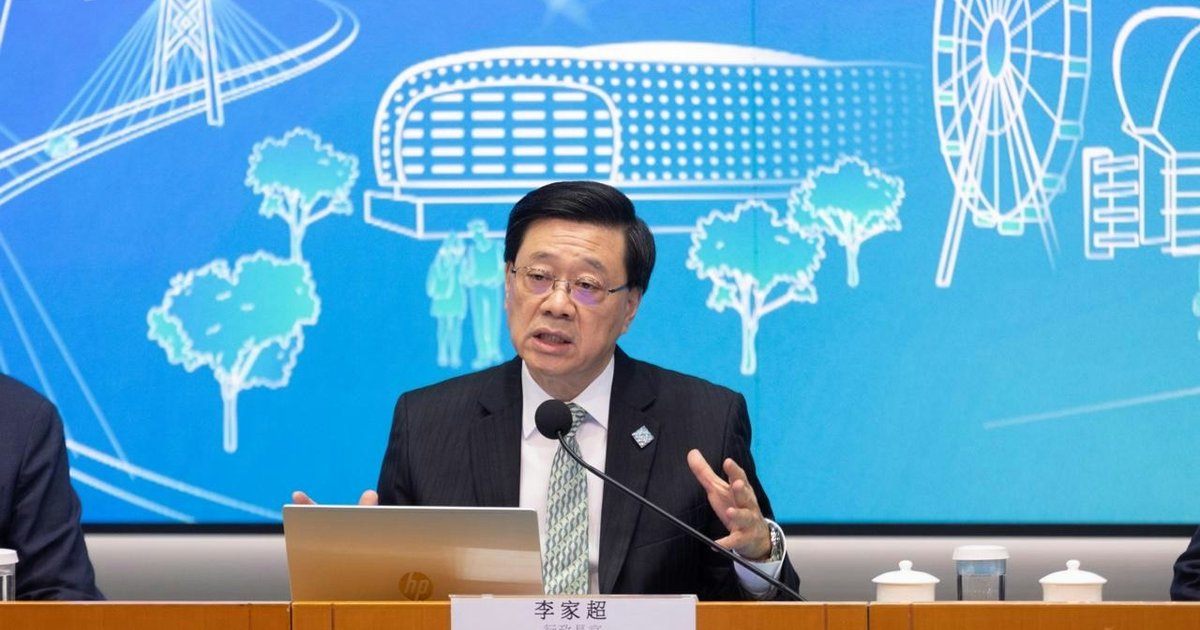
Chief Executive John Lee Ka-chiu (李家超) said in a television interview that anyone serving as Hong Kong's leader must remain free of distractions, as he was asked whether he would seek another term. He said his immediate task is to do his current work well, while also arguing that the Northern Metropolis and innovation and technology can strengthen Hong Kong's growth if implemented effectively
Key Points
- Lee said he would not speculate on re-election and that a chief executive must stay mentally focused on governing and finishing current tasks properly.
- Speaking on the television programme “On the Record”, Lee said Hong Kong's Five-Year Plan sets an indicative GDP growth target within a reasonable range
- Lee described the target as pragmatic because Hong Kong is an externally oriented economy affected by changing trade conditions beyond its control
- He said the Northern Metropolis is a breakthrough point and that stronger economic growth would be normal if the project is delivered well
- On Hong Kong's latest unemployment rate of 3.8%, Lee said sudden changes make forecasts difficult and the government should communicate cautiously
- Asked about the Tai Po Hong Fuk Court fire, Lee said the incident exposed systemic and implementation problems and the government must prevent a repeat.
- Lee said the Policy Address has already set out priority reforms, with broader reforms to follow after an independent committee submits its report.
- He also said performance indicators in the Five-Year Plan are not designed for reporting to Beijing, adding that the purpose of duty visits is to reassure the country
Why It Matters
Lee's remarks frame his final year of the current term around delivery rather than electoral positioning, while linking his administration's credibility to reform after the Hong Fuk Court fire. His comments also show that the government is tying future growth expectations to the Northern Metropolis and innovation agenda, even as it avoids firm predictions on unemployment and external economic risks