Queen Mary Hospital Introduces Breakthrough Technology for Post-Prostate Cancer Urinary Incontinence
AM730 · 2 SOURCESabout 2 hours ago2 MIN
Summary
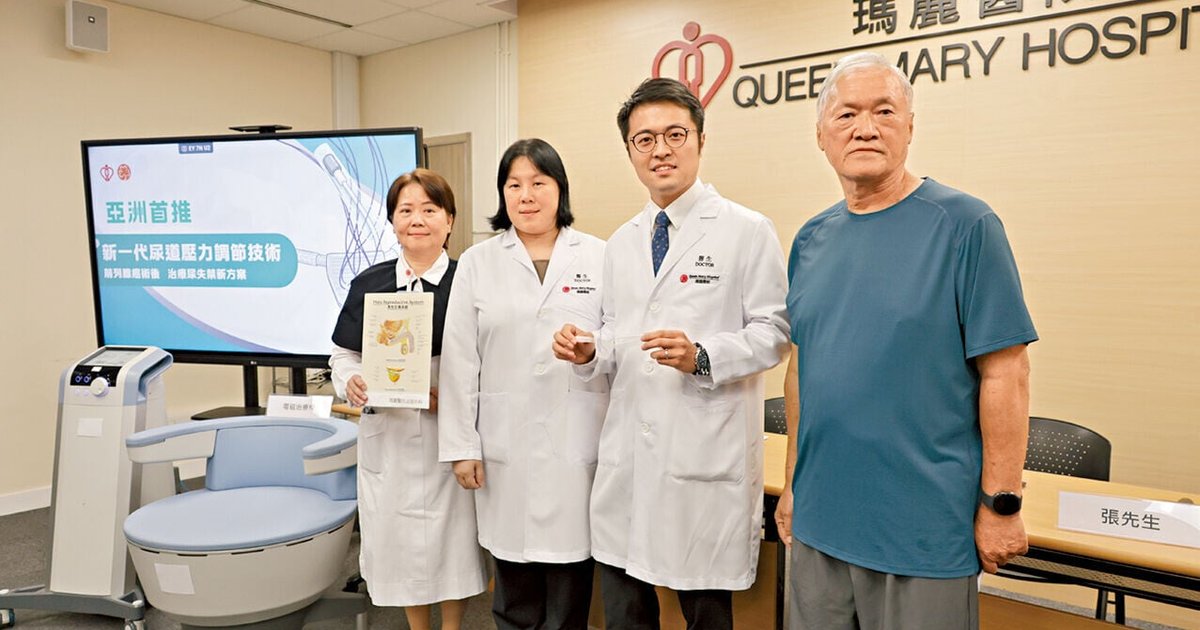
Prostate cancer is the third most common cancer among males in Hong Kong, with treatment often leading to long-term urinary incontinence as a side effect . Queen Mary Hospital has introduced a groundbreaking new generation urethral pressure regulation technology, marking the first application of this technique in Asia . The procedure involves placing a fillable silicone water balloon in the perineum to support the urethral sphincter, allowing patients to urinate normally without manual intervention . The hospital has successfully completed 16 cases, with a component replacement rate of less than 6% over five years . Patient outcomes have been highly positive, with most reporting substantial improvement in quality of life .
Key Points
- Approximately 1 in 10 prostate cancer patients experience significant urinary incontinence after radical prostatectomy or radiotherapy
- The new technology places a silicone water balloon in the perineum to gently support urethral muscles from outside
- A subcutaneous injection port under the scrotum allows post-operative adjustment of water volume to fine-tune continence
- Unlike traditional artificial urinary sphincters, no manual pumping is required before urination
- 71-year-old patient Mr. Cheung, diagnosed in 2022, reports only minimal leakage during exercise after the procedure
Why It Matters
This innovative technology offers new hope for prostate cancer survivors suffering from urinary incontinence, a condition that significantly impacts daily life and mental wellbeing . By reducing the 5-year component replacement rate to under 6%, the treatment provides a more durable and cost-effective solution for public healthcare patients .
This innovative technology offers new hope for prostate cancer survivors suffering from urinary incontinence, a condition that significantly impacts daily life and mental wellbeing . By reducing the 5-year component replacement rate to under 6%, the treatment provides a more durable and cost-effective solution for public healthcare patients .