Rising Japan Housing Costs Push Buyers Toward 'Stigmatized' Properties
SingTao · 1 SOURCESabout 3 hours ago7 MIN
Summary
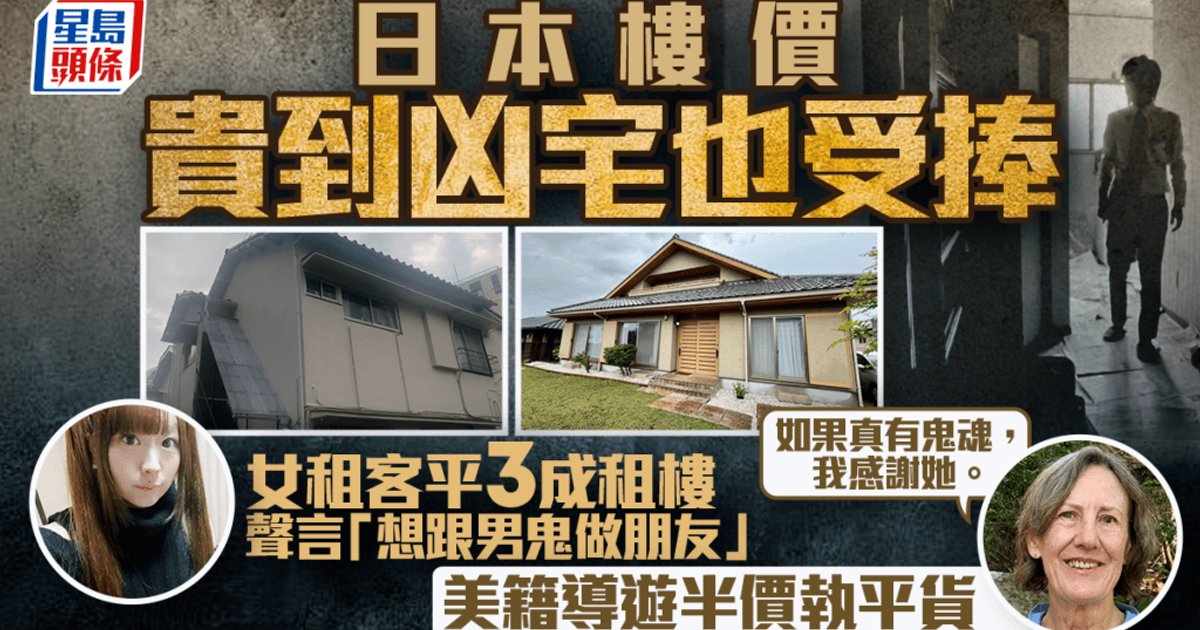
As Japan's housing market continues to surge, many buyers and renters are increasingly turning to stigmatized properties—homes where suicides, murders, or solitary deaths occurred—in search of more affordable options. A Tokyo woman secured a Setagaya apartment at nearly 30 percent below market rate after being told a former tenant died by suicide inside, while a 69-year-old American tour guide purchased a Kagoshima house at half the typical price following disclosure of a previous occupant's solitary death. A 2025 survey found over half of Japanese respondents would consider renting such properties if the discount was sufficient .
Key Points
- A Tokyo underground idol identified as Ryua (a pseudonym) pays 45,000 yen (approximately HK$2,250) monthly for a 269-square-foot Setagaya unit, roughly 30 percent below the market rate of 62,000 yen (HK$3,100), after a previous tenant died by suicide inside .
- The 69-year-old American tour guide Diane Tincher, who has lived in Japan for nearly 40 years, purchased a three-bedroom detached house in Kagoshima's countryside for 20 million yen (HK$1.02 million)—less than half the typical 45 million yen (HK$2.3 million) asking price—after the agent disclosed that an elderly woman had died alone in the property .
- Japan's Ministry of Land, Infrastructure, Transport and Tourism established guidelines in 2021 requiring agents to proactively disclose murders, suicides, fire-related deaths, or cases where bodies remained undiscovered for extended periods; rental disclosures apply for three years post-incident while sales require indefinite disclosure .
- The Oshimaland website (大島てる), founded in 2005 in Tokyo and later expanded nationally and internationally in 2011, operates on a crowdsourced model allowing citizens to submit property locations and incident details .
- Property consultant Kodama Kazutoshi (兒玉和俊) established Kachimode to offer scientific ghost investigations, conducting overnight stays in stigmatized properties with cameras, thermal imaging, electromagnetic field detectors, barometers, thermometers, and IC recording devices .
Why It Matters
This trend reflects how Japan's broader housing affordability crisis is reshaping cultural attitudes toward traditionally taboo topics, potentially offering a pathway to homeownership for younger generations priced out of conventional markets. The emergence of professional ghost investigation services and crowdsourced disclosure databases signals the growing mainstream acceptance—and market legitimization—of stigmatized properties as a practical housing solution .
This trend reflects how Japan's broader housing affordability crisis is reshaping cultural attitudes toward traditionally taboo topics, potentially offering a pathway to homeownership for younger generations priced out of conventional markets. The emergence of professional ghost investigation services and crowdsourced disclosure databases signals the growing mainstream acceptance—and market legitimization—of stigmatized properties as a practical housing solution .