12-Year-Old Skater Wong Yeuk-Ching Misses First Day of Secondary School to Train for Nagoya Asian Games
SingTao · 1 SOURCESabout 3 hours ago2 MIN
Summary
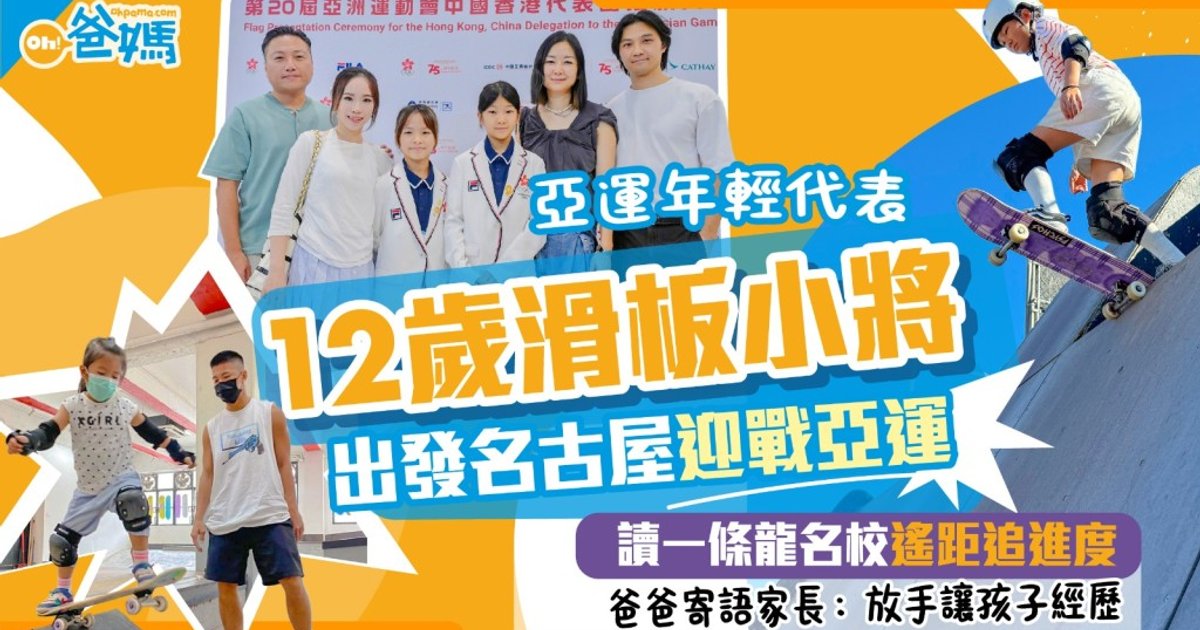
Twelve-year-old Hong Kong skateboarder Wong Yeuk-Ching, known as Kamus, has chosen an unconventional start to her secondary school journey. Rather than attending the first month of classes at HKBU Affiliated School Wong Kam Fai Secondary and Primary School, she is in Nanjing pursuing her dream of Asian Games glory. As one of Hong Kong's youngest athletes at the Nagoya Asian Games, Kamus competes in the women's park skateboarding event, having departed for mainland China in late July to begin intensive preparations .
Key Points
- Kamus Wong, a Secondary 1 student at HKBU Affiliated School Wong Kam Fai, applied for school leave starting from the new academic year to train in Nanjing
- The training regimen in Nanjing far exceeds her previous schedule, ramping up from four to five sessions per week in Hong Kong to daily sessions, six hours per day, seven days a week
- Mainland coaches maintain exacting standards, demanding technical precision while pushing Kamus to break through her limits and master new tricks
- Kamus conquered her fear of the large "volcano" obstacle that had intimidated her since last year, finally committing to the jump after months of psychological struggle
- Her father revealed the family made a special exception for this leave, as the Asian Games only occurs every four years and represents a rare opportunity
Why It Matters
Kamus's journey exemplifies the significant sacrifices young athletes and their families make to compete on the international stage. Her story also highlights how Hong Kong's flexible education system supports student-athletes in balancing academic commitments with elite sports training. As the Nagoya Asian Games approach, Kamus represents both the promising future of Hong Kong skateboarding and the broader cultural shift of young people pursuing non-traditional athletic pathways with family support .
Kamus's journey exemplifies the significant sacrifices young athletes and their families make to compete on the international stage. Her story also highlights how Hong Kong's flexible education system supports student-athletes in balancing academic commitments with elite sports training. As the Nagoya Asian Games approach, Kamus represents both the promising future of Hong Kong skateboarding and the broader cultural shift of young people pursuing non-traditional athletic pathways with family support .