World Humanoid Robot Games Opens in Beijing with Record Participation
Bastillepost · 2 SOURCESabout 2 hours ago2 MIN
Summary
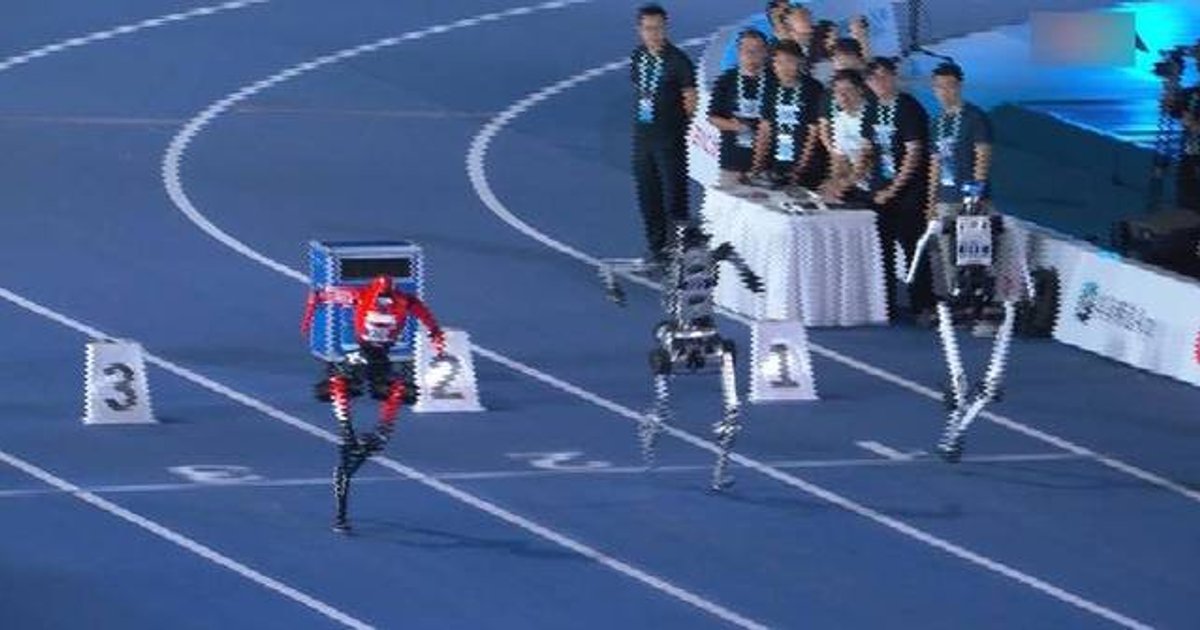
The second World Humanoid Robot Games launched in Beijing on Saturday, marking a 138 percent increase in participating teams compared to the inaugural event held in 2025. The five-day competition, running through August 26, features 51 events and more than 1,300 matches at the National Speed Skating Arena .
Key Points
- 666 teams from 16 countries brought 2,056 humanoid robots to compete, with the scale described as unprecedented in the opening ceremony .
- Team Tianzhuo won the 100-meter preliminaries with 9.39 seconds, beating the human world record of 9.58 seconds set by Usain Bolt .
- Hundreds of humanoid robots performed synchronized marching formations, waltz, street dance, and traditional tai chi at the opening ceremony .
- The competition upgraded from single-robot to two-robot head-to-head format, increasing intensity and entertainment value .
- A dedicated Robot Village with Wi-Fi 7 and AI network management ensures stable command transmission with latency under 10 milliseconds .
Why It Matters
The robot games highlight China's rapid advancement in humanoid robotics, with NVIDIA CEO Jensen Huang's daughter Madison Huang attending the concurrent World Robot Conference as a signal of accelerating international collaboration in the Asian robotics ecosystem . The integration of traditional Chinese sports like tai chi and touhu alongside conventional athletics demonstrates how emerging technologies are being adapted for diverse cultural contexts, setting a precedent for future robot-human competitions worldwide.
The robot games highlight China's rapid advancement in humanoid robotics, with NVIDIA CEO Jensen Huang's daughter Madison Huang attending the concurrent World Robot Conference as a signal of accelerating international collaboration in the Asian robotics ecosystem . The integration of traditional Chinese sports like tai chi and touhu alongside conventional athletics demonstrates how emerging technologies are being adapted for diverse cultural contexts, setting a precedent for future robot-human competitions worldwide.