Taiwan Coast Guard Repels 16 Mainland Vessels in Coordinated Maritime Operation
SCMP · 2 SOURCESabout 2 hours ago2 MIN
Summary
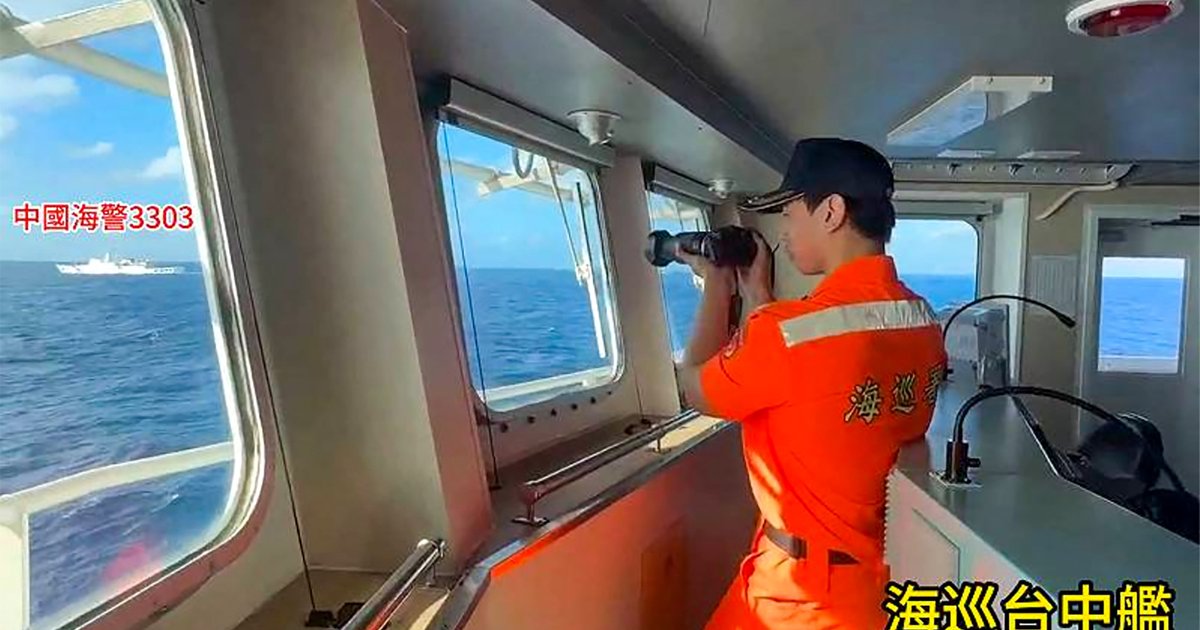
Taiwan's Coast Guard Administration (CGA) announced on Sunday that it successfully repelled 16 mainland Chinese vessels—including coast guard ships, research vessels, and fishing boats—that conducted a coordinated multi-pronged operation in waters around Taiwan. The vessels operated simultaneously in four locations: east of Hualien, south of Pingtung, southwest of Kaohsiung, and near the Taiwan-controlled Dongsha Islands. The CGA immediately dispatched monitoring vessels and broadcast warnings ordering the mainland ships to leave the restricted waters .
Key Points
- The operation involved 16 mainland vessels: 12 coast guard and research ships, plus 4 fishing boats, operating simultaneously on Sunday .
- Two mainland coast guard ships circled Dongsha Island; Taiwan deployed 2 coast guard vessels to monitor them at close range and broadcast warnings .
- The CGA described the activities as "hybrid warfare" and accused Beijing of pursuing "law enforcement in name, expansion of authority in reality" .
- On October 1, a Taiwan coast guard vessel used water cannons against a mainland fishing boat near Dongsha, causing damage and triggering Beijing's condemnation .
- Ma Chen-kun, a professor of PLA affairs at National Defence University in Taoyuan, said Beijing is shifting from navy-led grey-zone operations to coast guard and maritime law enforcement tactics .
Why It Matters
The coordinated maritime operation demonstrates Beijing's evolving strategy of applying pressure around Taiwan through civilian maritime agencies rather than military assets, making escalation harder to counter diplomatically . This approach—described by experts as "leaving the islands but taking away the surrounding seas"—gradually squeezes Taiwan's maritime jurisdiction while maintaining plausible deniability short of outright conflict .
The coordinated maritime operation demonstrates Beijing's evolving strategy of applying pressure around Taiwan through civilian maritime agencies rather than military assets, making escalation harder to counter diplomatically . This approach—described by experts as "leaving the islands but taking away the surrounding seas"—gradually squeezes Taiwan's maritime jurisdiction while maintaining plausible deniability short of outright conflict .