Kwai Chung Driver Filmed With Toddler on Lap
SingTao · 5 SOURCES41 minutes ago2 MIN
Summary
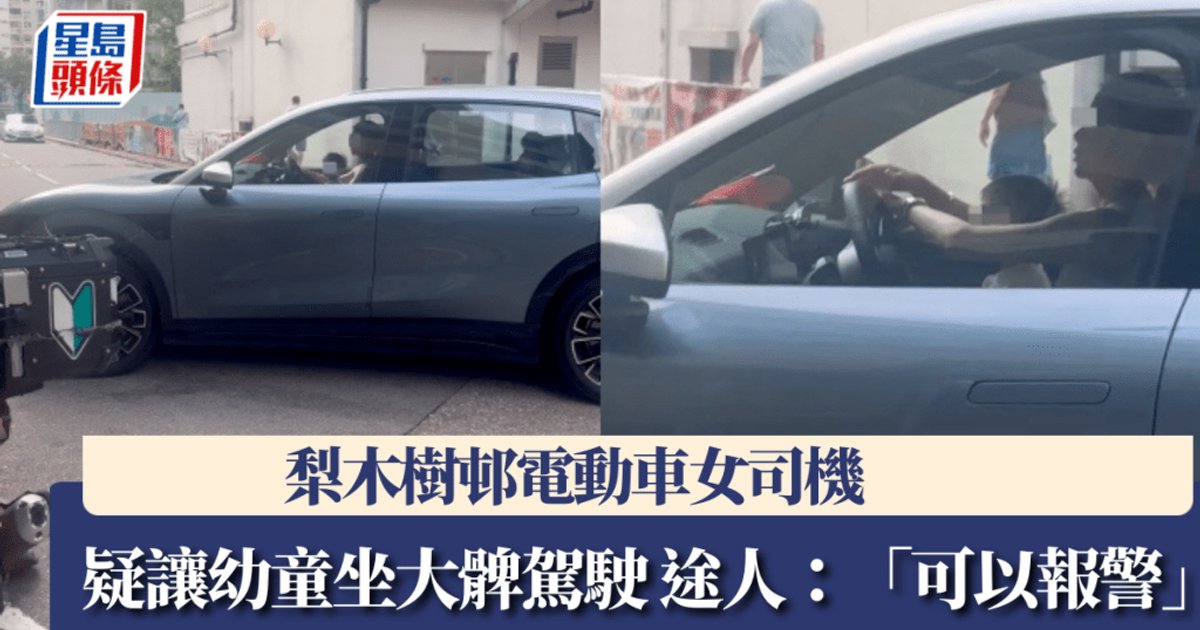
Fresh reporting says the person who posted the clip has already filed a report through the Electronic Police Report Centre after the footage spread online. The video, about 12 seconds long, appears to show a female driver operating an electric private car with dual Hong Kong-Mainland plates near Kin Shue House in Lei Muk Shue Estate, Kwai Chung, while a toddler sits on her lap. Witness audio in the clip includes repeated horn sounds and a woman saying police could be called, while the driver and a rear passenger are seen waving as the car moves off. The incident has drawn criticism online and prompted renewed discussion of child-restraint rules and whether the conduct could amount to dangerous driving.
Key Points
- The clip was said to have been filmed at about 3:30pm on April 21 on On Yam Road outside Kin Shue House, Lei Muk Shue Estate in Kwai Chung.
- Footage shows the female driver making a U-turn near the middle of the road, with an approximately two-year-old boy seated between her arms on her lap.
- A motorcycle came alongside during filming, several horns were heard, and a passerby said in Cantonese that police could be called.
- on.cc reported the driver also appeared not to be wearing a seat belt, while the car later drove away and both front and rear occupants waved outward
- Under the 2024 Road Traffic safety-equipment amendment, children under eight must use child restraints unless at least 1.35 metres tall; offenders face a HK$230 fixed penalty and up to HK$2,000 on conviction.
Why It Matters
The legal risk may extend beyond a seat-belt or child-restraint ticket, because a barrister cited by HK01 said an adult who lets a young child effectively take part in driving could face a dangerous-driving charge carrying possible immediate imprisonment on conviction. For Hong Kong families, the case is a stark reminder that child-restraint rules apply in both front and rear seats and that a sudden stop or airbag deployment can sharply increase injury risk for very young passengers.
The legal risk may extend beyond a seat-belt or child-restraint ticket, because a barrister cited by HK01 said an adult who lets a young child effectively take part in driving could face a dangerous-driving charge carrying possible immediate imprisonment on conviction. For Hong Kong families, the case is a stark reminder that child-restraint rules apply in both front and rear seats and that a sudden stop or airbag deployment can sharply increase injury risk for very young passengers.