Jelly Masses in South Korean Lake Identified as Invasive Bryozoan Species
Bastillepost · 2 SOURCESabout 3 hours ago5 MIN
Summary
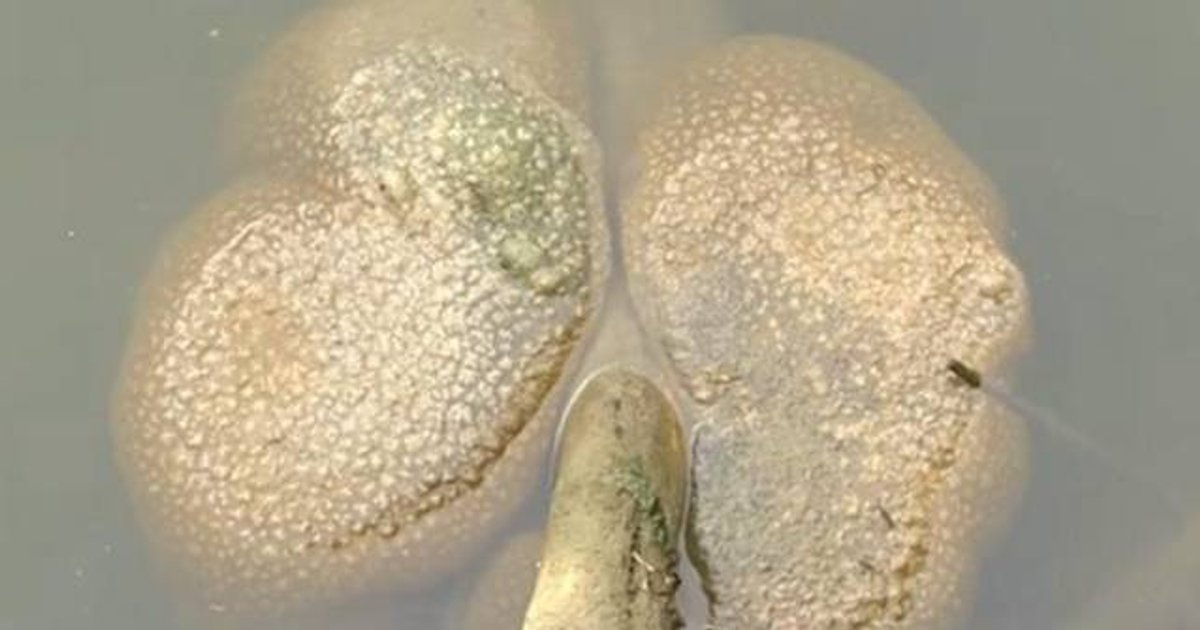
Large semi-transparent gelatinous masses discovered in Paro Lake (破虜湖) in Hwacheon County, Gangwon Province, South Korea, have been identified as colonies of Pectinatella magnifica, a freshwater bryozoan considered an invasive species in the country . The unusual formations, some as large as rugby balls, appeared on October 17 near Love Island (愛心島) in shallow waters . Local fishermen report that the mass occurrences coincide with reduced fish catches, raising ecological concerns about the lake's aquatic environment .
Key Points
- The gelatinous masses were found concentrated in the reclaimed area connecting land to Love Island, where water flow is relatively stagnant and sediments are densely distributed .
- A 67-year-old local fisherman reported that these colonial organisms proliferate during unusually dry or hot weather, directly correlated with declining fish catches .
- Pectinatella magnifica is not an insect or parasite but a colony of countless microscopic aquatic animals that filter-feed on tiny organisms and organic particles .
- South Korea's Ministry of Environment and National Institute of Environmental Sciences studied the species in 2014 and found no clear ecological toxicity or direct harmful effects .
- This marks the first time such large-scale appearances have been recorded in Paro Lake, distinguishing it from the 2014 outbreak that affected multiple South Korean waterways .
Why It Matters
The emergence of these invasive bryozoan colonies in Paro Lake highlights how environmental changes can favor non-native species proliferation, potentially disrupting local fishing communities . While the species itself poses no direct toxicity, environmental groups warn that its mass appearance may signal broader water quality issues, including slowed water flow and excessive algae growth, warranting continued ecological monitoring .
The emergence of these invasive bryozoan colonies in Paro Lake highlights how environmental changes can favor non-native species proliferation, potentially disrupting local fishing communities . While the species itself poses no direct toxicity, environmental groups warn that its mass appearance may signal broader water quality issues, including slowed water flow and excessive algae growth, warranting continued ecological monitoring .