Hong Kong expands recycling with paper and battery plants
HK01 · 1 SOURCESabout 2 hours ago2 MIN
Summary
Hong Kong is building out local circular-economy infrastructure at Tuen Mun EcoPark, where a paper pulp mill with annual capacity above 100,000 tonnes and the city’s first large-scale power battery treatment facility have recently come into operation. The two projects target long-standing weaknesses in waste handling by creating local outlets for recovered paper and retired electric-vehicle batteries instead of relying mainly on exports
Key Points
- The Hong Kong government has set a 2050 carbon-neutrality target, and waste treatment is the city’s third-largest emissions source after power generation and transport
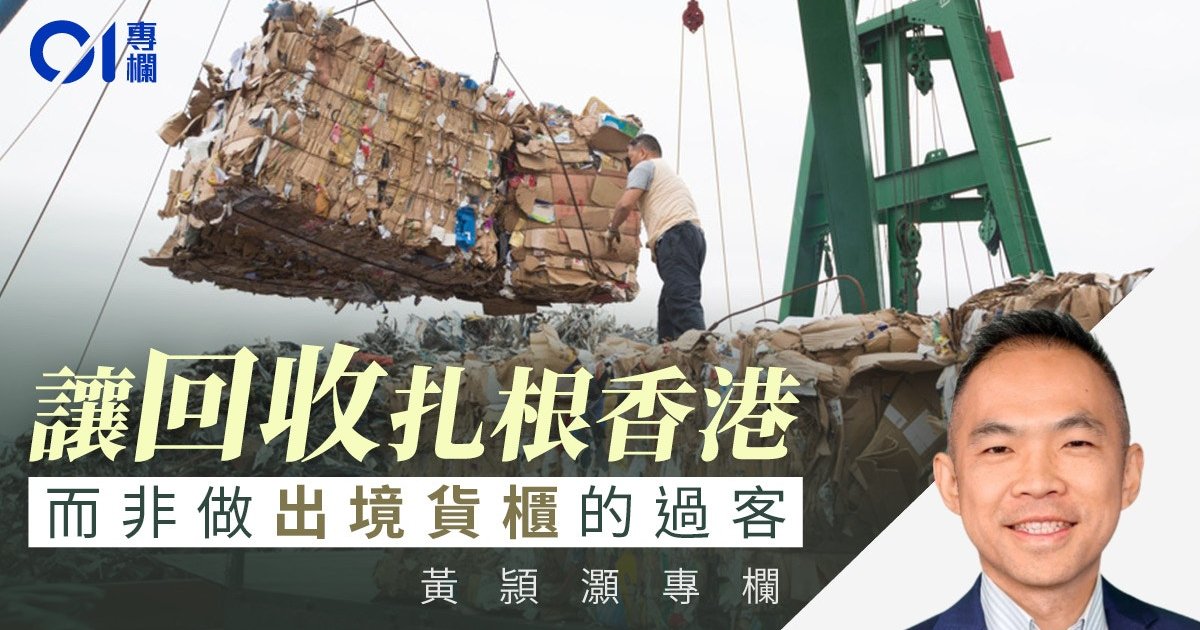
- At Tuen Mun EcoPark, the paper pulp plant runs two production lines, each able to process up to 1,500 tonnes of waste paper a day
- The plant can handle more than 700,000 tonnes of waste paper a year, exceeding Hong Kong’s roughly 500,000 tonnes of annual recovered paper output
- Environmental Protection Department data cited in the article said Hong Kong disposed of 3.85 million tonnes of municipal solid waste in 2024, including 886,000 tonnes of waste paper, or about 23%
- Hong Kong’s first large-scale power battery treatment facility began operating in June at EcoPark, with annual capacity of 10,000 tonnes for retired electric-vehicle batteries
Why It Matters
A stable local processing chain could make recyclers and waste pickers less vulnerable to overseas policy shifts and market swings that previously disrupted Hong Kong’s waste-paper trade. For residents, the benefits will depend not only on new plants but also on better source separation so more paper and batteries enter local recycling streams instead of landfills