Urban Renewal Authority Tokwawan Project Attracts Strong Developer Interest
SingTao · 1 SOURCES1 day ago2 MIN
Summary
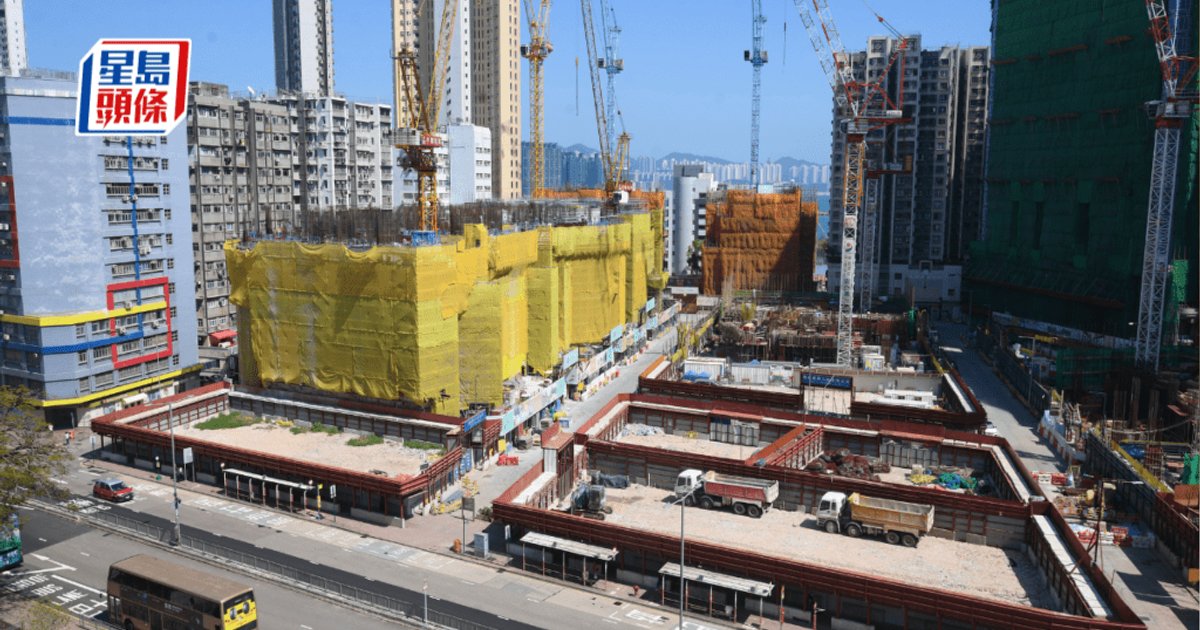
The Urban Renewal Authority's flagship Tokwawan Road/Wharrie Street redevelopment project reached a significant milestone today as it closed for development intention submissions. Originally planned for 900 units, the scheme has been expanded to approximately 1,050 residential units following approval to relax building height restrictions. Market analysts have valued the project between HK$3.9 billion and HK$4.8 billion, with industry observers anticipating strong developer interest given its strategic location and the precedent set by previous Small District Development initiatives.
Key Points
- The project site covers approximately 58,900 square feet with a plot ratio of 9 times, allowing residential gross floor area of about 442,000 square feet
- Building height has been increased from 140 metres to 144 metres above Principal Datum to accommodate two towers of 32 to 34 floors each
- The development will adopt Modular Integrated Construction (MiC) methods, earning a floor area exemption of approximately 39,800 square feet
- Two pedestrian footbridges will connect the estate to Tokwawan MTR Station and the adjoining Primus Place development
- The project forms the centerpiece of Victoria Cove Central, a new community integrating eight other ongoing redevelopment sites
Why It Matters
As the final project under Hong Kong's pioneering Small District Development model, this scheme sets a benchmark for large-scale urban renewal by test-driving comprehensive community integration through uniform design standards, pedestrian connectivity, and social welfare facilities. Its successful delivery could shape future urban renewal strategies across the territory, particularly as the government seeks to accelerate housing supply through innovative construction technologies.
As the final project under Hong Kong's pioneering Small District Development model, this scheme sets a benchmark for large-scale urban renewal by test-driving comprehensive community integration through uniform design standards, pedestrian connectivity, and social welfare facilities. Its successful delivery could shape future urban renewal strategies across the territory, particularly as the government seeks to accelerate housing supply through innovative construction technologies.