Chongqing Delivery Noodles Found with Livestock Microchip, Traced to Pig Tracking System
SingTao · 2 SOURCESabout 3 hours ago3 MIN
Summary
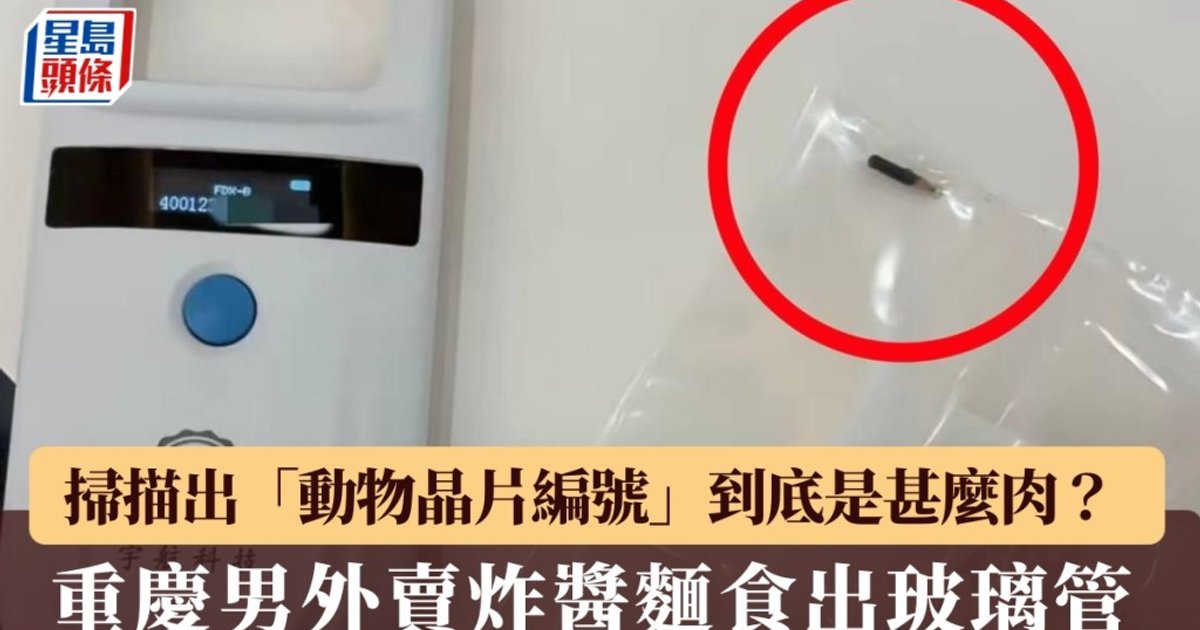
A food safety incident in Chongqing has drawn widespread attention after a netizen found a glass tube containing an animal microchip embedded in a delivery order of zhajiang noodles. The consumer, who placed the order through a food delivery platform on September 13, 2026, initially believed he had swallowed broken glass and suffered considerable distress. After contacting the merchant who failed to respond, he took the glass tube to a pet hospital for scanning, where a 15-digit animal identification number was successfully retrieved from the microchip inside .
The discovery triggered intense online speculation, with netizens raising concerns about whether the meat might originate from stolen pets or other questionable sources. The Chongqing Market Supervision Department intervened and conducted on-site inspections at the merchant's kitchen, testing the meat source. The department subsequently confirmed that the hard glass object was a modern livestock identification chip implanted in pigs for production tracking and traceability purposes, rather than a pet microchip typically implanted in cats or dogs .
The poster ultimately reached a civil settlement with the restaurant and set his original expose video to private status. However, the incident has highlighted significant loopholes in the pork supply chain, where tracking chips inserted for livestock management were not removed during slaughter and processing, ultimately reaching consumers through delivery orders .
Key Points
- The consumer placed a zhajiang noodles order via food delivery platform on September 13, 2026, and bit into a hard glass tube during the meal
- The glass tube contained a metal-core microchip that was successfully scanned at a pet hospital, yielding a 15-digit animal identification number
- Initial online reactions ranged from humor to alarm, with netizens joking about "two-legged lamb" (human meat) and questioning whether stolen pets were being processed
- The Chongqing Market Supervision Department confirmed the chip was a pig tracking device used in livestock production traceability systems, not a pet microchip
- The case exposed supply chain management failures, as the pig identification chip was not extracted during slaughter and passed through quality inspection into commercial distribution
Why It Matters
The incident reveals vulnerabilities in China's livestock traceability infrastructure, where tracking devices intended to ensure pork safety and origin verification may themselves become contamination risks if not properly removed during processing . While the official explanation provides some reassurance that the meat was pork rather than pet or human flesh, it underscores the need for stricter supply chain controls from farm to table to prevent foreign objects from entering food products . Consumer trust in food delivery platforms and restaurant kitchens has already been shaken, as evidenced by the immediate public assumption of the worst-case scenario upon learning of the discovery .
The incident reveals vulnerabilities in China's livestock traceability infrastructure, where tracking devices intended to ensure pork safety and origin verification may themselves become contamination risks if not properly removed during processing . While the official explanation provides some reassurance that the meat was pork rather than pet or human flesh, it underscores the need for stricter supply chain controls from farm to table to prevent foreign objects from entering food products . Consumer trust in food delivery platforms and restaurant kitchens has already been shaken, as evidenced by the immediate public assumption of the worst-case scenario upon learning of the discovery .