Belgian Physicist Francis Halzen Wins Nobel Prize in Physics for Neutrino Research
Thestandard · 3 SOURCESabout 3 hours ago2 MIN
Summary
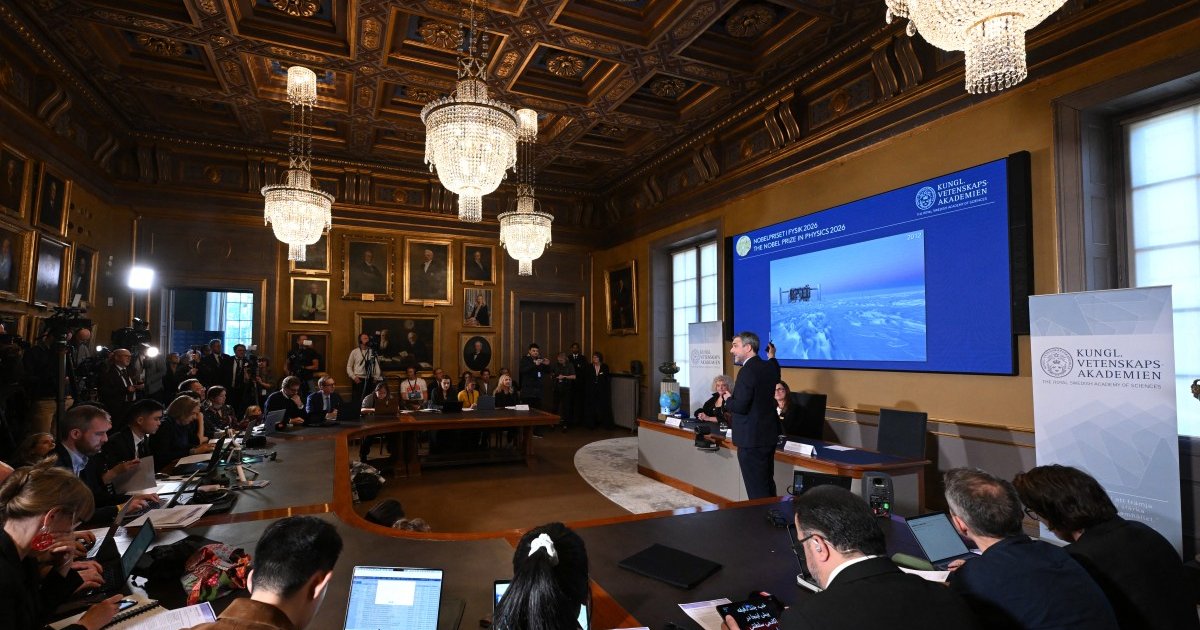
Belgian physicist Francis Halzen has been awarded the 2026 Nobel Prize in Physics for his groundbreaking work on neutrinos at the South Pole. The Royal Swedish Academy of Sciences announced on Tuesday that Halzen, 82, was honoured "for decisive contributions to the IceCube Neutrino Observatory and the discovery of high-energy neutrinos of astrophysical origin" . Speaking from Italy by telephone shortly after the announcement, Halzen expressed his surprise: "It was a great surprise, and I obviously didn't expect it. But it's a great pleasure to hear about this prize" .
Key Points
- Francis Halzen, born in Tienen, Belgium, is a professor at the University of Wisconsin–Madison and received the Nobel Prize in Physics 2026
- The IceCube Neutrino Observatory is a cubic kilometre of ice at the South Pole equipped with light sensors that can capture neutrinos from distant cosmic processes
- Ellen Moons, secretary general of the Royal Swedish Academy of Sciences, described this year's prize as being about "ghostly messengers from space"
- Halzen's research into capturing neutrinos dates back to the 1980s, and he led an international team of researchers and engineers to build the observatory
- The Nobel Prize is the second awarded this season, following Monday's Medicine Prize to Karl Deisseroth, Peter Hegemann, and Georg Nagel for optogenetics research
Why It Matters
The recognition highlights how Halzen's vision and scientific tenacity have created an entirely new form of astronomy, using neutrinos as messengers to study violent processes in the distant universe that cannot be observed through traditional light-based telescopes . This breakthrough enables scientists to detect cosmic events such as supernovae and black holes in ways previously impossible, opening unprecedented windows into the most energetic phenomena in the cosmos.
The recognition highlights how Halzen's vision and scientific tenacity have created an entirely new form of astronomy, using neutrinos as messengers to study violent processes in the distant universe that cannot be observed through traditional light-based telescopes . This breakthrough enables scientists to detect cosmic events such as supernovae and black holes in ways previously impossible, opening unprecedented windows into the most energetic phenomena in the cosmos.