China Commerce Minister Warns EU Against Protectionism in Auto Trade Talks
On.cc · 2 SOURCESabout 4 hours ago2 MIN
Summary
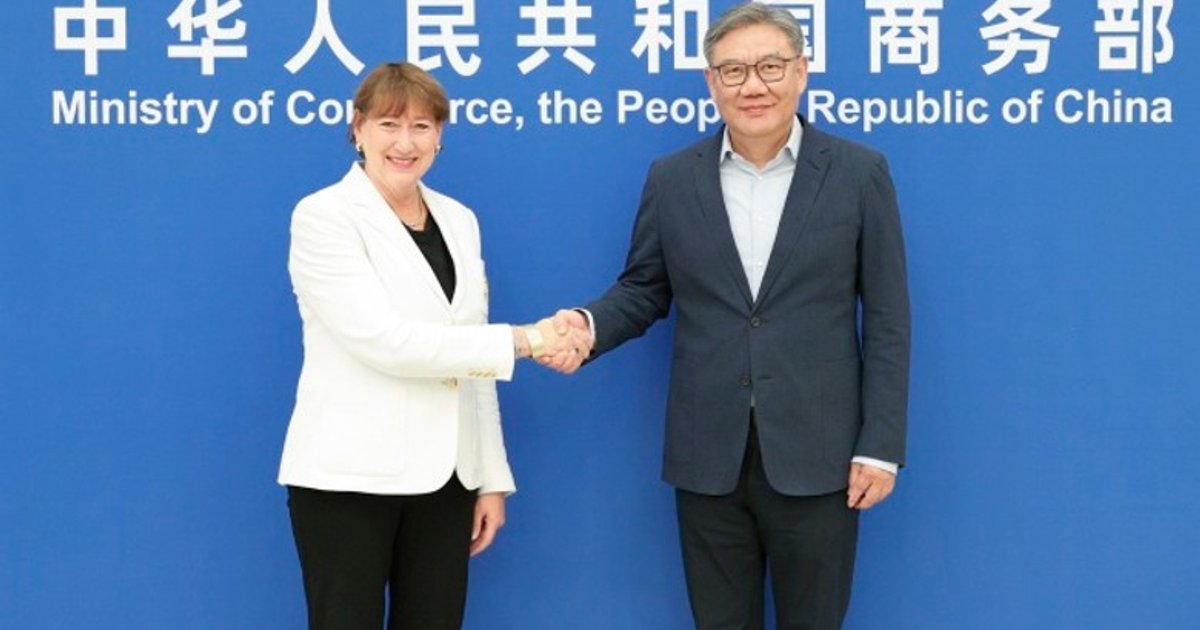
China's Commerce Minister Wang Wentao warned the European Union on Monday (September 21, 2026) against adopting protectionist measures that would restrict market access and create mutual exclusion globally. His comments came during separate meetings with German and European automobile industry leaders as trade tensions between Beijing and Brussels intensify over electric vehicle tariffs and market access issues. Wang emphasized that China views itself as a partner in resolving economic disputes rather than as the root cause of Europe's challenges. The meetings took place at the Ministry of Commerce in Beijing, with Wang calling for constructive dialogue through established consultation mechanisms.
Key Points
- Commerce Minister Wang Wentao met German Automobile Industry Association Chairman Muller in Beijing on September 21, discussing Sino-German auto industry cooperation and China-EU economic relations .
- Wang stressed that China is not the source of the EU's economic challenges but rather a partner in jointly resolving problems within the China-EU trade and investment consultation framework .
- Muller responded that improving competitiveness is the German auto industry's path forward, welcoming Chinese automotive and parts manufacturers to invest in Germany .
- Wang also held a video call with European Automobile Manufacturers Association Chairman Conlison, who also serves as Mercedes-Benz Group chairman, on the same day .
- Both industry associations committed to promoting dialogue between their respective governments and Beijing to avoid escalation of trade friction .
Why It Matters
The outcome of these consultations could significantly impact global automotive supply chains, with German manufacturers like Mercedes-Benz heavily invested in both the Chinese and European markets. As Hong Kong serves as a major financial hub connecting international investors to mainland enterprises, prolonged trade disputes could affect market sentiment and cross-border investment flows through the city. The stance taken by German industry leaders signals that major European businesses prefer engagement over confrontation with China.
The outcome of these consultations could significantly impact global automotive supply chains, with German manufacturers like Mercedes-Benz heavily invested in both the Chinese and European markets. As Hong Kong serves as a major financial hub connecting international investors to mainland enterprises, prolonged trade disputes could affect market sentiment and cross-border investment flows through the city. The stance taken by German industry leaders signals that major European businesses prefer engagement over confrontation with China.