Mary Hospital lift probe finds four causes
HK01 · 10 SOURCESabout 9 hours ago2 MIN
Summary
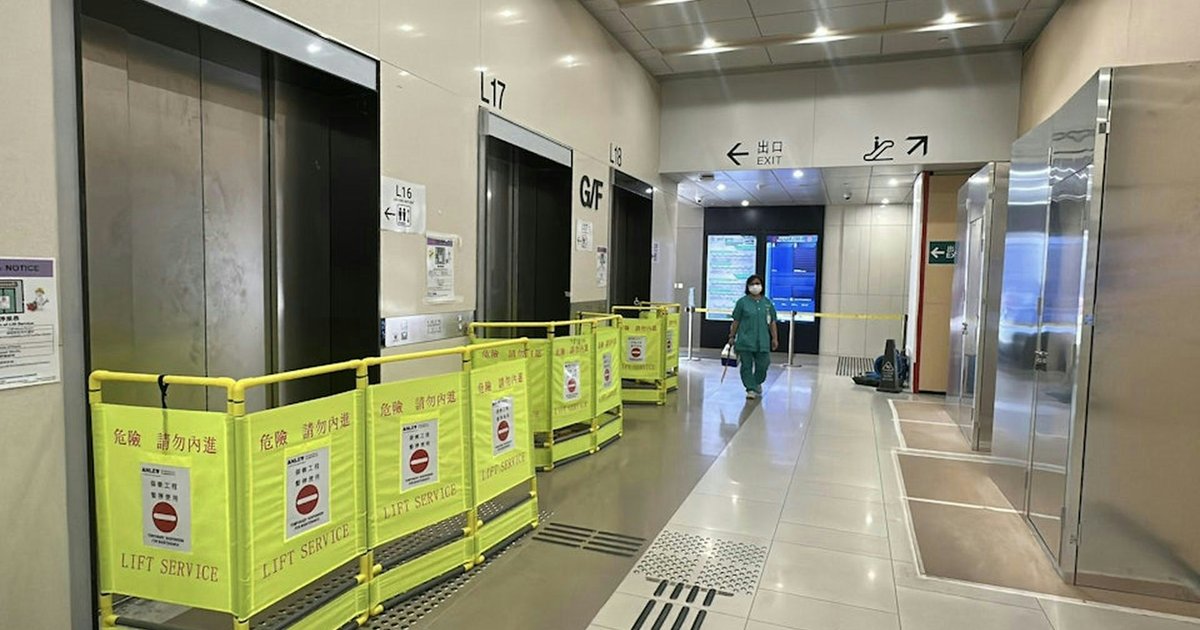
The Development Bureau’s investigation into the lift failures at Queen Mary Hospital’s Clinical Block 1 found that all 28 lifts had defects of varying degrees and that frequent breakdowns stemmed from four main causes. The government said the main responsibility lay with the main contractor and lift subcontractor, while failures in supervision and checking were also found among project personnel and public officers. Possible illegal acts uncovered during the probe have been referred to relevant law enforcement agencies, and the Architectural Services Department is discussing disciplinary procedures for involved staff. Repair work is still under way, with 18 lifts repaired by November 10 and seven reopened after acceptance tests, while full services in the new block will begin only after all 28 lifts are functioning normally.
Key Points
- The report identified four main causes: deviations in lift shaft dimensions and verticality, rail misalignment across floors, unbalanced car centres of gravity, and poor installation workmanship.
- Four lift shafts had especially serious deviations of about 62 to 82 millimetres in the 32-storey building, exceeding the usual permitted tolerance for that height range.
- The Development Bureau said the main contractor, Analogue Holdings’ project arm “On Bo” as named in Chinese reports, and lift subcontractor Anlev had multiple failings, including unauthorized concrete hacking and non-compliant installation work.
- The Architectural Services Department was criticised for weak gatekeeping, including approving a completion certificate on January 2, 2025 when five lifts still lacked operation permits.
- From September 2025 to January 2026, the building recorded 238 lift failures, including six reportable incidents, 18 passenger entrapments, and 100 faults involving lift components.
Why It Matters
The findings go beyond a single hospital project because they raise questions about how public works, lift certification and site supervision are checked before facilities open for use. For Hong Kong patients, staff and taxpayers, the immediate consequence is delayed commissioning of a major clinical building and pressure for tighter oversight of contractors, consultants and government departments.