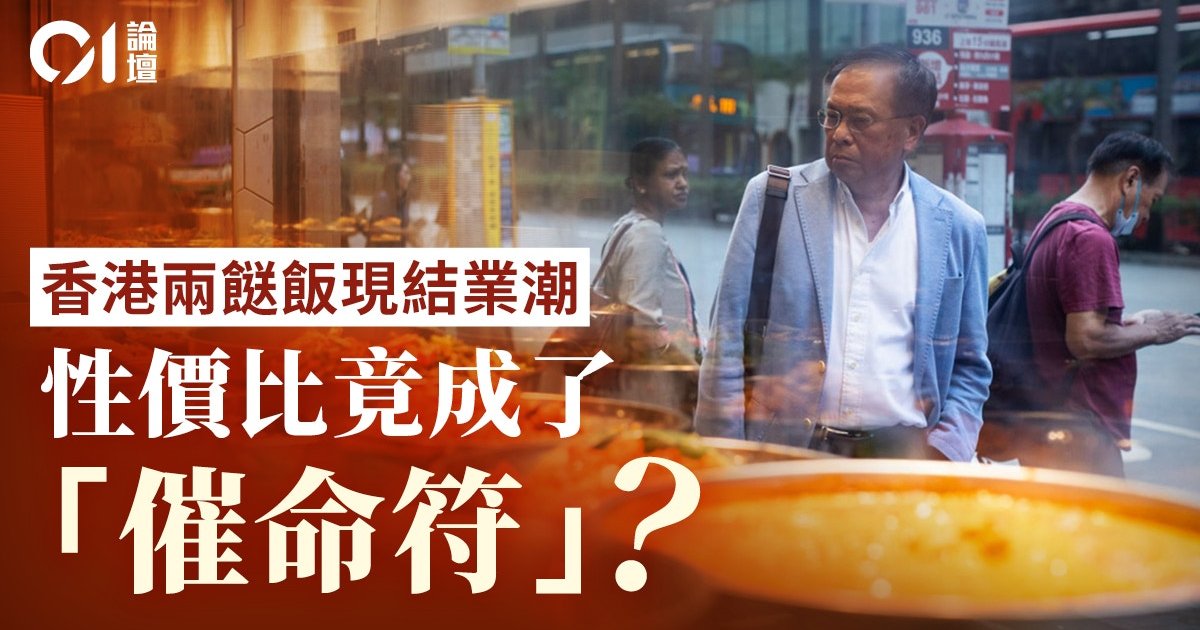
Who Collapsed Hong Kong's Budget Two-Dish Rice Phenomenon?
HK01 · 1 SOURCESabout 2 hours ago2 MIN
Summary
Hong Kong's beloved two-dish rice phenomenon, which surged during the COVID-19 pandemic as an affordable dining option for workers, is now experiencing a severe contraction with widespread closures across the city. The budget model that once promised easy profits is unraveling as landlords reclaim property and rents return to pre-pandemic levels, leaving many operators unable to sustain operations. Industry insiders say the market is entering a painful correction phase, with the survival threshold set at just 300 boxes per day.
Key Points
- Two-dish rice emerged during COVID-19 as demand for takeout surged and landlords offered steep rental discounts due to high vacancy rates
- A Causeway Bay flagship location commanded 220,000 HKD monthly rent, requiring nearly 200 box sales daily just to cover rent alone
- Wan Chai's Hennessy Road saw seven two-dish rice shops within just a few hundred meters, triggering destructive price wars down to 35 HKD for three dishes
- Labor shortages force operators to pay kitchen staff at least 20,000 HKD monthly, with wages consuming up to one-third of total revenue
- Food waste from unsold dishes discarded nightly accounts for roughly 10% of total ingredient costs
- Surviving shops typically fall into two categories: neighborhood "husband-and-wife" operations with legacy leases, or flexible multi-functional outlets
Why It Matters
The collapse of the two-dish rice boom illustrates a fundamental truth about Hong Kong's high-cost restaurant environment: business models detached from realistic cost structures cannot survive long-term, regardless of consumer demand . For Hong Kong diners, this signals a return to more sustainable pricing as the market purges unsustainable operators, while the remaining players must refocus on food safety and quality rather than pure price competition to endure.
The collapse of the two-dish rice boom illustrates a fundamental truth about Hong Kong's high-cost restaurant environment: business models detached from realistic cost structures cannot survive long-term, regardless of consumer demand . For Hong Kong diners, this signals a return to more sustainable pricing as the market purges unsustainable operators, while the remaining players must refocus on food safety and quality rather than pure price competition to endure.