Locally-Developed Water Tank Cleaning Robots Trialed at Hong Kong Housing Estates
Bastillepost · 2 SOURCESabout 2 hours ago2 MIN
Summary
Housing Bureau Chief Ho Chung-ray announced that water tank cleaning robots developed locally by the Hong Kong Centre for Construction Robotics (HKCRC) have been trialed at multiple public housing estates since May, offering a safe solution for high-risk confined space work. The robot has evolved to its fourth generation as of April 2026 and secured a gold medal at the Geneva International Invention Exhibition in March, drawing interest from Singapore, South Korea, and Middle East markets.
Key Points
- Housing Bureau and HKCRC signed a memorandum of understanding in January 2024 to explore smart construction and housing management solutions
- The water tank cleaning robot was officially launched in late 2025 and began trials at Tung Tau Estate, Hoi Ying Estate, and Lai Yiu Estate in May 2026
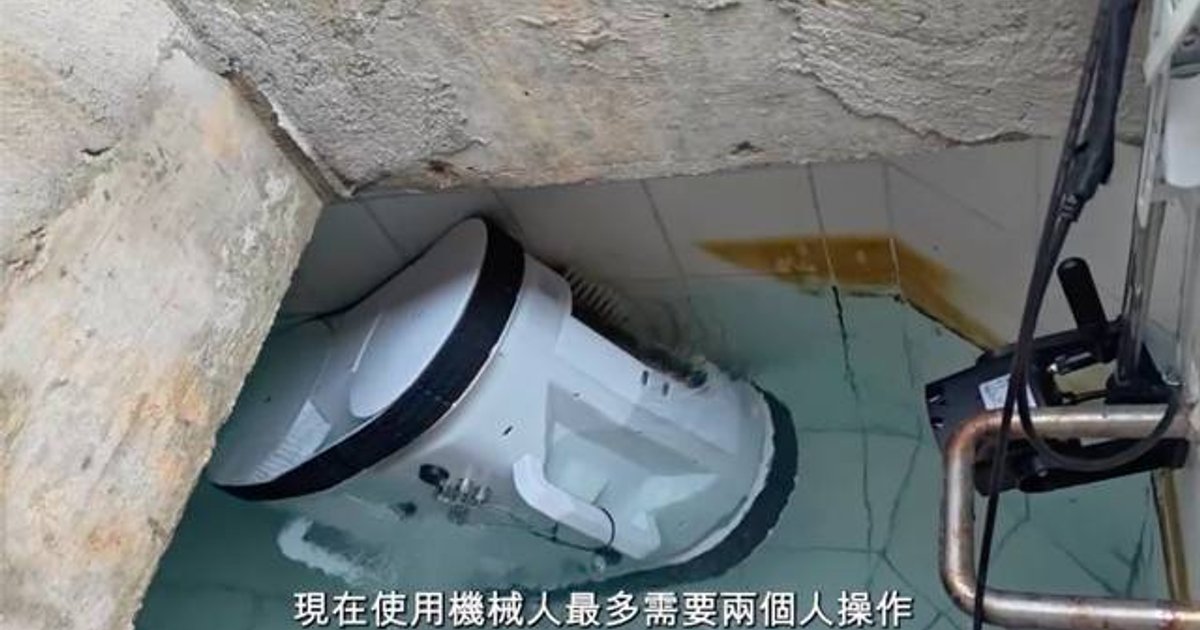
- Workers previously had to be lowered into water tanks for cleaning; now they can operate the robot remotely via a controller, watching live footage on the screen
- By April 2026, the robot reached its fourth generation with capabilities including cleaning, high-pressure washing, vacuum suction, disinfectant spraying, and AI-powered navigation up to 25 meters underwater
- The invention won a gold award at the Geneva International Invention Exhibition in March 2026, attracting business inquiries from Singapore, South Korea, and the Middle East
Why It Matters
The deployment of these robots represents a significant advancement in worker safety by eliminating the need for humans to enter confined water tanks, while also positioning Hong Kong's construction technology sector for international collaboration and mass production by the end of 2026 .
The deployment of these robots represents a significant advancement in worker safety by eliminating the need for humans to enter confined water tanks, while also positioning Hong Kong's construction technology sector for international collaboration and mass production by the end of 2026 .