TCM Tips on Winter Lamb Consumption as Lidong Arrives
Bastillepost · 3 SOURCESabout 3 hours ago6 MIN
Summary
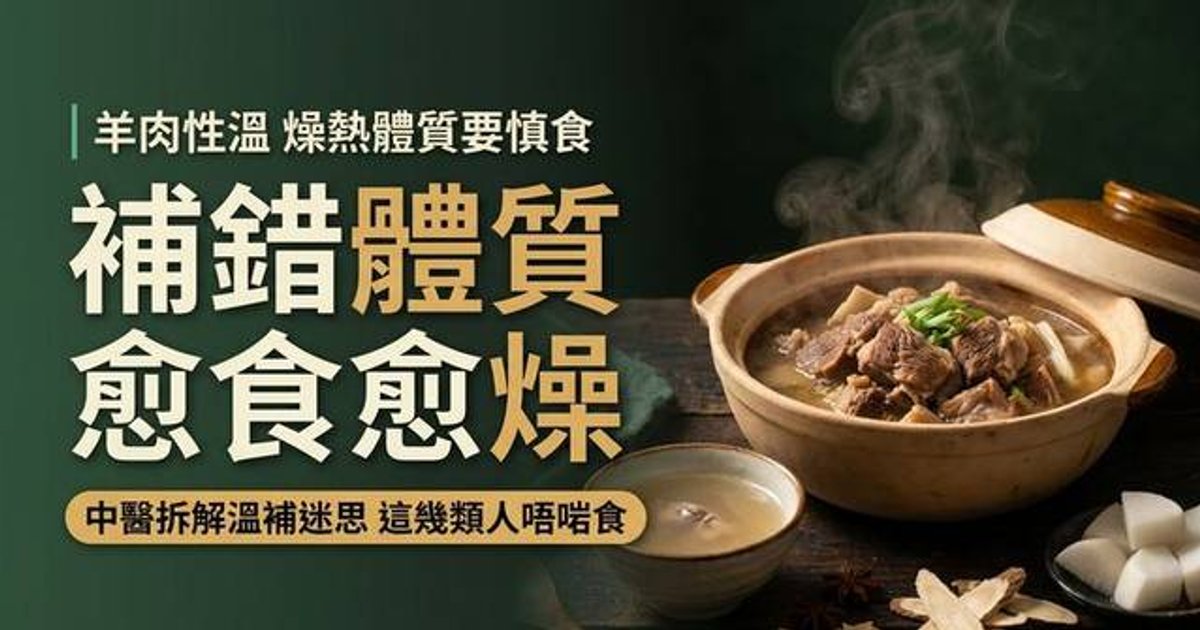
As the solar term Lidong (Start of Winter) falls on November 7, lamb hot pots and warming lamb dishes have become popular menu items across Hong Kong. Traditional Chinese medicine (TCM) practitioners emphasize that lamb, classified as warm in nature and sweet in flavor, belongs to the spleen and kidney meridians, offering traditional benefits such as warming the middle abdomen, strengthening the spleen, and boosting qi . However, TCM experts stress that not everyone is suitable for lamb consumption—those with existing heat symptoms like dry mouth, sore throat, or constipation may experience worsened conditions if they overindulge . The core principle of winter nourishment lies in "pattern identification for supplementation" (辨證施補), meaning dietary choices should be customized based on individual constitution rather than following blanket seasonal formulas .
Key Points
- Lamb is classified as warm-natured food suitable for yang-deficient individuals who frequently experience cold limbs, fatigue, and preference for warm beverages .
- People with yin deficiency symptoms—dry mouth, constipation, canker sores, or hand/foot heat—should limit lamb intake to avoid exacerbating heat-related discomfort .
- TCM recognizes three supplementation approaches: warm tonification (for cold constitutions), neutral tonification (for balanced needs), and cooling tonification (for heat-prone individuals) .
- The Health Department's TCM Regulatory Office warns that excessive supplementation may cause bloating, irritability, insomnia, and throat dryness .
- Traditional recipes like Angelica-Ginger Lamb Soup use 200g lamb, 3g angelica root, and 4 ginger slices for two persons .
Why It Matters
Hong Kong's food culture heavily features seasonal dishes, but TCM philosophy reminds residents that dietary choices should align with personal health conditions rather than cultural traditions alone. For the city's aging population and those managing chronic conditions like diabetes or kidney disease, consulting qualified TCM practitioners before adopting winter supplementation regimens could prevent unintended health complications. This approach bridges traditional wisdom with modern health awareness, encouraging mindful eating during the festive winter dining season.
Hong Kong's food culture heavily features seasonal dishes, but TCM philosophy reminds residents that dietary choices should align with personal health conditions rather than cultural traditions alone. For the city's aging population and those managing chronic conditions like diabetes or kidney disease, consulting qualified TCM practitioners before adopting winter supplementation regimens could prevent unintended health complications. This approach bridges traditional wisdom with modern health awareness, encouraging mindful eating during the festive winter dining season.