EU Proposes Canada as First Associate Member in Historic Policy Shift
Thestandard · 4 SOURCESabout 2 hours ago2 MIN
Summary
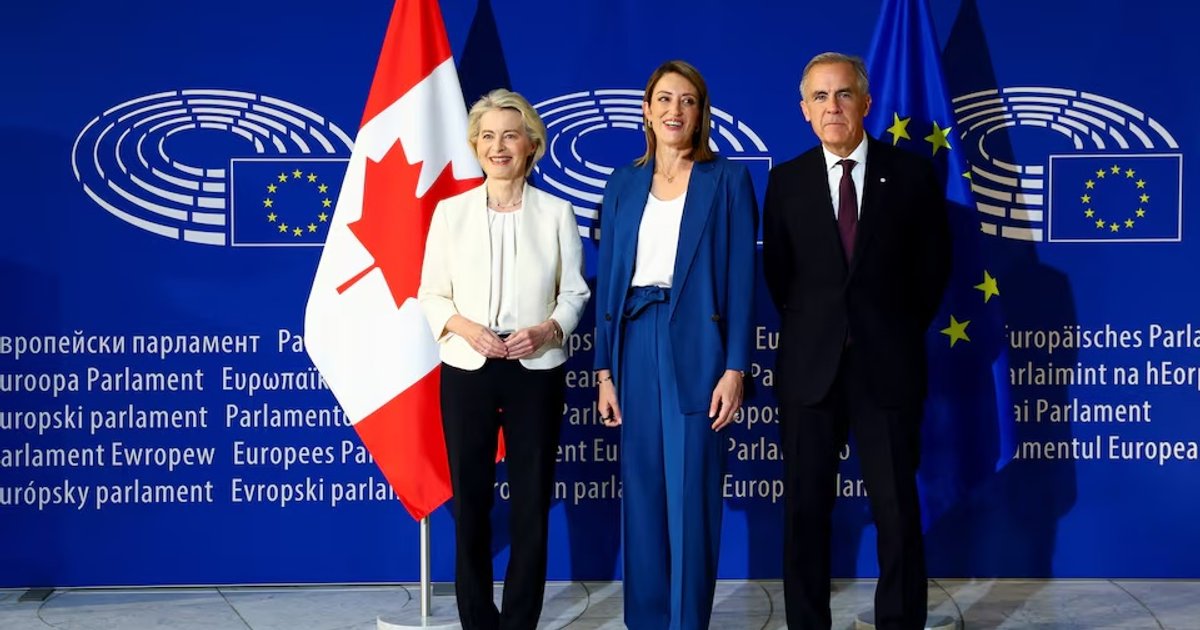
European Commission President Ursula von der Leyen has proposed making Canada the EU's first "associate member" during her State of the European Union address in Strasbourg on September 16, 2026. The announcement comes as Canadian Prime Minister Mark Carney visits France following the collapse of Canada-U.S. trade talks last month. Von der Leyen outlined plans to upgrade EU-Canada relations from the existing CETA trade agreement to an "Alliance for the Future" covering manufacturing, AI, defense, and critical minerals .
Key Points
- European Commission President Ursula von der Leyen proposed opening the door for Canada to become the EU's first "associate member" during her State of the European Union address in Strasbourg, France, on September 16, 2026 .
- Canadian Prime Minister Mark Carney attended the address and will deliver his own speech on Thursday, following a historic breakdown in Canada-U.S. relations after trade talks collapsed last month .
- The EU and Canada will upgrade their relationship from the Comprehensive Economic and Trade Agreement (CETA) to an "Alliance for the Future" covering manufacturing, technology, defense, the Arctic, energy, critical minerals, and AI .
- Von der Leyen proposed "Europe's own Article 4," modeled on NATO's consultation mechanism, under which EU member states would convene when one country faces a serious security incident below armed aggression .
- The Commission will propose an EU Kids Act on Thursday prohibiting social media use for children under 13 and personal accounts for those under 15, with platforms facing mandatory safe-design requirements .
Why It Matters
The associate membership category, which has no basis in EU treaties, represents a significant policy innovation that could redefine how the bloc engages with partners who share democratic values but may not seek full accession. This development signals a broader shift in EU strategy to reimagine partnerships amid fractures in the international rules-based system, potentially setting a precedent for future arrangements with other close allies .
The associate membership category, which has no basis in EU treaties, represents a significant policy innovation that could redefine how the bloc engages with partners who share democratic values but may not seek full accession. This development signals a broader shift in EU strategy to reimagine partnerships amid fractures in the international rules-based system, potentially setting a precedent for future arrangements with other close allies .