Starbucks Limits Dine-In to 90 Minutes at Two Hong Kong Locations
AM730 · 1 SOURCESabout 2 hours ago2 MIN
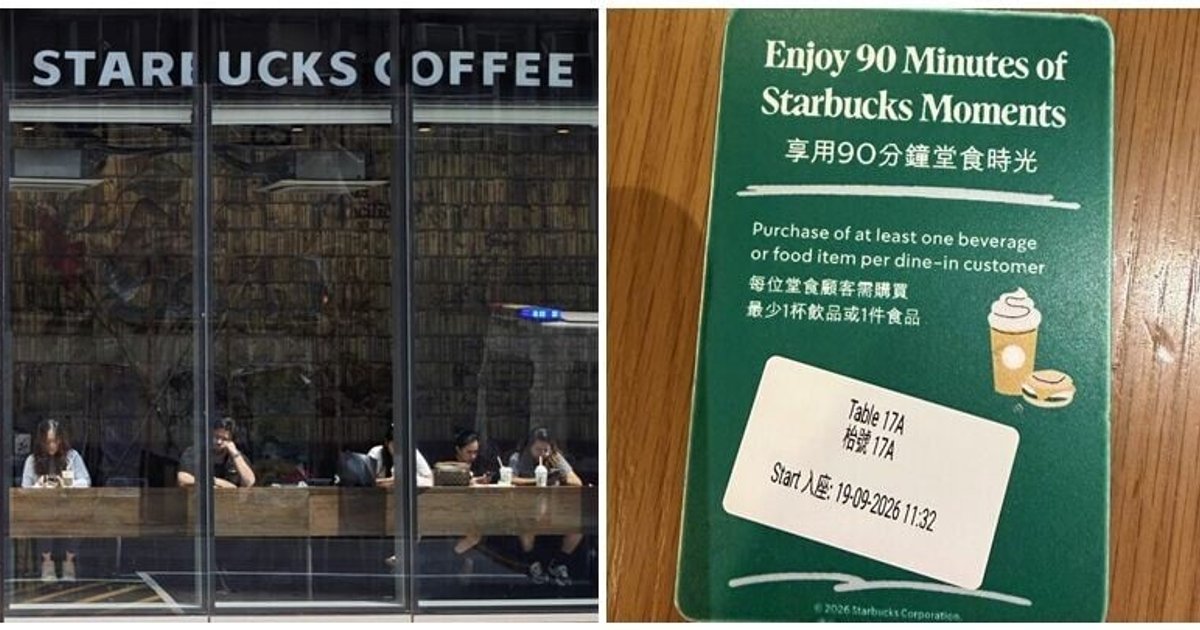
Summary
Starbucks Hong Kong and Macau has launched a 90-minute dine-in time limit at two pilot locations, sparking widespread discussion among Hong Kong residents. The policy targets customers who occupy tables for extended periods without making purchases, a phenomenon colloquially known as "sitting idle" (literally: lingering without buying). The pilot scheme applies to the Sha Tin New Town Plaza and Kwai Fong Metro Plaza branches, operating daily from 11am to 6pm .
Key Points
- The 90-minute dine-in limit is currently active at the Sha Tin New Town Plaza branch and the Kwai Fong Metro Plaza branch, effective daily from 11am to 6pm .
- Dine-in customers receive a "time limit card" indicating their 90-minute dining window and must purchase at least one drink or one food item per person .
- Customers wishing to extend their stay beyond 90 minutes may do so by making additional purchases, provided seats remain available .
- If other customers are waiting for seats, patrons must re-queue and purchase additional items before being seated again .
- Starbucks stated the arrangement aims to improve seat management during busy periods and enhance customer experience, though future expansion to other branches will depend on individual store operations .
Why It Matters
This move by Starbucks reflects a broader challenge facing Hong Kong's cafe and fast-food industry, where free Wi-Fi and spacious environments have made chains like Starbucks popular alternatives to paid co-working spaces. The policy could set a precedent for other retailers grappling with customers who occupy seating without generating revenue, potentially reshaping the business model of Hong Kong's cafe culture .
This move by Starbucks reflects a broader challenge facing Hong Kong's cafe and fast-food industry, where free Wi-Fi and spacious environments have made chains like Starbucks popular alternatives to paid co-working spaces. The policy could set a precedent for other retailers grappling with customers who occupy seating without generating revenue, potentially reshaping the business model of Hong Kong's cafe culture .