John Lee says local jobs come before imported labour
Bastillepost · 1 SOURCESabout 4 hours ago5 MIN
Summary
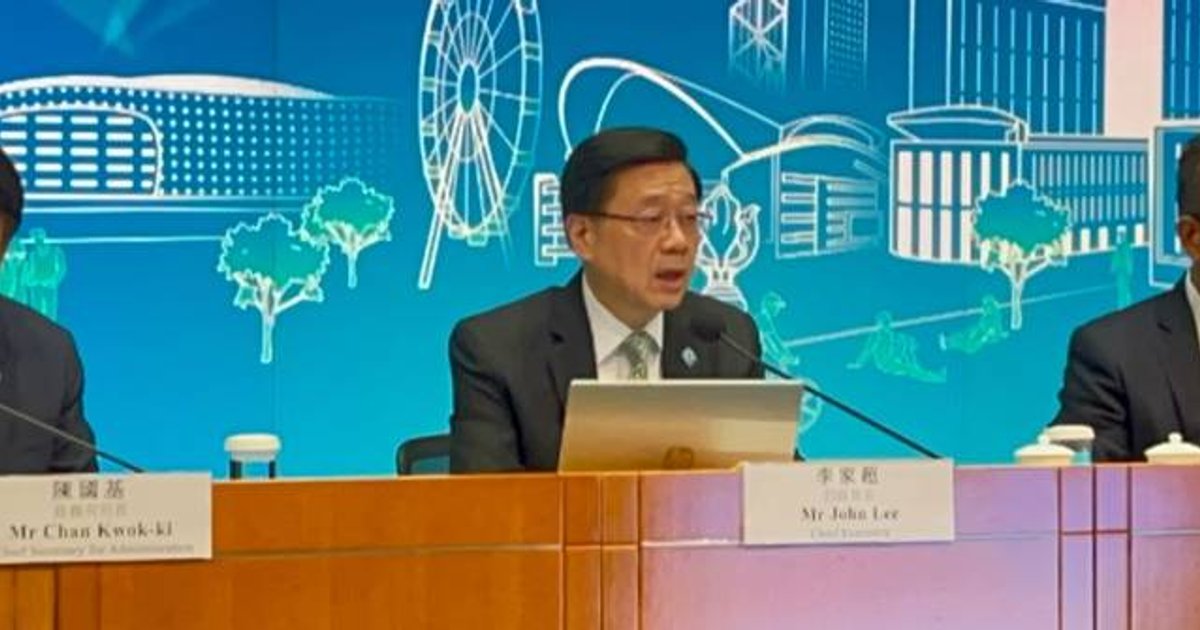
Chief Executive John Lee Ka-chiu (李家超) said at a press conference that protecting local employment is the government's overriding priority, and imported labour will be allowed only when specific sectors are proven to face real manpower shortages. He said the approval process is handled cautiously and is subject to multiple restrictions, including sector-specific quotas and proof that employers cannot hire locally first. Lee also said the government will continue cracking down on illegal workers and will not allow the import of cheap labour, because imported workers must be paid no less than the median wage for the relevant post. On talent policy, he drew a distinction between high-end talent and general labour, saying Hong Kong will keep attracting talent in areas where shortages are confirmed by manpower projections
Key Points
- Lee said local workers' employment is the government's absolute priority, and enforcement against illegal workers will continue alongside labour import controls
- Limited labour import schemes currently cover sectors including residential care homes, manufacturing, and transport, and approvals are granted only when shortages are confirmed
- In construction, the quota is 12,000 imported workers, but only about 5,000 to 6,000 have recently been approved, reflecting demand-based vetting
- Under the Enhanced Supplementary Labour Scheme, employers must first try local recruitment for four weeks, or six weeks in some sectors, before applying
- Chief Secretary Eric Chan Kwok-ki (陳國基) said the planned university town includes about 300 hectares of campus land within a broader area exceeding 1,000 hectares
Why It Matters
The remarks set out how the government is trying to balance two politically sensitive goals: protecting local workers while easing shortages in selected industries and competing globally for talent. They also link labour policy with longer-term planning for the Northern Metropolis, where the proposed university town is intended to support innovation, business partnerships and graduate retention in Hong Kong