China's River Water Cooling System Offers Green Urban Air Conditioning
AM730 · 1 SOURCESabout 1 hour ago2 MIN
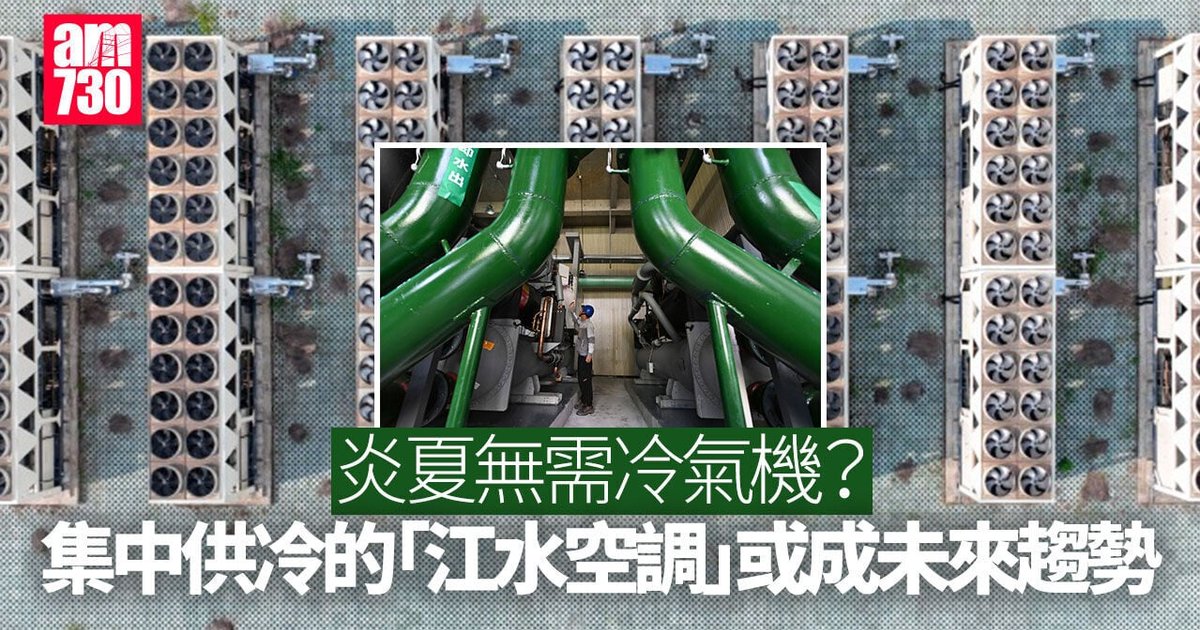
Summary
China is pioneering district cooling technology that leverages natural water bodies as heat exchangers, offering a low-carbon alternative to conventional air conditioning systems. In Wuhan's Hankou Riverside International Business District, the Yangtze River has been transformed into a massive natural "radiator" that removes heat from buildings. This centralized approach, now expanding to Shenzhen's Qianhai New District, promises significant energy savings and environmental benefits compared to traditional individual air conditioning units.
Key Points
- The Wuhan project draws water from approximately 10 meters below the Yangtze River surface, about 1.5 kilometers from its energy station, using it solely for heat exchange without consumption or pollution
- The system currently serves about 260,000 square meters of buildings and will eventually cover approximately 2.1 million square meters, equivalent to nearly 300 standard office towers
- Full operation is projected to save 7,374 tons of standard coal annually and reduce approximately 18,000 tons of carbon dioxide emissions, achieving over 30 percent energy efficiency versus conventional central air conditioning
- Shenzhen's Qianhai district has integrated district cooling into its municipal planning from the outset, with 6 of 10 planned cold stations now operational across Guiwan, Qianwan, and Mawan areas
- Qianhai's AI-powered system predicts cooling demand using weather forecasts and historical data, stores cooling capacity during cheaper off-peak nighttime electricity hours, and enables inter-station support via interconnected pipelines
Why It Matters
The district cooling model demonstrates how urban infrastructure can be reimagined for climate resilience, with the Qianhai system alone projected to save 130 million kilowatt-hours of electricity annually and free up nearly 100,000 square meters of building space that would otherwise accommodate rooftop cooling equipment . As Chinese cities seek to meet carbon neutrality targets, this technology offers a replicable blueprint for reducing building sector emissions while improving energy grid stability through intelligent load balancing.
The district cooling model demonstrates how urban infrastructure can be reimagined for climate resilience, with the Qianhai system alone projected to save 130 million kilowatt-hours of electricity annually and free up nearly 100,000 square meters of building space that would otherwise accommodate rooftop cooling equipment . As Chinese cities seek to meet carbon neutrality targets, this technology offers a replicable blueprint for reducing building sector emissions while improving energy grid stability through intelligent load balancing.