Teacher's Stroke Correction on Thank-You Character Sparks Online Debate
Bastillepost · 1 SOURCESabout 19 hours ago2 MIN
Summary
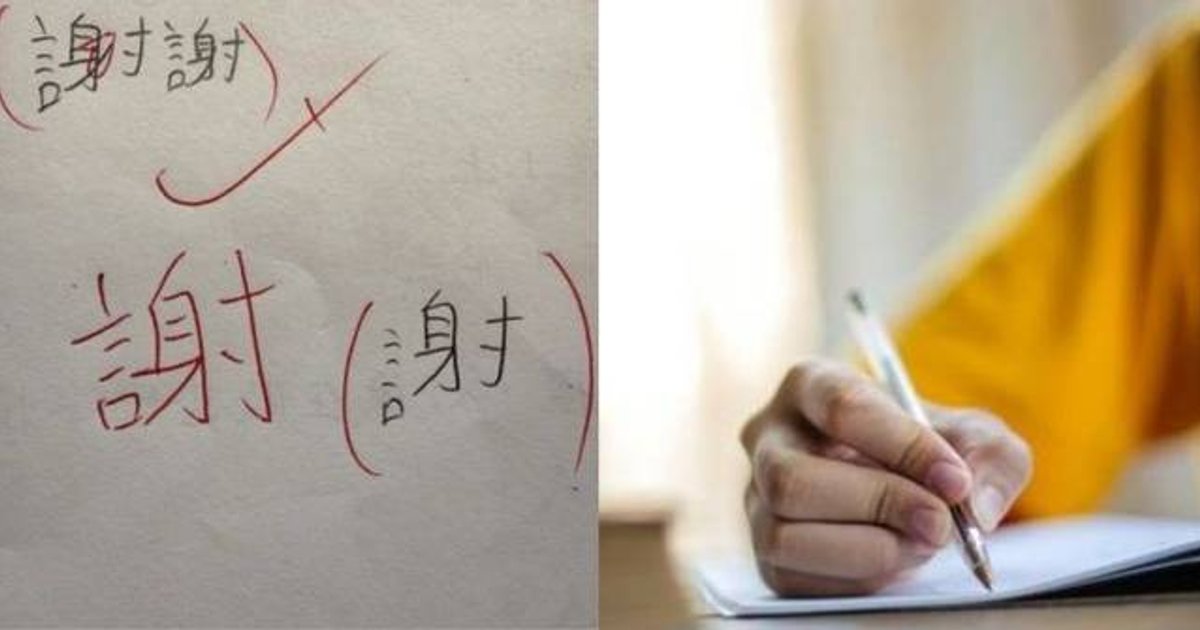
A Hong Kong mother has ignited a vigorous online discussion after seeking advice about the correct way to write the Chinese character meaning "thank you" (xiè). The parent posted online about her child's schoolwork, which had been circled by the teacher who demonstrated that the middle stroke should not cross through the character. The mother expressed her confusion in her post, asking whether the stroke should cross or not, stating she clearly remembered it should cross .
Key Points
- The Hong Kong mother photographed her child's homework and shared it online after the teacher circled the character and showed the middle stroke without crossing through .
- In her online post seeking clarification, the mother asked whether the stroke should cross, remarking she clearly remembered it crossing in her memory .
- Most netizens agreed with the mother and child, with some stating the stroke should cross slightly and even questioning the necessity of such detailed stroke analysis in education .
- One netizen who claimed to have consistently ranked among the top three in Chinese class during their school years recalled learning the stroke without crossing, supporting the teacher's correction .
- A commenter with expertise in Chinese character studies explained that the crossing or non-crossing of the stroke relates to different historical eras and meanings, noting the teacher was preserving forms from Shuihudi Qin bamboo slips and oracle bone script traditions .
Why It Matters
The incident reflects growing concerns about the balance between preserving traditional Chinese character forms and modern educational priorities. As digital typing and voice input increasingly replace handwritten composition, debates about precise stroke order and character forms highlight deeper questions about how traditional culture should be taught in schools. This discussion resonates with Hong Kong parents navigating an educational system that must reconcile classical Chinese scholarship with contemporary learning needs.
The incident reflects growing concerns about the balance between preserving traditional Chinese character forms and modern educational priorities. As digital typing and voice input increasingly replace handwritten composition, debates about precise stroke order and character forms highlight deeper questions about how traditional culture should be taught in schools. This discussion resonates with Hong Kong parents navigating an educational system that must reconcile classical Chinese scholarship with contemporary learning needs.