Study: Nearly 16% of Hong Kong Secondary Students in Relationships with AI Companions
HK01 · 2 SOURCESabout 3 hours ago2 MIN
Summary
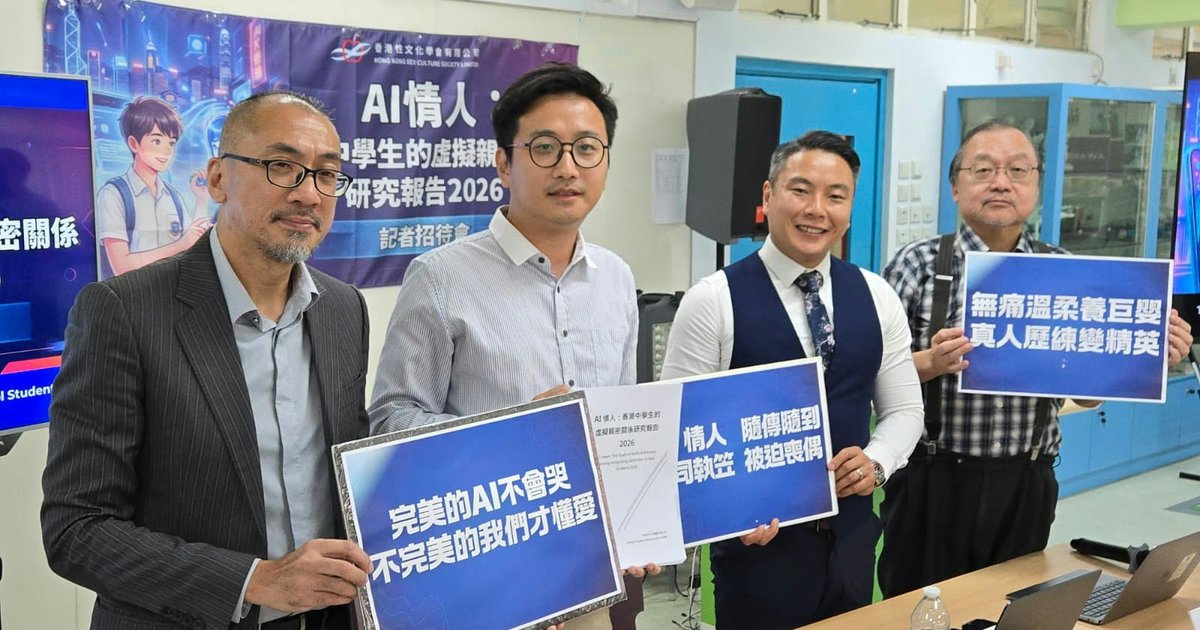
The Hong Kong Sexual Culture Association released on October 13, 2026, a research report titled "AI Lovers: Hong Kong Secondary Students' Virtual Intimate Relationships Report 2026," revealing that 15.9% of secondary school students have developed emotional connections with AI or virtual characters . The study, conducted between May and June 2026, surveyed 3,389 students from 17 full-time secondary schools, spanning ages 12 to 18 . Researchers found that 27% of virtual dating users showed moderate to severe depression symptoms in the past two weeks, while approximately 9% experienced daily feelings of depression and despair—a rate 3.6 times higher than non-users .
Key Points
- Female students exhibited significantly higher engagement, with 21.8% having virtual romantic experiences compared to 11.2% of male students—more than double the rate
- About 70% of virtual intimate users were junior secondary students, utilizing platforms such as Character.ai and romance simulation games
- Some 8% of users spent more than two hours daily on virtual intimate interactions, with one documented case of a student spending 3-4 hours daily chatting with AI
- The Hong Kong Sexual Culture Association's chairman, Professor Kwan Kai-man from HKBU, urged parents to communicate rather than confiscate devices, warning that excessive AI dependency may cause communication skills to atrophy
- While Mainland China enacted legislation in July 2026 banning AI companion products for minors, Hong Kong teenagers can still access such applications, prompting calls for educational measures
Why It Matters
This study highlights a rapidly emerging phenomenon among Hong Kong's youth that could reshape adolescent emotional development and social skills. With experts warning of a vicious cycle where depression drives students toward AI companions, which in turn deepens isolation, the findings present a pressing challenge for educators and policymakers. The research comes as Mainland China has already taken legislative action, suggesting Hong Kong may need to develop its own protective measures before the situation escalates further.
This study highlights a rapidly emerging phenomenon among Hong Kong's youth that could reshape adolescent emotional development and social skills. With experts warning of a vicious cycle where depression drives students toward AI companions, which in turn deepens isolation, the findings present a pressing challenge for educators and policymakers. The research comes as Mainland China has already taken legislative action, suggesting Hong Kong may need to develop its own protective measures before the situation escalates further.