20 Teams Advance in Smart Surveying Innovation Contest Ahead of November Finals
SingTao · 1 SOURCESabout 4 hours ago2 MIN
Summary
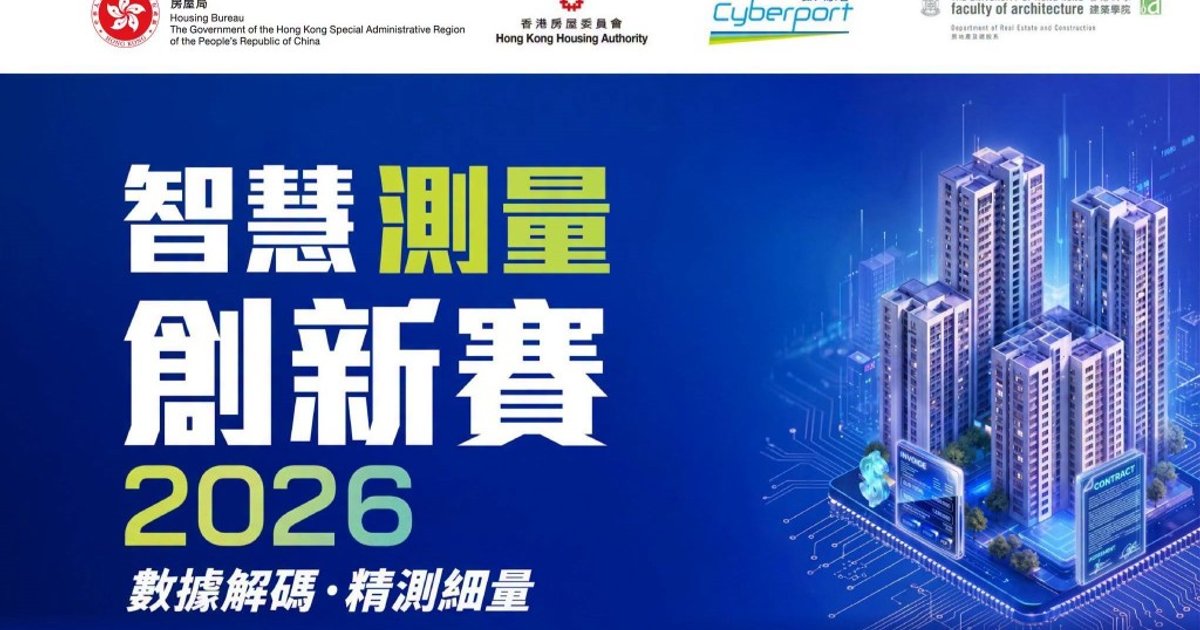
The Smart Surveying Innovation Competition 2026 has announced 20 finalist teams following a first-round professional evaluation. The contest, jointly organized by four major institutions, attracted nearly 400 participants forming about 120 teams who submitted over 120 initial proposals. The finalists will undergo intensive training from September through November before competing in a 48-hour innovation challenge.
Key Points
- The Housing Bureau, Hong Kong Housing Authority, Cyberport, and University of Hong Kong jointly organized this inaugural competition
- Registration closed on August 14, 2026, attracting approximately 120 teams with nearly 400 participants and over 120 proposals
- Participants came from tech enterprises, startups, quantity surveying consultants, construction firms, and universities
- Twenty teams advanced, evenly split across four categories with five teams each: Contract Advisory, Progress Payment Valuation, Professional Free Proposal, and Student Free Proposal
- Housing Bureau Director Ho Wing-yin announced the results on September 5, 2026, via social media
- Selected teams will receive computing resources, sample data, expert mentorship, AI workshops, and on-site construction visits
- The 48-hour innovation competition and finals are scheduled for November 2026
- Winning teams may explore proof-of-concept collaboration with organizers and the Housing Authority
Why It Matters
This competition represents a significant push to modernize surveying practices in Hong Kong's public housing development by leveraging artificial intelligence and cross-sector collaboration. Successful solutions could set new standards for construction technology implementation across future government infrastructure projects, potentially reducing costs and improving efficiency in public housing construction.
This competition represents a significant push to modernize surveying practices in Hong Kong's public housing development by leveraging artificial intelligence and cross-sector collaboration. Successful solutions could set new standards for construction technology implementation across future government infrastructure projects, potentially reducing costs and improving efficiency in public housing construction.