Norway's New King Haakon VIII Takes Parliamentary Oath Following Father's Death
SingTao · 2 SOURCES1 day ago2 MIN
Summary
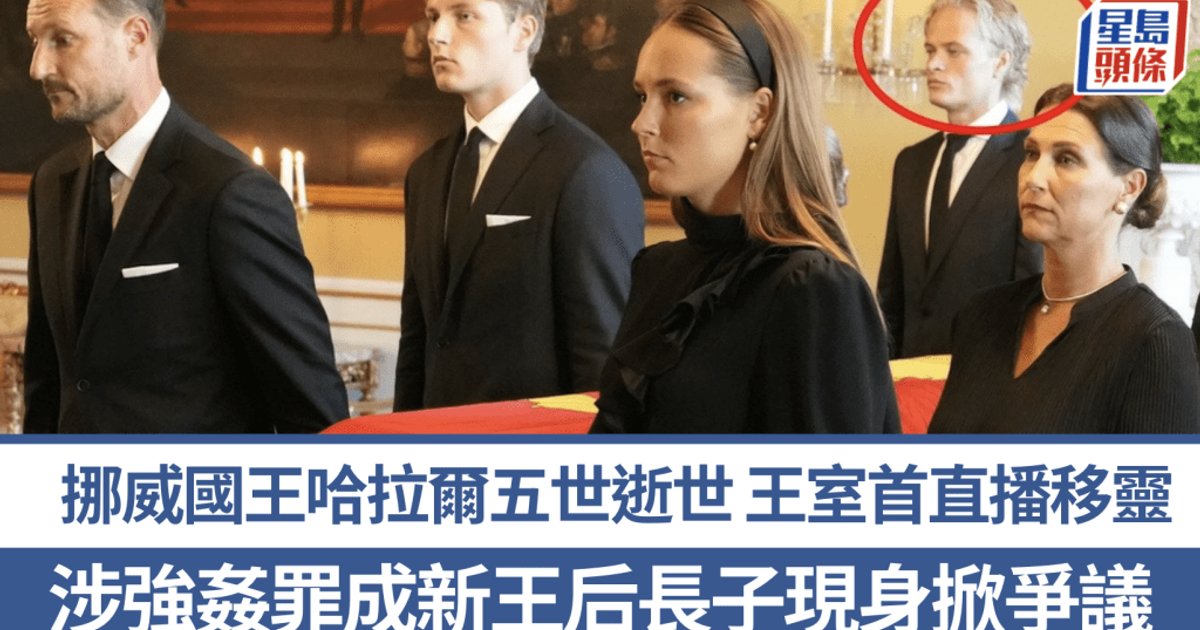
Crown Prince Haakon officially became King Haakon VIII on September 1, 2026, one day after his father King Harald V died at the age of 89 after a reign lasting 35 years . The new monarch travelled from the Royal Palace to parliament in an open-top vehicle, where he swore his oath of loyalty to the Norwegian constitution . The ceremony, which included formal announcement by the parliament speaker, marked the constitutional transfer of power, as Norway has not held formal coronations since 1908 . The royal succession was shadowed by controversy after Marius Borg Høiby, Queen Mette-Marit's son from a previous relationship, was allowed to participate in the funeral procession despite being convicted of sexual offences .
Key Points
- King Harald V died on August 28, 2026 at 6:35am at Oslo University Hospital, after being treated for blood infection following anaemia .
- The late monarch was Norway's first native-born heir in nearly six centuries, known for competing in three Olympic sailing events .
- Marius Borg Høiby, 29, was convicted in June 2026 of 34 out of 40 charges including two counts of rape, sentenced to four years; he participated in the televised funeral procession under electronic monitoring .
- Queen Mette-Marit, who underwent lung transplant surgery in June 2026, attended the procession and appeared in public for the first time since the operation .
- Public support for the monarchy rose to 72 percent following King Harald V's death, up from 64 percent in May 2026 .
Why It Matters
The royal succession in Norway highlights how constitutional monarchies handle power transitions while managing internal family controversies that test public tolerance . The contrast between the dignified image of royal succession and the optics of a convicted sex offender participating in a nationally televised state ceremony underscores the reputational risks facing modern monarchies . The sharp rise in monarchist sentiment following Harald V's death suggests that personal popularity of individual monarchs can temporarily overshadow broader republican sentiment .
The royal succession in Norway highlights how constitutional monarchies handle power transitions while managing internal family controversies that test public tolerance . The contrast between the dignified image of royal succession and the optics of a convicted sex offender participating in a nationally televised state ceremony underscores the reputational risks facing modern monarchies . The sharp rise in monarchist sentiment following Harald V's death suggests that personal popularity of individual monarchs can temporarily overshadow broader republican sentiment .