Hong Kong Public Housing Resident Defends Lifestyle Against Friends' Welfare Fraud Accusations
SingTao · 1 SOURCESabout 1 hour ago2 MIN
Summary
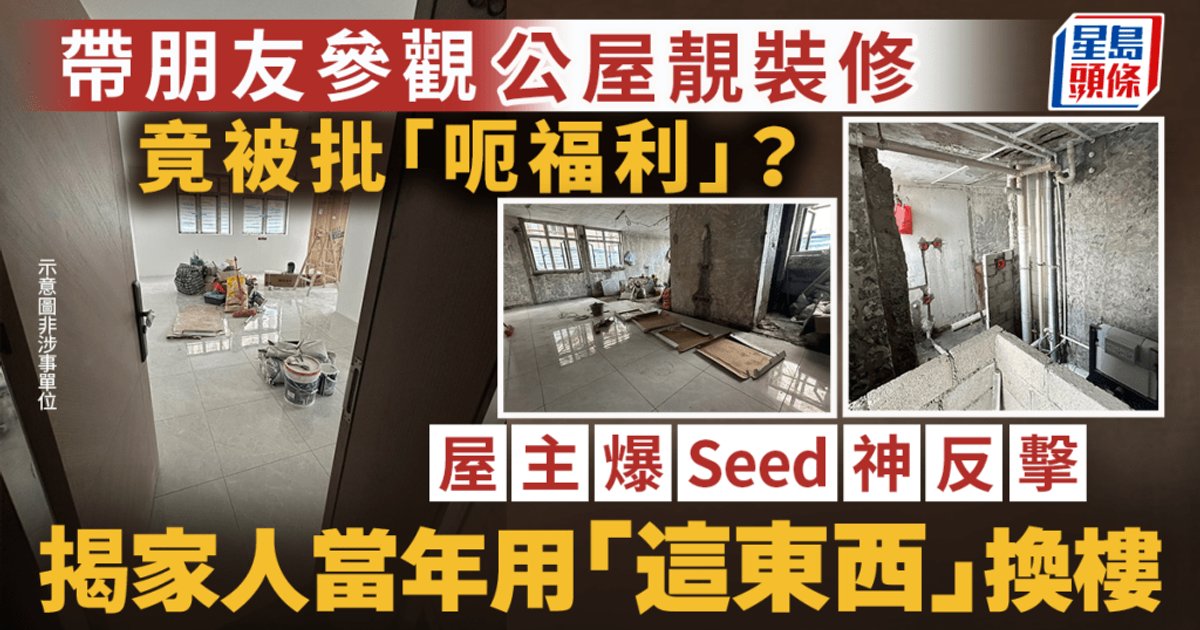
A Hong Kong public housing resident has sparked heated online debate after defending her lifestyle against friends who accused her of misusing welfare benefits. The poster shared on social media that after inviting friends over, she faced criticism claiming that people with nice home renovations and the means to travel should not "scam taxpayers' money" by living in public housing . The incident has ignited widespread discussion about stereotypes surrounding public housing residents and revived awareness of the Tenant Purchase Scheme introduced in 1998.
Key Points
- The poster stated that friends criticized her family's lifestyle after visiting their home, accusing them of misusing public housing benefits
- She revealed her family originally received the public housing unit as compensation when the government confiscated their pig-keeping license
- The family had the option to choose between private and public housing, ultimately selecting the latter for its convenient location, mountain views, and larger space
- Many netizens expressed sympathy, advising her to distance herself from judgmental friends and not feel ashamed of her living situation
- Critics focused on the "land premium" issue, arguing that purchasing public housing without paying land premiums still constitutes using public resources
- The 1998 Tenant Purchase Scheme allowed residents to buy units at discounted prices, but was discontinued after Phase 6B in 2005
- Only 39 designated public housing estates retain the right for tenants to purchase their units
Why It Matters
This controversy reflects broader social tensions in Hong Kong regarding wealth inequality and housing affordability, as well as misconceptions about public housing eligibility and the various ways residents can acquire such units .
This controversy reflects broader social tensions in Hong Kong regarding wealth inequality and housing affordability, as well as misconceptions about public housing eligibility and the various ways residents can acquire such units .