Tuen Mun Hospital opens same-floor neuroscience centre
SingTao · 5 SOURCES1 day ago5 MIN
Summary
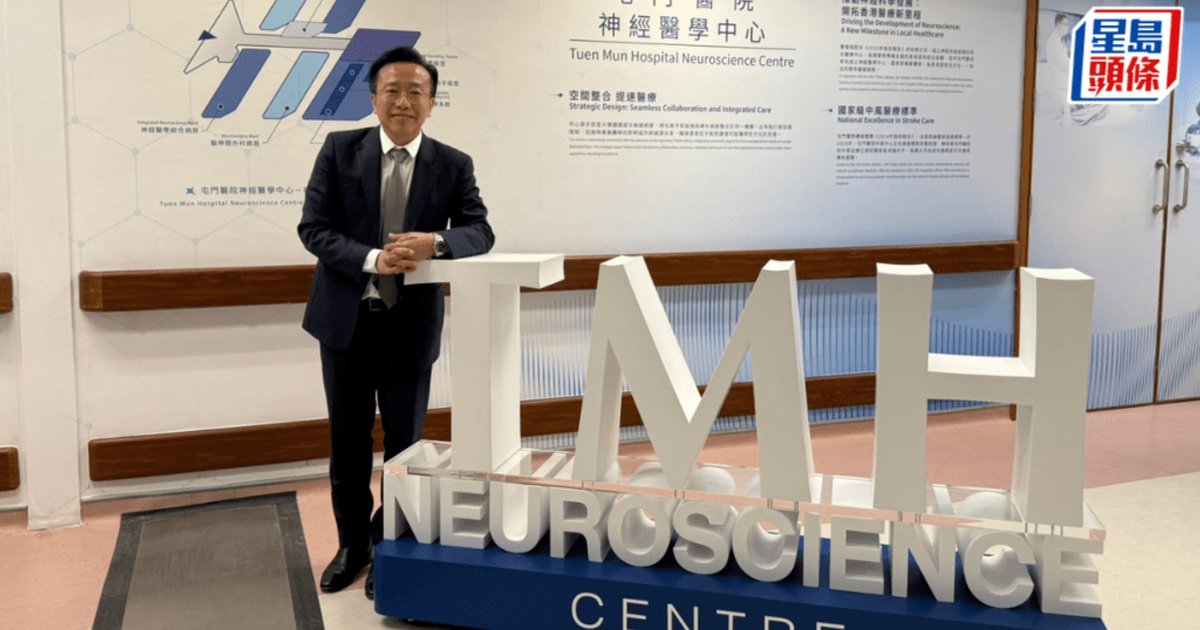
Tuen Mun Hospital held an opening ceremony on October 23 for its Neuroscience Centre, which has been coming into operation in phases since late 2024 and now has more facilities entering service. The centre adopts a “same-floor co-management” model, concentrating wards, advanced operating facilities and related services on one level to provide one-stop multidisciplinary care for neurological patients. Officials said the centre offers six core services, including stroke, movement disorders, epilepsy, pain management, neurovascular management and organ donation support. Health secretary Lo Chung-mau said the project supports Hong Kong’s first five-year healthcare plan and was placed at Tuen Mun Hospital because of its established strengths in neurological diagnosis, medicine and surgery.
Key Points
- The centre is on the second floor of Tuen Mun Hospital’s main block and integrates wards, operating rooms, imaging and planned rehabilitation facilities on the same level.
- Its integrated neuroscience ward has 44 beds, including four intensive care beds, while two epilepsy monitoring beds in separate rooms use 24-hour continuous EEG monitoring.
- Since late 2024, the hospital has introduced focused ultrasound and intraoperative MRI; about 44 patients have received the former and about 76 the latter.
- Deputy hospital chief executive Cheng Chun-bong (鄭振邦) said the ward has served about 450 patients since June, and the pain treatment room has treated about 50.
- Cheng said acute stroke thrombolysis can be shortened from about one hour to as fast as 20 minutes, while thrombectomy can be reduced to 45 minutes.
Why It Matters
For patients with stroke and other fast-changing neurological conditions, keeping scans, specialist teams, intensive care and surgery on one floor could reduce delays at critical moments. The Hospital Authority has also signalled that similar centres may be developed at other leading public hospitals, suggesting the Tuen Mun model could shape future specialist service planning in Hong Kong.