Eight Arrested in Hong Kong Sugar-Dating Scam
AM730 · 2 SOURCESabout 2 hours ago2 MIN
Summary
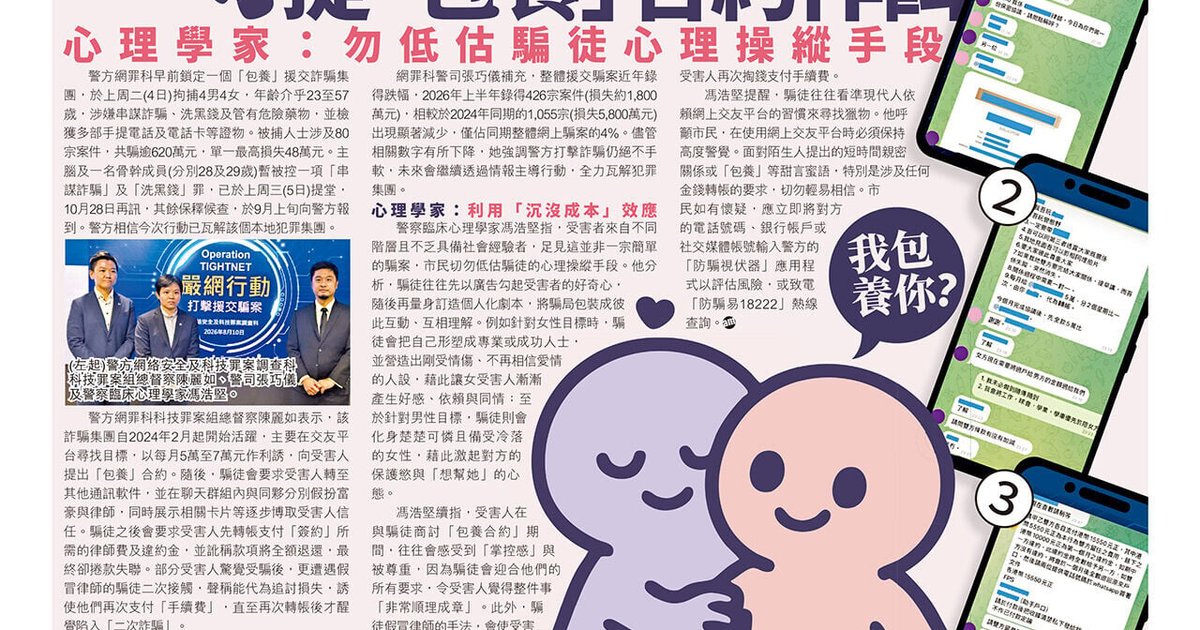
Hong Kong police said they had dismantled a local online scam syndicate that used fake “sugar dating” arrangements to defraud victims of more than HK$6.2 million across 80 cases.
Officers arrested four men and four women, aged 23 to 57, in an operation codenamed “Severe Net” conducted last Tuesday, August 4.
Investigators said the group had been active since February 2024, targeting people on dating platforms with promises of HK$50,000 to HK$70,000 a month before demanding supposed legal and contract-related payments.
Police said some victims were later approached again by fraudsters posing as lawyers offering to recover losses, leading to a second layer of deception.
Key Points
- Police seized multiple mobile phones and SIM cards, and arrested eight suspects on suspicion of conspiracy to defraud, money laundering and possession of dangerous drugs.
- The alleged kingpin, 28, and a 29-year-old core member were charged with conspiracy to defraud and money laundering, appeared in court on August 5, and the case was adjourned to October 28.
- Victims were moved from dating platforms to other messaging apps, where accomplices posed as wealthy patrons and lawyers, even showing fake lawyer business cards.
- Fraudsters claimed victims had to pay lawyer fees, breach penalties or confidentiality-agreement costs into designated accounts, promising full refunds that never came.
- Among the 80 victims, 65% were women aged 19 to 41; over 52% worked in services, retail or clerical support, 20% were students, and 15% were professionals including teachers and healthcare workers.
Why It Matters
The case shows how online romance and sex-related scams can be tailored to different targets, including young adults and established professionals, rather than only people seen as inexperienced.
Police and a clinical psychologist warned that the fraud relied on trust-building, fake third-party safeguards and the sunk-cost effect, making repeat victimisation more likely once money had already been paid.