Pediatric Dentistry | Parents Warned Against Common Phrases That May Upset Children at Dental Visits
SingTao · 1 SOURCES1 day ago2 MIN
Summary
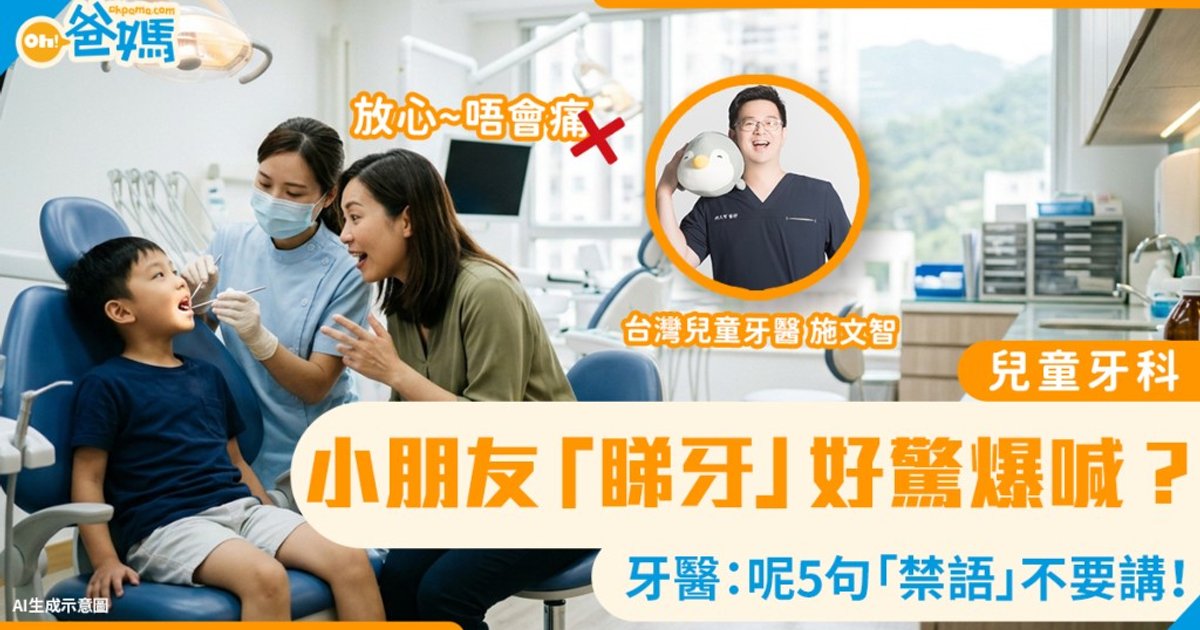
When taking children to the dentist, parents often feel more anxious than their kids and tend to offer excessive reminders, encouragement, or repeat the dentist's instructions. However, pediatric dentist Dr. Shi Wenzhi warns that the more adults speak during appointments, the more confused children become. Parents are advised to avoid five common phrases that may inadvertently increase dental anxiety in young patients.
Key Points
- Parents should never use dental visits as threats or punishment, such as telling misbehaving children they will be "sent to the dentist" — this creates fear even before the child enters the clinic
- Saying "you can't see" during treatment may frighten some children more than allowing them to observe the dentist's actions, as visibility helps children understand and feel secure about what is happening
- Promising "it won't hurt" can backfire because children cannot distinguish between pain, soreness, numbness, or pressure, so any unexpected sensation may cause them to feel betrayed by their parents
- Repeatedly echoing the dentist's instructions, such as saying "the dentist wants you to open wide" after the dentist has already spoken, causes children to focus on the parent's voice instead of following the dentist's rhythm
- After the visit, avoid making comparisons like "your sister is braver than you" or teasing the child, as genuine fears can become entrenched when dismissed or mocked
Why It Matters
Dental anxiety established in childhood often persists into adulthood, leading to avoidance of necessary dental care and poorer oral health outcomes over time. By understanding what NOT to say, Hong Kong parents can help create more positive dental experiences that build long-term trust between children and their dental care providers .
Dental anxiety established in childhood often persists into adulthood, leading to avoidance of necessary dental care and poorer oral health outcomes over time. By understanding what NOT to say, Hong Kong parents can help create more positive dental experiences that build long-term trust between children and their dental care providers .