Tongji University Under Fire After Female Student Forced to Undress for Dysmenorrhea Sick Leave
SingTao · 2 SOURCESabout 4 hours ago6 MIN
Summary
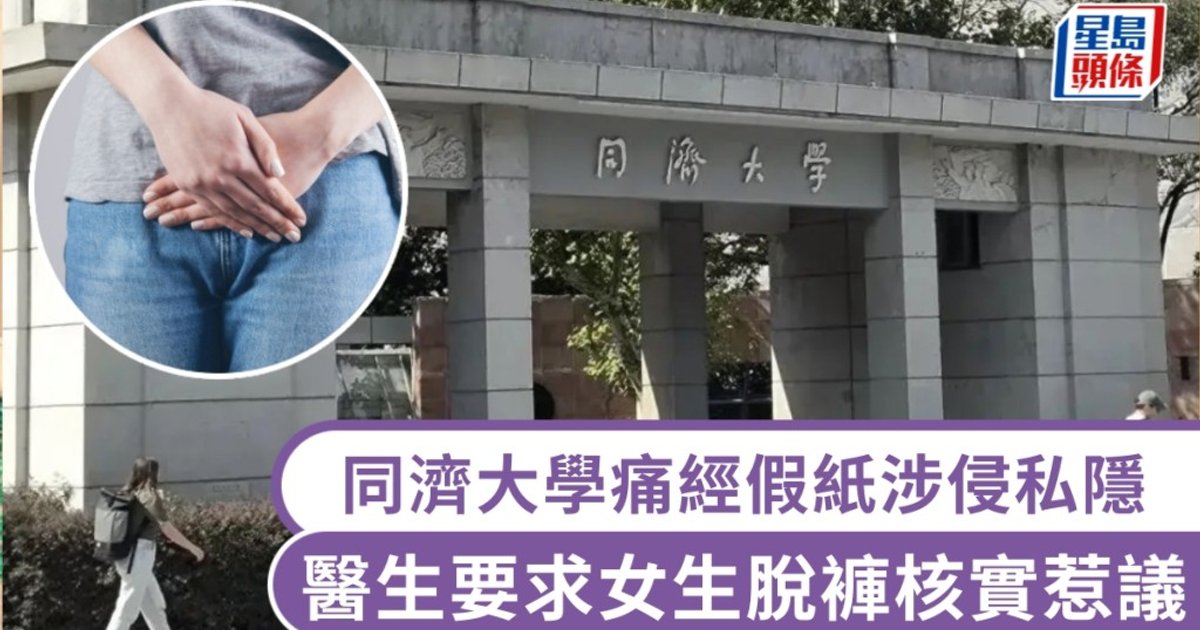
A female student at Shanghai's Tongji University (同濟大學) Jiading campus has sparked widespread controversy after alleging that a campus doctor demanded she undergo a pants-removal examination when seeking a sick note for severe dysmenorrhea on September 17. The university hospital acknowledged that dysmenorrhea sick notes are typically issued for one to two days, but maintained that whether an internal examination is necessary is ultimately a medical decision left to the physician's discretion. The incident quickly went viral on Chinese social media, with the related Weibo topic accumulating nearly one million views as of September 17. Critics have condemned the practice as a violation of student dignity and privacy, arguing that subjective physiological conditions like menstrual pain should not require invasive verification procedures.
Key Points
- A female student at Tongji University Jiading campus posted online on September 17 alleging that a campus hospital doctor demanded a pants-removal examination for dysmenorrhea sick leave
- The university hospital confirmed that dysmenorrhea sick notes are generally issued for one to two days, but stated that examination requirements depend on clinical judgment
- The incident accumulated nearly one million views on Weibo within hours of being posted on September 17
- Hospital staff explained that severe dysmenorrhea requires differential diagnosis to rule out acute conditions such as intestinal obstruction or ovarian cyst torsion
- Public criticism intensified as netizens argued that requiring forced privacy exposure for subjective menstrual pain creates an unreasonable burden on genuinely ill students
Why It Matters
The controversy highlights broader tensions between institutional medical verification procedures and student privacy rights on Chinese campuses. As universities increasingly implement leave-of-absence policies requiring medical documentation, cases like this raise fundamental questions about the boundaries of acceptable medical examination for subjective conditions. The viral backlash suggests growing public intolerance for practices perceived as punitive rather than patient-centered, potentially influencing future policy changes at educational institutions across China .
The controversy highlights broader tensions between institutional medical verification procedures and student privacy rights on Chinese campuses. As universities increasingly implement leave-of-absence policies requiring medical documentation, cases like this raise fundamental questions about the boundaries of acceptable medical examination for subjective conditions. The viral backlash suggests growing public intolerance for practices perceived as punitive rather than patient-centered, potentially influencing future policy changes at educational institutions across China .