Grant Thornton: HK Listed Companies Face Severe AI, Cybersecurity Skills Gap on Boards
SingTao · 2 SOURCESabout 3 hours ago2 MIN
Summary
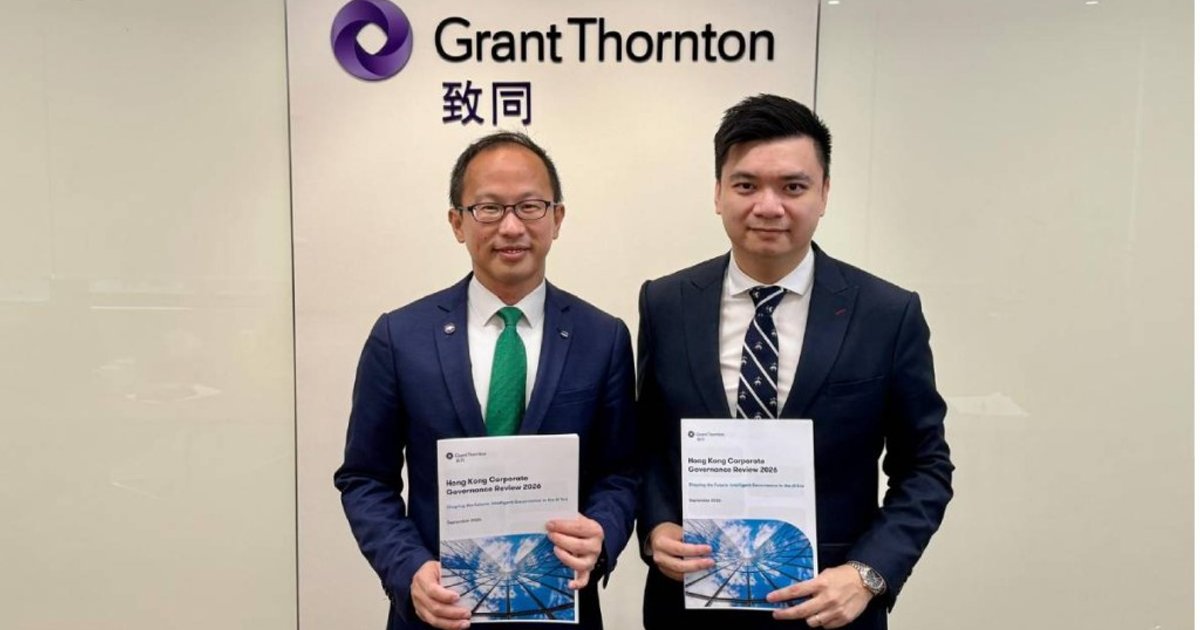
Grant Thornton Hong Kong released its 15th annual "2026 Hong Kong Corporate Governance Report," exposing a severe capability gap in artificial intelligence and cybersecurity oversight among directors of Hong Kong's largest listed companies. While nearly 60% of surveyed companies have identified cybersecurity and AI as core risks, less than 1% of Hang Seng Composite LargeCap Index directors possess relevant professional backgrounds in IT, AI, or cybersecurity. The report, analyzing 100 Hang Seng Composite Index large-cap companies' annual and ESG reports as of June 30, 2026, highlights that only 11% of companies have established dedicated committees to oversee these emerging risks. The findings coincide with a wave of board renewal prompted by new independent director tenure caps, though experts warn the refresh may be superficial rather than substantive.
Key Points
- Less than 1% of Hang Seng Composite LargeCap Index directors have IT, AI, or cybersecurity expertise, with cybersecurity specialization accounting for just 0.56% of disclosed professional backgrounds
- Only 11% of companies have established dedicated committees to oversee AI and cybersecurity risks, while 86% of board-level training on these topics relies on self-study materials without interactive training
- Employee cybersecurity training coverage has declined from 75% to 60% across all sectors, with healthcare sector training rates plummeting from 38% to 25%
- Independent director average tenure has shortened from 6.8 years to 5.8 years following the introduction of a 9-year tenure cap, yet only 10% of large companies are willing to appoint entirely new directors
- Female director representation stands at 22% for large-cap companies, falling significantly behind Europe's 34-40% and North America's 30-33%, with the energy sector recording only 8.1%
Why It Matters
The findings signal a structural vulnerability in Hong Kong's corporate governance framework as companies increasingly confront AI and cybersecurity threats amid limited board-level expertise. With regulatory pressure forcing board renewals, the risk that companies simply rotate familiar candidates through an insider network—rather than genuinely diversifying skills and perspectives—could undermine investor confidence and attract criticism from ESG-focused institutional investors .
The findings signal a structural vulnerability in Hong Kong's corporate governance framework as companies increasingly confront AI and cybersecurity threats amid limited board-level expertise. With regulatory pressure forcing board renewals, the risk that companies simply rotate familiar candidates through an insider network—rather than genuinely diversifying skills and perspectives—could undermine investor confidence and attract criticism from ESG-focused institutional investors .