Historic Tsan Yuk Hospital Designated Statutory Monument, Marking Century of Obstetric Innovation
AM730 · 1 SOURCESabout 2 hours ago2 MIN
Summary
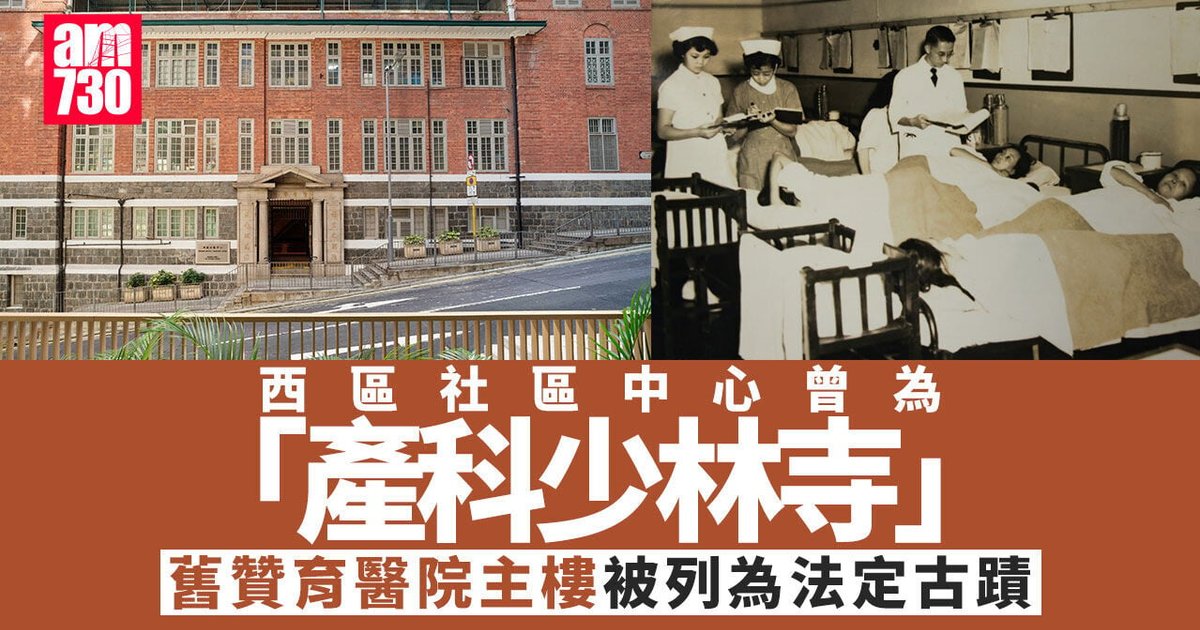
The century-old main building of Tsan Yuk Hospital in Sai Ying Pun received statutory monument status in early 2026, preserving a landmark that transformed maternal care for Hong Kong's Chinese community. The hospital, established in 1922 by the Chinese Public Dispensaries Committee, pioneered modern Western obstetric practices at a time when infant mortality among Chinese babies under one year old reached catastrophic levels of 70 to 90 percent. Its Neo-classical red brick edifice, featuring calligraphy by Qing Dynasty scholars, now houses community services while commemorating the profound impact of its medical mission.
Key Points
- Tsan Yuk Hospital was founded in 1922 as Hong Kong's first dedicated Chinese maternity hospital by the Chinese Public Dispensaries Committee
- The original facility operated with only 30 beds, at peak times requiring two pregnant women to share a single bed
- In 1941, the hospital delivered 4,000 mothers, accounting for one-tenth of all births across Hong Kong
- The hospital relocated to a 7-story building on Hospital Road in 1955, later specializing exclusively in high-risk pregnancy cases
- The main building was converted to community use in 1961 and now houses NGOs including a Chinese medicine clinic, women's centre, and Scouting associations
- The granite entrance plaque bears the hospital's name inscribed in regular script by Qing Dynasty scholar Chen Bo-tao
- Qing Dynasty Hanlin Academy graduate Lai Ji-xi contributed the couplet "Cherish life as virtue, nurture children with love" on the columns
Why It Matters
The monument designation protects a physical record of Hong Kong's medical modernization, when Western obstetric practices gradually replaced home births assisted by traditional "midwives," fundamentally improving survival outcomes for mothers and infants in the community .
The monument designation protects a physical record of Hong Kong's medical modernization, when Western obstetric practices gradually replaced home births assisted by traditional "midwives," fundamentally improving survival outcomes for mothers and infants in the community .