Cantonese Sausages: Ancient Arab Roots and the Fight to Preserve Traditional Craft
Bastillepost · 1 SOURCESabout 5 hours ago2 MIN
Summary
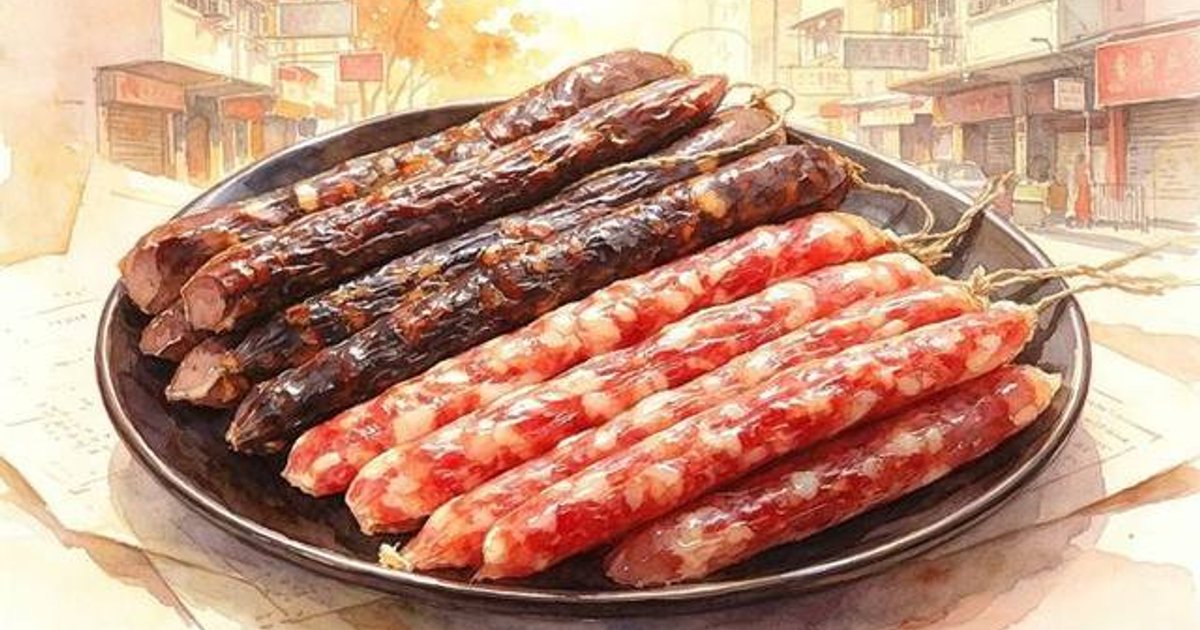
The beloved tradition of "when autumn wind blows, eat preserved meats" carries deeper historical and nutritional significance than most Hong Kong diners realize. Cantonese sausages, or lap cheong, originated not from local invention but from cultural exchange during the Tang and Song dynasties, when Arab traders brought sausage-making techniques via the Maritime Silk Road to Guangzhou . This autumn, as the seasonal winds once again signal the start of preserved meat season, the industry confronts an existential challenge: traditional handcraft methods are disappearing as young people shy away from demanding apprenticeship, and factory production using hot-air drying replaces natural fermentation that once gave these products their distinctive character .
Key Points
- The Cantonese preserved meat tradition stems from practical necessity rather than culinary preference: before refrigeration, the dry northern winds of late autumn created ideal conditions for air-drying meat outdoors without spoilage
- During the Tang and Song dynasties, Arab merchants introduced sausage-making along the Maritime Silk Road to Guangzhou; local chefs adapted the technique by adding rose wine and soy sauce, creating the signature sweet-salty flavor profile
- Duck liver sausages originated as a food conservation innovation, transforming what would otherwise be discarded offal into a delicacy rich in iron and Vitamin A
- The national Cantonese preserved meat market exceeds 10 billion yuan annually, with Zhongshan Huangpu Town alone producing over 200,000 tonnes yearly—representing more than 50% of national output
- Traditional handmade production requires expert skills including precise fat-to-meat ratios, meticulous cutting, seasoning, and the critical "needling" step to pierce the casing and release air for even drying
Why It Matters
The decline of traditional preserved meat craftsmanship represents more than a change in food production methods—it signals the erosion of seasonal food culture that has defined Hong Kong dining for generations . With Hong Kong's high land costs making private drying facilities nearly impossible to maintain, the unique flavor profile developed through natural north wind fermentation risks becoming a thing of the past, leaving only mass-produced alternatives that lack the subtle complexity of artisanal products .
The decline of traditional preserved meat craftsmanship represents more than a change in food production methods—it signals the erosion of seasonal food culture that has defined Hong Kong dining for generations . With Hong Kong's high land costs making private drying facilities nearly impossible to maintain, the unique flavor profile developed through natural north wind fermentation risks becoming a thing of the past, leaving only mass-produced alternatives that lack the subtle complexity of artisanal products .