Nepal seeks billions from UN climate fund after floods kill over 1,300
SCMP · 3 SOURCESabout 4 hours ago3 MIN
Summary
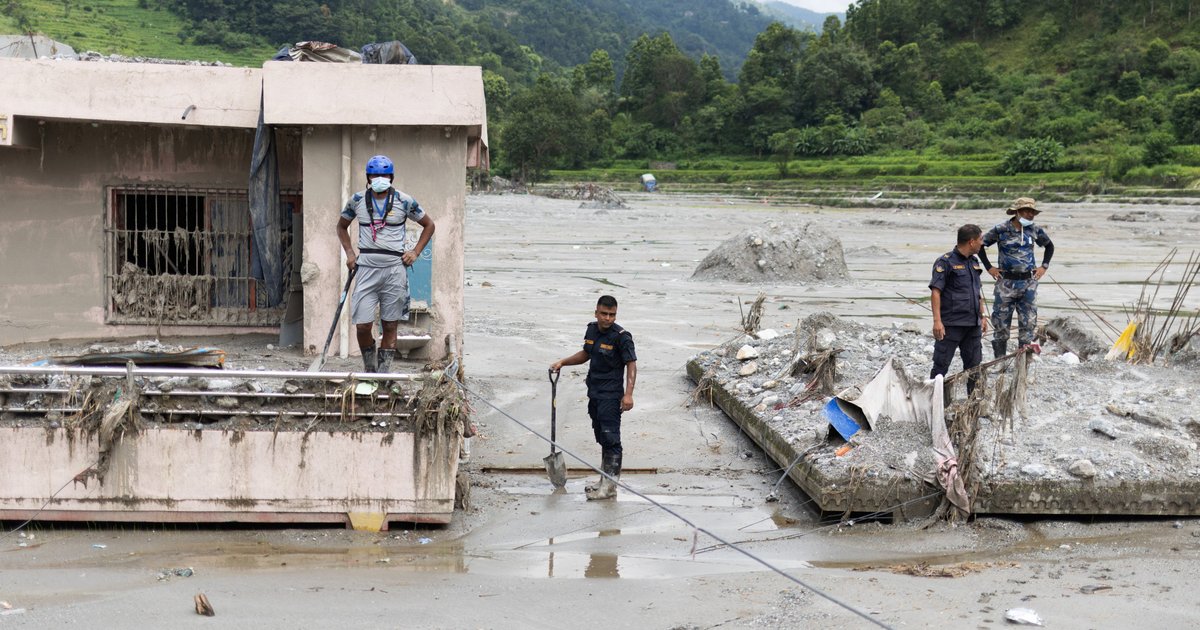
Nepal is turning to a newly established United Nations climate fund for help after devastating floods triggered by a glacial collapse along its border with China killed more than 1,300 people, with around 5,000 others still missing. The disaster, which struck on August 26, has left the Himalayan nation facing a recovery bill estimated at up to US$5 billion. Foreign Minister Shisir Khanal confirmed last week that Nepal sent a formal letter to the fund's co-chairs requesting immediate support, arguing that international promises "must move from commitments on paper to concrete action on the ground."
Key Points
- The flooding was caused by a rock-ice avalanche along the Nepal-China border on August 26, producing a tsunami-like surge that swept through villages
- Death toll has exceeded 1,300, with approximately 5,000 people still missing, making it Nepal's worst natural disaster in decades
- Nepal has formally requested the UN-backed Fund for Responding to Loss and Damage to respond "rapidly, directly and effectively" in a letter signed by Finance Minister Swarnim Wagle and Environment Minister Gita Chaudhary
- The UN Fund for Responding to Loss and Damage was established at the COP27 climate summit in Sharm el-Sheikh, Egypt in 2022
- The precise role climate change played in the disaster is not yet fully established, though the Himalayas are highly vulnerable to warming as permafrost and glaciers thaw, rendering rock, soil and ice unstable
- Meteorological data shows the glacier at 5,200 metres experienced temperatures around 5 degrees Celsius between August 21-26, the highest in over 55 years of records
- Berkeley Earth chief scientist Robert Rohde calculated that without climate change, such temperatures would likely occur only once in a few thousand years
- The Nepal Army rescued two local workers trapped inside a hydropower tunnel for nine days, while a Chinese national was pulled out the following day
- Fund board members issued an open letter stating the disaster is "precisely the kind of climate-related extreme weather events the fund was established to address"
- The letter did not quantify the losses or specify how much money Nepal was requesting
Why It Matters
The Nepal case represents a pivotal moment for climate justice, testing whether wealthy nations will compensate developing countries suffering climate impacts they did little to cause. The fund remains new, underfunded, and untested, making this first large-scale request a critical indicator of whether the international system can deliver on years of climate negotiations and promises made to vulnerable nations .
The Nepal case represents a pivotal moment for climate justice, testing whether wealthy nations will compensate developing countries suffering climate impacts they did little to cause. The fund remains new, underfunded, and untested, making this first large-scale request a critical indicator of whether the international system can deliver on years of climate negotiations and promises made to vulnerable nations .