Hong Kong Couple Opts for Minimalist Design in 380-sq-ft Subsidized Flat, Rejecting Floor-to-Ceiling Cabinets
SingTao · 1 SOURCES1 day ago5 MIN
Summary
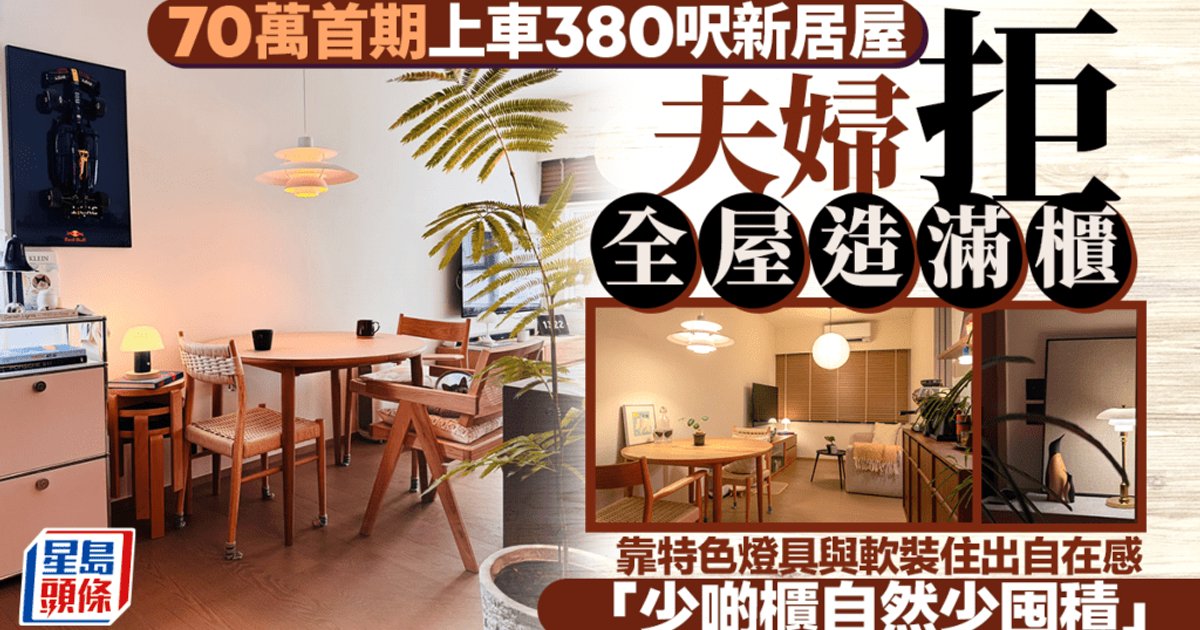
A young Hong Kong couple in their late twenties who purchased a 380-square-foot subsidized housing unit in Kowloon have embraced a minimalist interior design philosophy, deliberately choosing not to fill their small home with floor-to-ceiling storage cabinets. The pair, identified only as Hei and his wife, successfully ballot for the flat in 2023 using a white-form application and completed their five-month renovation project last September with a budget of approximately 500,000 Hong Kong dollars .
Key Points
- The couple purchased the 380-square-foot one-bedroom flat for 3.8 million Hong Kong dollars with a down payment of approximately 700,000 Hong Kong dollars, using their white-form eligibility for subsidized housing .
- Hei explains that limiting built-in storage actually helps prevent hoarding habits, as fewer cabinets mean residents are forced to regularly assess and declutter their belongings rather than simply hiding unused items away .
- The flat features a Japandi (Japanese-Scandinavian) design aesthetic in the living and dining areas using natural wood, white, and grey tones, while the workspace incorporates more colourful post-modern elements for visual contrast .
- Notable furnishings include a damaged Verpan Pantop Portable lamp whose bent stem serves as a memorial to their late cat Oreo, and a special sofa sourced from a Taiwan retailer called "Sleep Tofu" (眠豆腐) after the couple personally visited the showroom .
- Hei shares their home renovation journey on social media, where their design approach has resonated with Hong Kong netizens who praised the non-traditional aesthetic as a refreshing departure from typical local interior styles .
Why It Matters
This case illustrates a growing counter-trend among young Hong Kong homeowners who prioritize spatial freedom and mental well-being over maximizing storage capacity in the city's notoriously cramped living environment. Their approach challenges the conventional wisdom that small flats must be fitted with extensive custom cabinetry, potentially influencing future subsidized housing design standards and renovation practices across the territory .
This case illustrates a growing counter-trend among young Hong Kong homeowners who prioritize spatial freedom and mental well-being over maximizing storage capacity in the city's notoriously cramped living environment. Their approach challenges the conventional wisdom that small flats must be fitted with extensive custom cabinetry, potentially influencing future subsidized housing design standards and renovation practices across the territory .