Seoul Court Orders North Korea to Pay HK$256 Million for Destroying Liaison Office
SingTao · 2 SOURCESabout 2 hours ago2 MIN
Summary
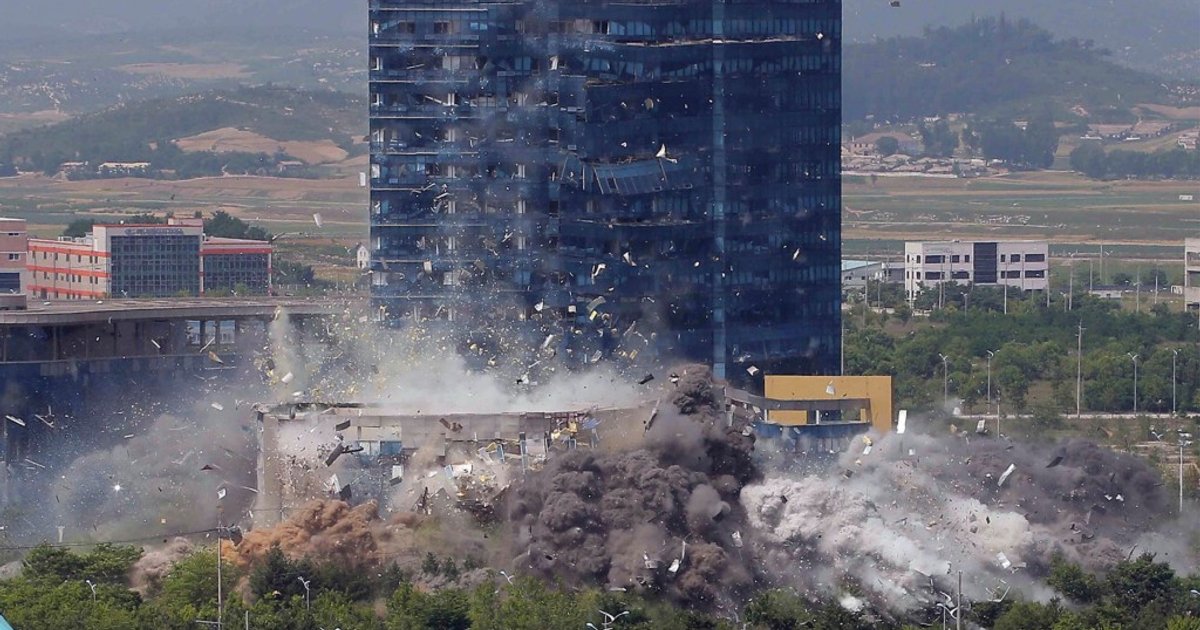
A Seoul court ruled on September 16, 2026 that North Korea must compensate South Korea 446.26 billion won (approximately HK$256 million) for demolishing the inter-Korean liaison office in June 2020. This landmark verdict marks the first time the South Korean government has filed a direct lawsuit against Pyongyang, a case that took over three years to conclude. While the court almost fully accepted the government's damage claims, experts say actual enforcement remains highly unlikely due to the absence of diplomatic relations and North Korea's refusal to participate in the proceedings.
Key Points
- The Seoul Central District Court's 46th Civil Division ruled on September 16 that North Korea must pay 446.2641 billion won in damages for destroying the liaison office .
- The inter-Korean liaison office, located in the Kaesong Industrial Complex in North Korean territory, was established in September 2018 following a summit between President Moon Jae-in and North Korean leader Kim Jong-un at Panmunjom .
- South Korean personnel withdrew from the office in January 2020 due to the COVID-19 pandemic, and in June 2020, Kim Yo-jong, sister of Kim Jong-un, ordered the demolition, citing leaflets released by North Korean defector groups .
- According to South Korea's Ministry of Unification calculations, the explosion caused approximately 101.8 billion won in damage to the liaison office itself and 344.5 billion won to the nearby Integrated Support Center, totaling roughly 447 billion won .
- North Korea refused to appear in court, forcing the proceedings to be conducted through service by publication; Seoul filed the lawsuit in June 2023 primarily to prevent the three-year statute of limitations from expiring .
Why It Matters
This ruling carries significant symbolic weight as it establishes a legal precedent for South Korea to pursue claims against North Korea through domestic courts. Although practical enforcement appears nearly impossible—given that North Korean assets overseas remain limited and previous similar lawsuits have yielded no compensation—the verdict formally preserves Seoul's right to pursue reparations for years to come, extending the claim period from three to ten years under civil law .
This ruling carries significant symbolic weight as it establishes a legal precedent for South Korea to pursue claims against North Korea through domestic courts. Although practical enforcement appears nearly impossible—given that North Korean assets overseas remain limited and previous similar lawsuits have yielded no compensation—the verdict formally preserves Seoul's right to pursue reparations for years to come, extending the claim period from three to ten years under civil law .