Japanese Food Truck Owner Diagnosed with Chronic Kidney Disease After Years of Skipping Water
SingTao · 2 SOURCESabout 2 hours ago2 MIN
Summary
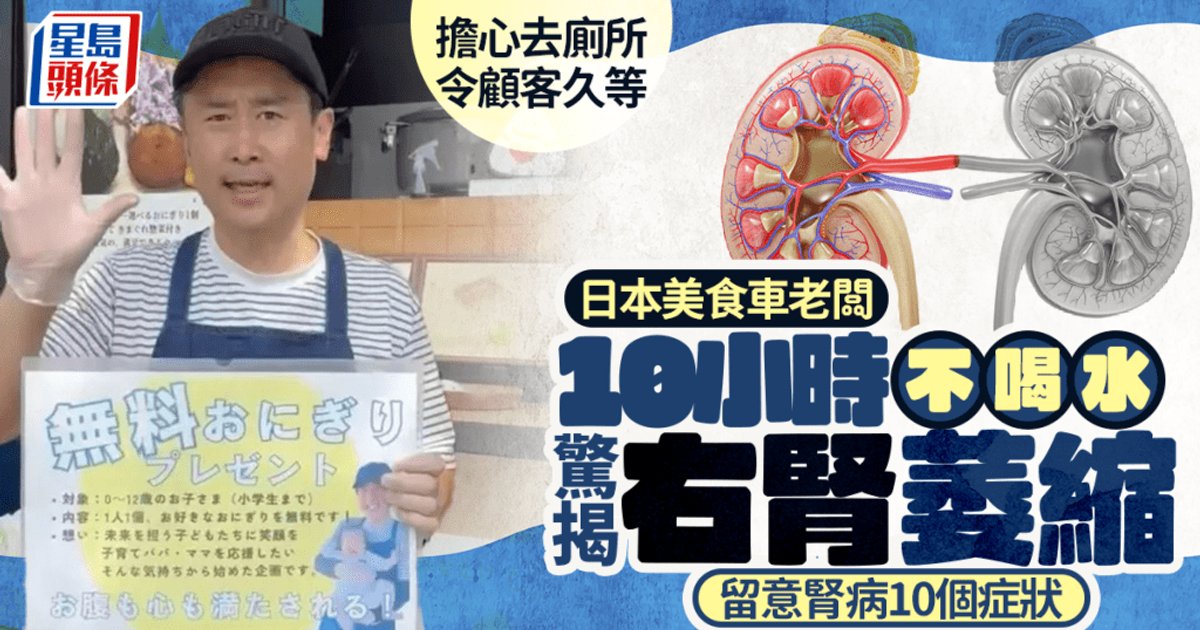
A Japanese rice ball food truck owner named Mr. Sanpei has been diagnosed with Stage 3 chronic kidney disease after years of deliberately avoiding water during his 10-hour work shifts. His routine health check in 2026 revealed that his right kidney had completely atrophied and lost all function, shocking him despite having normal kidney function indicators in previous years. With support from his wife, he now prioritizes health over business convenience and shares his story to warn others about the hidden dangers of dehydration.
Key Points
- Mr. Sanpei, who launched his rice ball food truck business in 2024, had been deliberately restricting water intake during his entire 10-hour work shifts out of concern for keeping customers waiting
- His routine health examination in 2026 revealed a dramatic deterioration in previously normal kidney function indicators, with further testing confirming his right kidney had completely atrophied and lost all function
- The kidneys are known as the "silent organ" because early-stage kidney damage typically presents no obvious symptoms, making regular health checks crucial for early detection
- After his wife reminded him that "your body is more important than your career," Mr. Sanpei embraced a new approach, now consuming over two liters of water daily under medical guidance with improving health markers
- According to the Hospital Authority of Hong Kong, kidney functions include excreting metabolic waste, regulating water, electrolytes, acid-base balance, and blood pressure, producing red blood cell hormones, and assisting in vitamin D synthesis
Why It Matters
This case serves as a stark reminder to service industry workers and busy professionals that workplace considerations should never come at the expense of basic health needs. When kidney function deteriorates to end-stage failure, patients require either dialysis or kidney transplantation to survive, highlighting the irreversible consequences of neglected dehydration. Hong Kong residents, particularly those in demanding occupations, should recognize the importance of proactive hydration rather than postponing water intake until "later."
This case serves as a stark reminder to service industry workers and busy professionals that workplace considerations should never come at the expense of basic health needs. When kidney function deteriorates to end-stage failure, patients require either dialysis or kidney transplantation to survive, highlighting the irreversible consequences of neglected dehydration. Hong Kong residents, particularly those in demanding occupations, should recognize the importance of proactive hydration rather than postponing water intake until "later."