Experts Share Quick Car Cooling Tips as Hong Kong Temperatures Soar Above 50°C
SingTao · 1 SOURCESabout 2 hours ago2 MIN
Summary
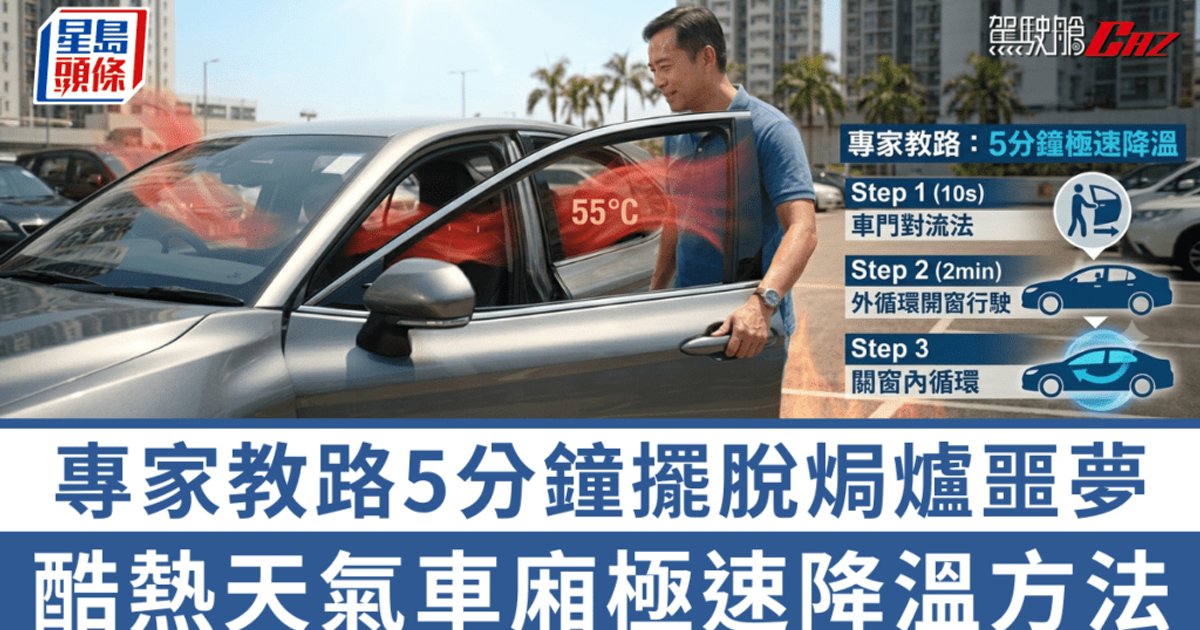
Hong Kong's extreme summer heat transforms parked vehicles into dangerous "natural ovens," with cabin temperatures often soaring to 50-60°C or higher . According to tests conducted by Japan's JAF (Japan Automobile Federation), the traditional habit of immediately closing car doors and cranking up air conditioning is actually the slowest method for cooling interior spaces . The alliance between Japanese automotive expertise and local Hong Kong driving experience has produced a comprehensive guide for drivers seeking rapid, energy-efficient, and safe cabin cooling solutions.
Key Points
- Before approaching your vehicle, press and hold the unlock button on your remote key for 3-5 seconds to simultaneously lower all windows and sunroofs, initiating natural ventilation while you walk to the car
- Plastic, leather interiors, and metal seatbelt buckles retain extreme heat (60-70°C surface temperature) even after air temperature cools, requiring physical countermeasures like sunshades
- Aerosol cooling sprays containing LPG (liquefied petroleum gas) and propane present serious fire hazards—never spray extensively in enclosed vehicles before starting the engine or smoking
- Recommended preventive equipment includes dual-layer reflective sunshades (for steering wheel and dashboard), UV tints blocking 99% of ultraviolet rays, and regular air conditioning maintenance every 12 months or 15,000 km
- Optimal parking strategies prioritize underground car parks, building shadows, or tree shade to minimize heat accumulation before trips
Why It Matters
For Hong Kong's millions of vehicle owners, these techniques address a genuine safety concern as climate change intensifies summer heat waves, reducing risks of heat exhaustion and burns from scalding interior surfaces . The guidance also promotes energy efficiency by helping drivers reduce fuel and electricity consumption associated with prolonged air conditioning use .
For Hong Kong's millions of vehicle owners, these techniques address a genuine safety concern as climate change intensifies summer heat waves, reducing risks of heat exhaustion and burns from scalding interior surfaces . The guidance also promotes energy efficiency by helping drivers reduce fuel and electricity consumption associated with prolonged air conditioning use .