The Sweet Tyranny: How Cane Sugar Ousted Honey from China's Palate
Bastillepost · 1 SOURCES1 day ago3 MIN
Summary
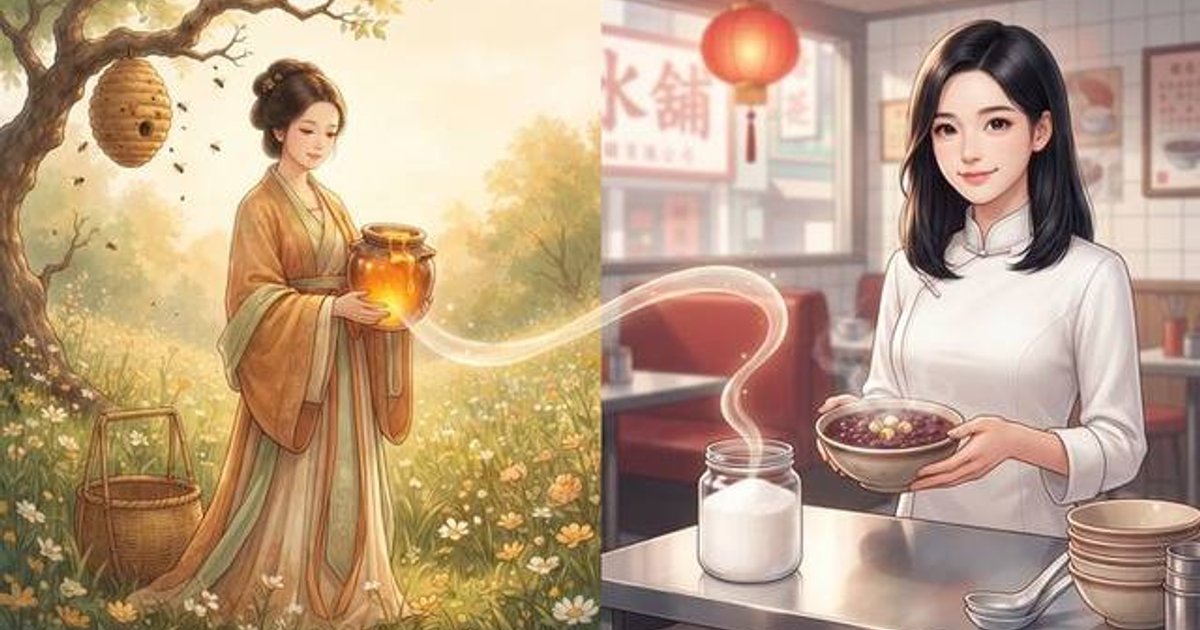
A historical exploration reveals how honey—once a precious luxury in China for three millennia—was systematically displaced by cane sugar through a technological revolution spanning the Tang to Ming dynasties. Emperor Taizong of Tang initiated the transformation in 647 AD by sending envoys to learn sugar-making techniques from India, a transfer that would fundamentally alter Chinese dietary culture . By the Ming Dynasty, the yellow mud water decolorization method enabled mass production of white sugar, democratizing sweetness and rendering honey a mere bread spread . This culinary shift culminated in the emergence of Cantonese sugar water culture, where traditional sweet soups like red bean soup and mango pomelo sago celebrate cane sugar's victory rather than honey's legacy .
Key Points
- Shang Dynasty oracle bone inscriptions already contained the character for honey, demonstrating honey's presence in Chinese culture for at least 3,000 years
- The Shennong Bencao Jing, China's earliest pharmacological text, classified honey as a superior grade medicine known as "stone honey" (shi mi), praising its abilities to benefit the five organs, supplement deficiency, relieve pain and detoxify
- The Records of the Three Kingdoms (Wei Annals, Yuan Shu biography) record that warlord Yuan Shu, after losing his throne and fleeing in summer heat, desperately craved honey wine but found none available—dying of frustration and declaring "Yuan Shu has come to this!"
- In 647 AD, Tang Emperor Taizong dispatched envoys to Magadha in India to study sugar refining; upon their return, he ordered sugarcane cultivation in Yangzhou and twelve years of experimentation, producing sugar superior in color and taste to Western Region sugar
- The Ming Dynasty work Tian Gong Kai Wu documented the yellow mud water decolorization method—pouring dark sugar syrup into a funnel-shaped clay container and washing with yellow mud water to produce large quantities of white sugar crystals, marking cane sugar's complete triumph over honey
Why It Matters
For Hong Kong readers, this historical narrative illuminates the deep cultural roots behind the sugar water shops lining every neighborhood street. The mango pomelo sago, invented in Hong Kong in the 1980s, represents not merely a dessert but the final chapter in a thousand-year culinary revolution . Understanding this history transforms an ordinary bowl of red bean soup from simple sweetness into a tangible artifact of technological progress, trade exchange with India, and the democratization of flavor that reshaped Chinese gastronomy .
For Hong Kong readers, this historical narrative illuminates the deep cultural roots behind the sugar water shops lining every neighborhood street. The mango pomelo sago, invented in Hong Kong in the 1980s, represents not merely a dessert but the final chapter in a thousand-year culinary revolution . Understanding this history transforms an ordinary bowl of red bean soup from simple sweetness into a tangible artifact of technological progress, trade exchange with India, and the democratization of flavor that reshaped Chinese gastronomy .