Smart Teaching Materials Integrated with Occupational Therapy Aid Special Needs Students
AM730 · 2 SOURCESabout 1 hour ago3 MIN
Summary
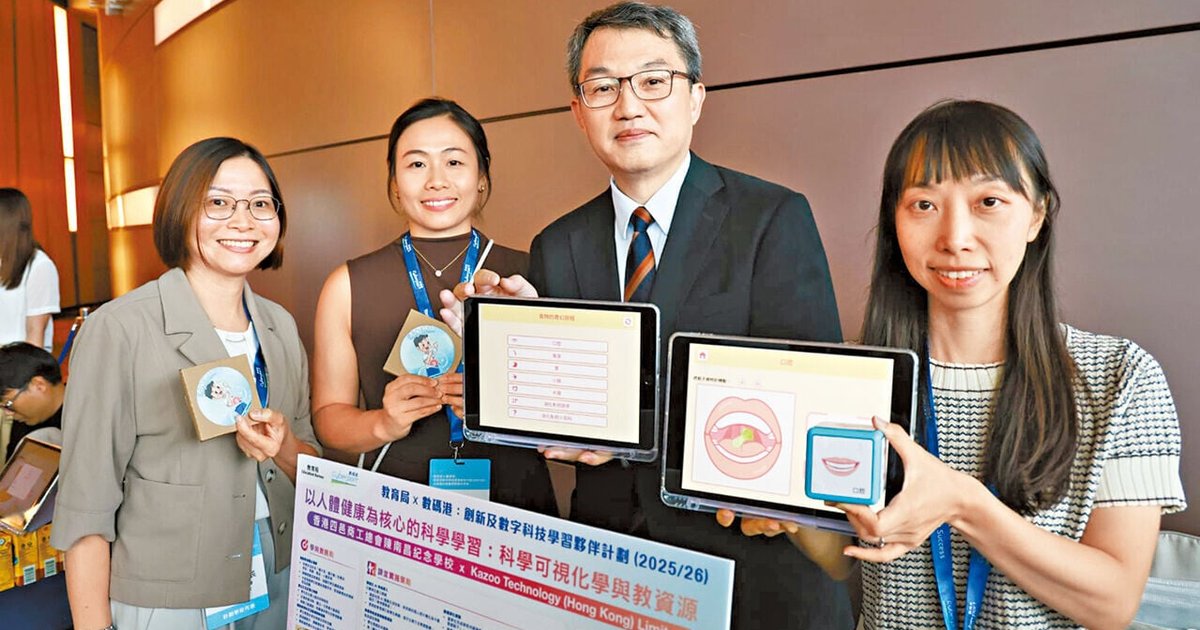
The Education Bureau and Cyberport have launched a collaborative initiative to pair schools with technology startups for developing innovative teaching solutions. Hong Kong Siyi Association of Commerce & Industry Chan Nam Cheong Memorial School has partnered with a startup to create interactive educational materials designed specifically for students with moderate intellectual disabilities. The materials combine smart dice with mobile devices, allowing students to physically manipulate the dice to visualize the digestive process on screen, with built-in occupational therapy components. Separately, Fung Kai No.1 Secondary School has introduced an AI-driven earthquake-resistant model design project as part of its STEAM curriculum. The inaugural "Innovation and Digital Technology Learning Partnership Scheme (2025/26)" sharing session was held at Cyberport, showcasing 10 selected schools' collaborative projects with 8 tech startups, attracting over 200 teachers.
Key Points
- Hong Kong Siyi Association of Commerce & Industry Chan Nam Cheong Memorial School developed interactive teaching materials using smart dice and mobile devices to help students understand abstract digestive concepts through physical manipulation
- When the screen displays food entering the stomach, students twist or squeeze the smart dice, triggering synchronized visuals of gastric acid breaking down food and stomach walls churning food into chyme
- Teacher Li Ailing noted the materials incorporate occupational therapy elements, training students' hand-eye coordination and visual-spatial perception to promote sensory and cognitive development
- The materials include an AI testing platform to help teachers identify students' learning difficulties and adjust teaching strategies accordingly; development was completed in June for classroom use
- Fung Kai No.1 Secondary School's earthquake model project uses a dedicated app for virtual structure design, followed by wooden model construction and vibration testing, with computer vision collecting displacement data analyzed by AI
- Teacher Chan Tsz-hung observed that this virtual-physical teaching model helps students who previously gave up easily after experimental failures become more engaged through iterative testing and design improvement
- The inaugural "Innovation and Digital Technology Learning Partnership Scheme (2025/26)" sharing session at Cyberport featured 10 selected schools and 8 Cyberport tech startups presenting math and STEAM teaching solutions
- Education Bureau Deputy Secretary Shi Junhui stated the scheme embodies cross-sector collaboration, leveraging Cyberport's tech talent and resources to address teaching pain points and explore how digital technology can empower education
Why It Matters
The collaboration between the Education Bureau and Cyberport demonstrates how Hong Kong's innovation ecosystem can address practical educational challenges, particularly for students with special learning needs. These tailored solutions show potential for broader application across other challenging curriculum areas, while also providing technology companies with real-world educational contexts to develop meaningful products. The success of such cross-sector partnerships could establish a replicable model for future edtech development in Hong Kong, ultimately enhancing learning outcomes for diverse student populations.
The collaboration between the Education Bureau and Cyberport demonstrates how Hong Kong's innovation ecosystem can address practical educational challenges, particularly for students with special learning needs. These tailored solutions show potential for broader application across other challenging curriculum areas, while also providing technology companies with real-world educational contexts to develop meaningful products. The success of such cross-sector partnerships could establish a replicable model for future edtech development in Hong Kong, ultimately enhancing learning outcomes for diverse student populations.