Hong Kong Rat Hepatitis E Cases Surge to Four in First Nine Months of 2026
On.cc · 1 SOURCESabout 4 hours ago2 MIN
Summary
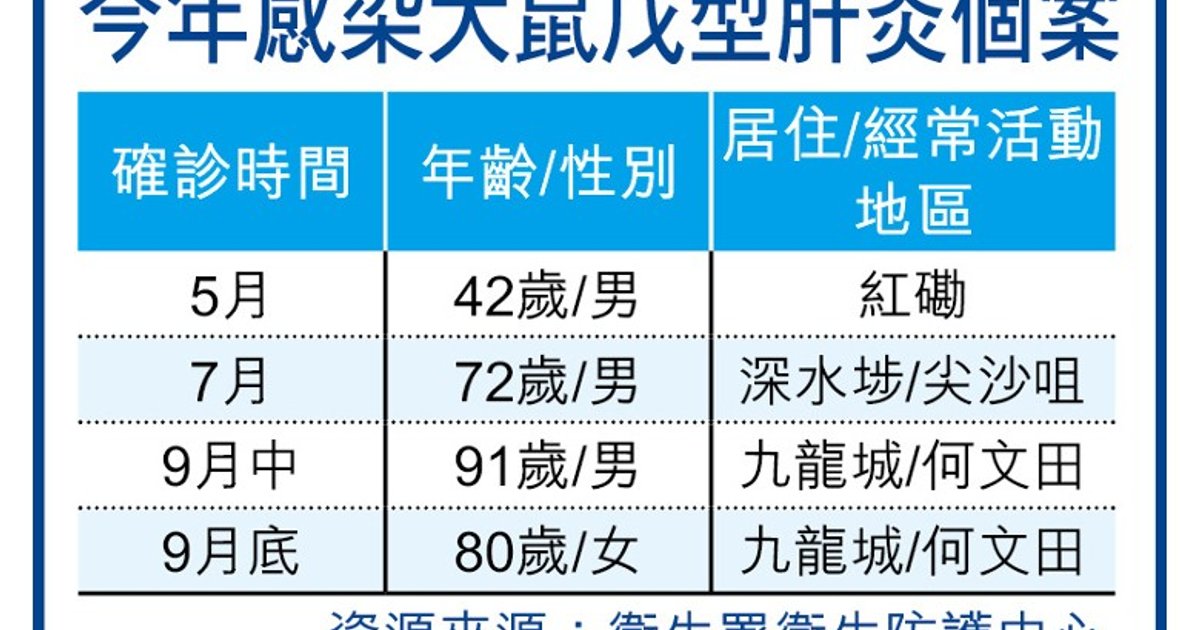
Hong Kong has documented four cases of rat hepatitis E between January and September 2026, a figure that equals the total number of infections recorded across the entire preceding five-year period from 2021 to 2025. The Centre for Health Protection announced the cases have appeared across diverse neighbourhoods including Hung Hom, Sham Shui Po, and Ho Man Tin. The two most recent infections involve an elderly couple residing in a Kowloon City elderly care home, with epidemiological evidence pointing to a restaurant in Ho Man Tin Plaza as the likely source of transmission. The Food and Environmental Hygiene Department has already initiated prosecution proceedings against the establishment, known as Tea Palace, after discovering rat activity and substandard hygiene conditions on the premises.
Key Points
- Hong Kong confirmed its first rat-to-human hepatitis E case globally in 2017, involving a 56-year-old liver transplant recipient
- Of 16 rat hepatitis E cases reported worldwide by 2020, 15 occurred in Hong Kong, highlighting the city's disproportionate burden
- The first 2026 case was a 42-year-old man in Hung Hom, with rat signs discovered at his residence and workplace garbage facility, suggesting local transmission
- The second case involved a 72-year-old Sham Shui Po resident who also frequented Tsim Sha Tsui; infection may have occurred locally or during travel
- The third case is a 91-year-old man from a Kowloon City elderly care home who regularly dined at Tea Palace in Ho Man Tin Plaza, where rat activity was confirmed
- The fourth case is an 80-year-old woman from the same care home and a family member of the third patient, also patronizing the same restaurant
Why It Matters
The concentration of four cases within nine months of 2026, following several years of relative stability, suggests that rat hepatitis E may be re-emerging as a public health concern in Hong Kong. The linked cases involving an elderly care home raise particular concerns about vulnerable populations, as immunocompromised individuals face heightened risks of severe complications from hepatitis E infection. With rat activity confirmed at multiple locations across the territory, from residential buildings to food premises, the outbreak underscores the ongoing challenge of rodent control in one of the world's most densely populated urban environments.
The concentration of four cases within nine months of 2026, following several years of relative stability, suggests that rat hepatitis E may be re-emerging as a public health concern in Hong Kong. The linked cases involving an elderly care home raise particular concerns about vulnerable populations, as immunocompromised individuals face heightened risks of severe complications from hepatitis E infection. With rat activity confirmed at multiple locations across the territory, from residential buildings to food premises, the outbreak underscores the ongoing challenge of rodent control in one of the world's most densely populated urban environments.