Community Drug Formulary to start on December 30
SingTao · 5 SOURCESabout 10 hours ago11 MIN
Summary
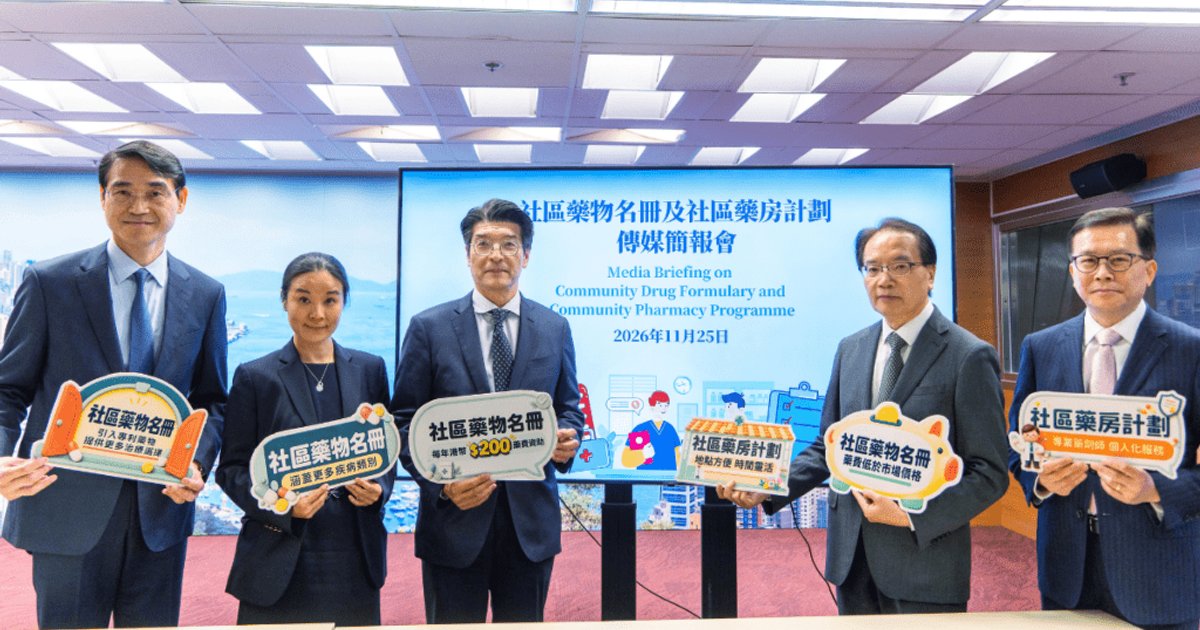
Hong Kong's Health Bureau said the Community Drug Formulary will take effect on December 30, replacing the current basic drug list used by family doctors in the Primary Care Shared Care Network. The formulary will cover 151 medicines, including 38 newly added items on top of the existing 113-drug list, and will broaden treatment coverage to urology, ophthalmology and dermatology conditions. Patients will pay by tier, with generic medicines charged at HK$2 per item per week and patented medicines at HK$30 per item per week, while the newly added medicines are priced at about one-tenth to one-third of market rates. About 70,000 patients who have completed screening for hypertension, diabetes, hyperlipidaemia or chronic hepatitis B and entered treatment under the network are expected to benefit first.
Key Points
- The formulary has three tiers: 146 generic medicines in Tier 1, five patented medicines in Tier 2, and no medicines yet in the special-drug Tier 3 category.
- The 38 added medicines include five patented and 33 generic drugs, extending coverage beyond existing chronic and episodic conditions into urology, eye and skin diseases.
- Officials said one generic lipid-lowering drug costing HK$120 to HK$160 for four weeks on the market will cost HK$8 under the formulary.
- A commonly used patented diabetes drug priced at HK$300 to HK$570 for four weeks will cost HK$120 after inclusion in the formulary.
- Each Shared Care Network participant will receive an annual HK$200 subsidy for Tier 1 medicines only, with unused balances expiring at year-end.
- The Primary Healthcare Commission said the medicines were selected with reference to the Hong Kong Reference Framework for Primary Care, local treatment needs, therapeutic effectiveness and overall treatment cost. In the five patented medicines now included, one is for hypertension and related conditions, while the other four are glucose-lowering drugs. After the formulary starts, patients in the treatment stage who need medication will pay consultation fees together with drug charges after seeing their family doctor, replacing the previous arrangement under which medicines on the basic list were covered within the consultation fee.
- The government said the annual HK$200 subsidy will be deducted automatically for Tier 1 medicines, and patients will receive SMS notifications showing charges and subsidy deductions. Eligible elderly people may also use Elderly Health Care Vouchers to pay the relevant drug fees. The Health Bureau said the formulary is intended to expand gradually, with a long-term target of covering 200 to 400 medicines.
- Officials also addressed concerns over charging. Strategy and Procurement Office director Dr Cheung Wai-lun (張偉麟) said a no-charge model could lead to medicine wastage, and that the revised fees were set after review at what the government considers an affordable level. Dr Cheung also said the future Tier 3 category is expected mainly to cover patented medicines that the authorities want to promote for wider use. Primary Healthcare Commissioner Dr Pang Fei-chow (彭飛舟) said many medicines prescribed in the private sector are patented drugs paid fully out of pocket, so discounted formulary prices should benefit patients
- The Primary Healthcare Commission will also invite Shared Care Network family doctors and patients to join the Community Pharmacy Scheme after the formulary takes effect, making community pharmacies one of the dispensing channels. For Hospital Authority family medicine clinic patients who later use community pharmacies, drug charges will remain aligned with existing Hospital Authority fees
Why It Matters
For patients managing chronic illness in the community, the new formulary changes drug access from an ad hoc private purchase model to a more standardised and subsidised system, especially for lower-cost generic medicines. It also widens the role of family doctors and community pharmacies in long-term treatment, which could make routine care outside public hospitals more practical for more patients over time.